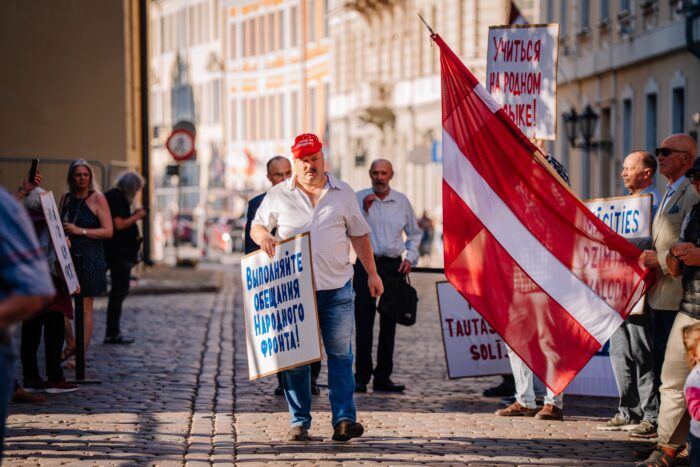
Size of Sweden’s ‘Gig Economy’ revealed for the first time

Research by the University of Hertfordshire and Ipsos MORI, in association with the Foundation for […]

Policy Study

16/03/2016
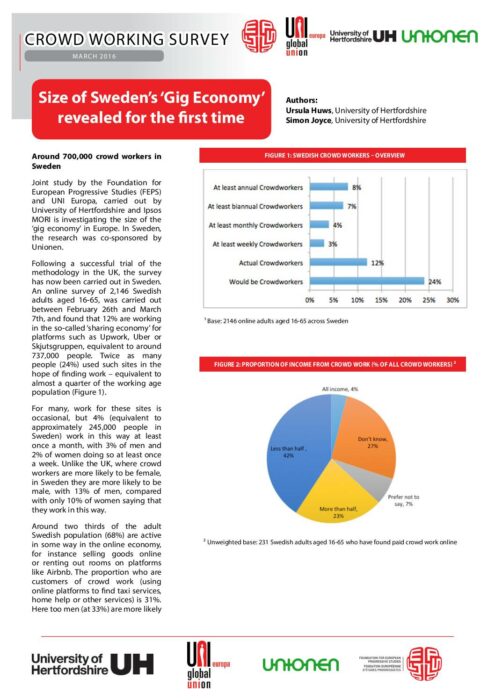
Research by the University of Hertfordshire and Ipsos MORI, in association with the Foundation for European Progressive Studies (FEPS) and UNI-Europa, is investigating the size of the ‘gig economy’ in Europe. In Sweden, the research was co-sponsored by Unionen.

Following a successful trial of the methodology in the UK, the survey has now been carried out in Sweden. An online survey of 2,146 Swedish adults aged 16-65, was carried out between February 26th and March 7th, and found that 12% are working in the so-called ‘sharing economy’ for platforms such as Upwork, Uber or Skjutsgruppen, equivalent to around 737,000 people. Twice as many people (24%) used such sites in the hope of finding work – equivalent to almost a quarter of the working age population.

Read the press release

Network
UNI Europa
Find all related publications
Publications
24/06/2026

Europe and the war in Ukraine

From Russian aggression to a new Eastern policy
18/06/2026

Institutional aspects of Ukrainian accession to the EU

Ukrainian accession to the European Union has major implications for the EU itself. It has […]
16/06/2026

Political parties in the EU and the challenges of enlargement 

Country analysis
16/06/2026

Positions on enlargement of the 27

What do EU political parties think?
Find all related Progressive Post
Progressive Post
25/06/2026

Cuba at a crossroads

Why Europe must lead with principles, solidarity and dialogue
18/06/2026

Made – or fade – in Europe?

The European Commission’s proposal for an Industrial Accelerator Act marks a significant step towards a […]
18/06/2026

Europe’s industrial future is a political choice

Europe is losing industrial jobs, productive capacity and economic sovereignty. The debate on the Industrial […]
Find all related Audiovisual
Audiovisual
09/06/2026

‘Europapolitische Akademie’ Flickr album

05/06/2026

‘What drives enlargement? Regional cooperation, political shifts and sustainable development’ Flickr album

30/05/2026

‘A progressive strategy for peace and cooperation in the Mediterranean’ Flickr album

22/05/2026

‘Progressive Migration Group – Addis Ababa’ Flickr album

Find all related news
News
23/06/2026

FEPS Reacts: 10 years after Brexit

Written by FEPS Secretary-General László Andor 🔸 Brexit has been a case study in national self-harm. The […]
10/06/2026

FEPS Young Academics Network – Cycle 10

Call for new members - Deadline June 28, 2026
05/06/2026

Call for a progressive EU enlargement

Friends of the Western Balkans' Joint Statement
04/06/2026

Call for tender – Researcher(s) to author a policy study

Call for Applications – June 4, 2026 to July 1, 2026
Find all related in the media
In the media

Elon Musk não existiria na Europa, porque nunca teria recebido tanto dinheiro de um orçamento público como recebeu nos EUA

by Expresso 24/06/2026
FEPS President and former Commissioner Nicolas Schmit explains how social democrats can regain the trust of EU citizens

Diez años del Brexit: la metamorfosis del euroescepticismo

by La Razón 24/06/2026
"Ten years of Brexit: the metamorphosis of Euroscepticism". This article from La Razón mentions FEPS policy brief "Countering the far right in the European Parliament", which examines the growing normalisation of far-right parties within the EP and analyses how their strategy has shifted from rejecting the EU to reshaping it from within.

Encouraged by the rejection of the labor law, European progressives gathered in Porto acknowledge that Social Europe has a safe haven in Portugal.

by Expresso PT 22/06/2026
This Expresso article delves into the discussions at the high-level conference "Social Europe is our target", which put social rights back at the heart of the EU agenda.

Újabb csata Brüsszellel? Elutasítja a migrációs paktumot a Magyar-kormány

by Partizán 17/06/2026
In this video by Partizán, FEPS Secretary General László Andor reflects on the recent choices of the new Hungarian government