
Policy Study
13/04/2016
Is CLASS still a valid analytical category for understanding inequality in Europe? How can it help shape progressive politics?
Transnational anti-gender mobilisations emerged almost simultaneously throughout the years 2012- 2013 all over Europe, seriously challenging women’s and minorities’ rights, and attempting to undermine the very foundations of liberal democracy. Countries such as Croatia, Italy, France, Germany, Poland, Russia, Slovakia, Slovenia and Spain became the stages of fierce attacks on gender equality and the rights of sexual minorities, as well as attempts to revoke the post-war international consensus on human rights. It was not long before progressives around Europe started to address these new conservative movements. This paper aims to present and critically evaluate these progressive reactions. First, we provide a short overview of existing academic literature and reflect on the anthropological and political foundations of the anti-gender campaign. We then provide numerous typologies of progressive responses, and follow up with their critical evaluation, pointing to broader structural causes behind the rise of anti-gender movements. Finally, we provide recommendations as to how current responses to the anti-gender campaign could be improved.
Network

Find all related publications
Publications
Find all related Progressive Post
Progressive Post

Find all related events
Events
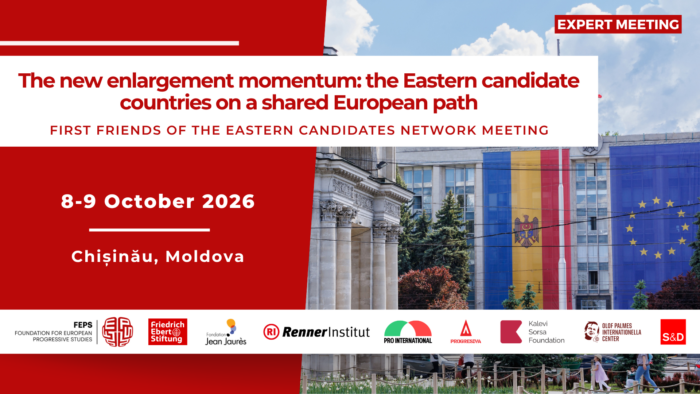
Chișinău, Moldova (Expert Meeting)
Dublin (expert meeting)
Dublin, Ireland (Expert meeting)
Dublin, Ireland
Load more...
Find all related Audiovisual
Audiovisual
21/09/2026
27/06/2026

05/06/2026

30/05/2026
Find all related news
News
Find all related in the media
In the media
“A civic revolution, not yet a social revolution”
Interview with László Andor, FEPS Secretary General, published by Fondation Jean-Jaurès (FR), analysing the electoral defeat of Viktor Orbán, the emergence of a broad opposition movement in Hungary, and the prospects for democratic renewal, EU relations and social change following what he describes as a “civic revolution” that has yet to deliver a social transformation.
“Money is coming! Will Péter Magyar deliver on his promise?”
Video Interview published on KlikkTV (HU), featuring László Andor, FEPS Secretary General, discussing EU funds to Hungary, their political conditionality, and the importance of fair distribution, rule of law and social investment within the European Union.
Liberal democracy’s social, societal fabric under threat – Live from the EPC Annual Conference 2025
by EPC 08/12/2025