
Policy Study
13/05/2024
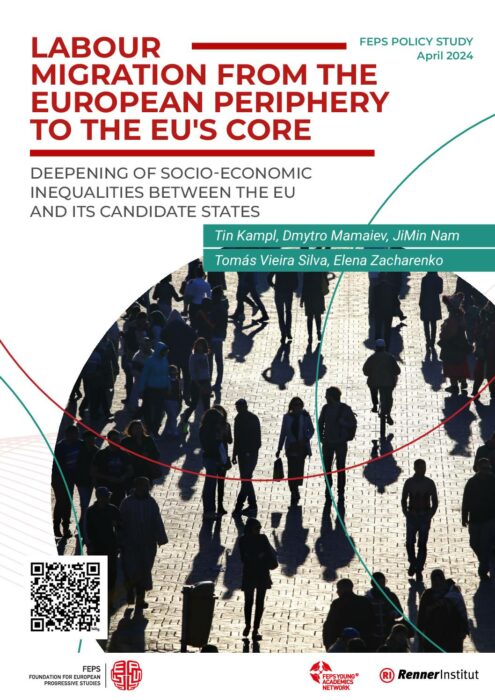
Deepening of socio-economic inequalities between the EU and its candidate states
EU enlargement is once again becoming a priority for European decisionmakers and is seen as an effective foreign policy tool in challenging geopolitical times. It is, however, crucial for European leaders to understand EU accession as a complex process that can also have negative consequences for economically weaker countries, perpetuating or deepening socio-economic inequalities with the EU and in its neighbourhood in view of increased labour migration. This policy brief aims to analyse this phenomenon in light of two particular issues: the application of visa liberalisation policies under EU accession negotiations; and the negative effects of high levels of migration from the semi-periphery to the core of the EU induced by access to the free movement of people.
To do so, this policy brief first makes use of existing literature on EU enlargement and labour migration into the EU, followed by a focus on the case of Croatia, the most recent EU member state, and its labour migration flows to Germany. Through the case considered, it is possible to see that emigration rates increased as EU accession progressed, contributing to multi-layer challenges, which impacted on Croatia’s demographics and ability to provide social and welfare services. Moreover, it demonstrates that accession to the EU did not move Croatia up in the economic hierarchy, maintaining the structural inequalities between countries at the EU’s core and those in its semi-periphery.
This policy brief puts forward policy recommendations to be implemented at three levels: the EU; the origin country; and the destination country. At the EU level, EU bodies must ensure the full implementation of and abidance by the European Pillar of Social Rights, both in the transformation of recommendations into binding regulations and in its enlargement policy and accession negotiations. With regards to origin countries, the EU must turn its focus to developing strong and resilient labour markets through increased funding before opening the EU’s labour market to migrants from said countries, while ensuring that key sectors (such as healthcare and education) are not susceptible to shortages or brain drain. Lastly, the EU should work with destination countries to tackle the purchasing of migrant labour on the grey/black market, while promoting circular migration and the integration of migrants to empower them and assure full knowledge of labour and social rights.
Network

Related publications

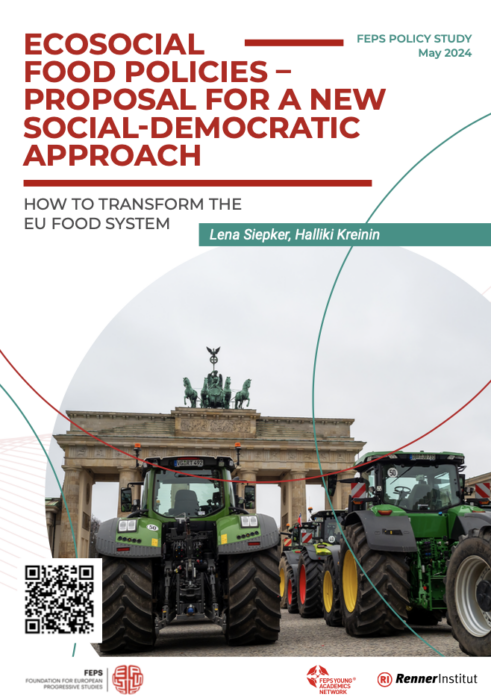
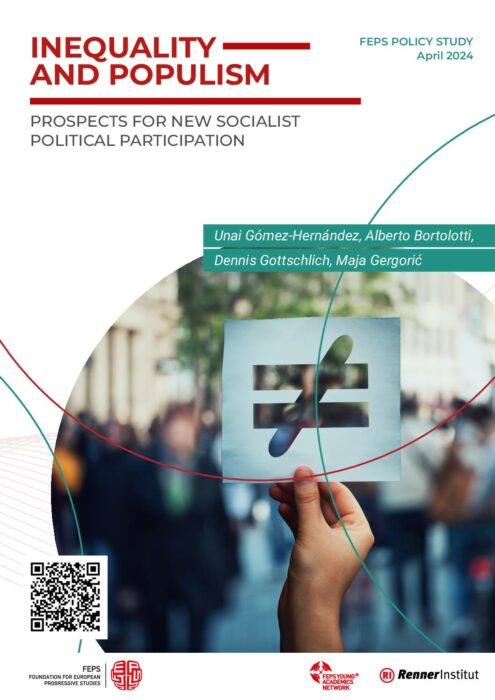

Find all related publications
Publications
Find all related Progressive Post
Progressive Post
Find all related events
Events
No upcoming events at the moment.
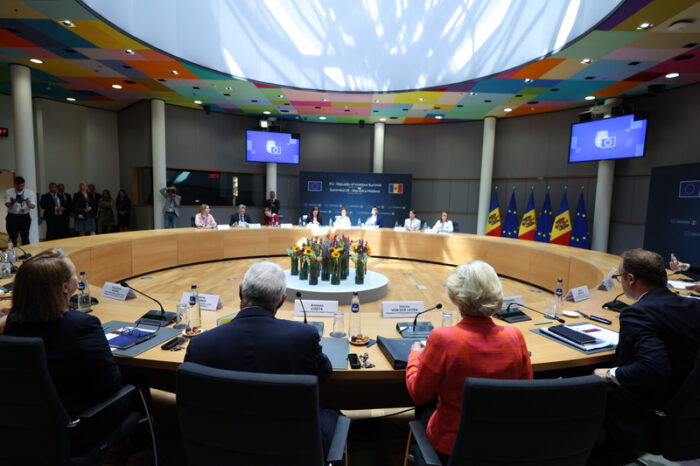
Chișinău, Moldova (Expert Meeting)

FEPS HQ
Brussels, Belgium (Hybrid)
Podgorica, Montenegro (Expert Meeting)
Load more...
Find all related Audiovisual
Audiovisual

05/06/2026

22/05/2026

23/04/2026

17/04/2026
Find all related news
News

Find all related in the media
In the media
“Migrants: Amato to FEPS — ‘Socialists and populists fuel obsession’”
News article in Avanti! where Hedwig Giusto, FEPS Head of International Affairs, critiques how both populist and some socialist political forces are stoking fear around migration. Giusto calls for balanced migration policies that respect human rights, reinforce solidarity among member states, and reject securitarian obsessions.
Italy’s scheme to offshore asylum claims should not be a model for the rest of Europe
by The Guardian 16/10/2024