
Policy Brief
09/10/2014
The European Council’s meeting of 13-14 December 2012 has been convened to define a master plan and a road map to complete the EMU. The European Council seems finally to understand that it is not possible for the EU to re-launch growth and to reduce the public debt in a consistent way if the euro-zone crisis is not tackled by urgent reforms in the Economic and Monetary Union.
As long as the European banking system is fragmented and there is a credit shortage in most of European Member States, companies cannot invest and create jobs, particularly in the activities of the future. That is why a banking union is needed with deposit guarantees and with resolution instruments to restore the normal circulation of capitals and to restructure banks in distress. In order to break the link between bank debt and sovereign debt –which is at the core of the euro-zone crisis; these instruments should not create more burden for the public budgets and tax payers.
As long as the interest rate to be paid by public debt service is higher than the growth rate it is difficult for Member States to reduce consistently the public debt/GDP ratio, except by deep cuts in the welfare systems. That is why a European budgetary union is needed, coupling fiscal discipline with European instruments to bring down the costs of public debt issuance. Without these stronger instruments to reduce the divergences between Member States regarding the costs of investment and of public debt issuance, many Member States will be pushed for a long and deep recession which might then drag other EU Member States, leading to a more general recession and crisis of the European integration.
The discussions in the European Council were based not only on the draft conclusions but also on the report on Towards a Genuine EMU, prepared by the four Presidents (European Council, European Central Bank, Eurogroup and European Commission). This last institution has also recently presented a bolder than usual report Blue Print for a Deeper and Genuine EMU”, with detailed proposals for each stage and a clear identification of those requiring Treaty changes.
Find all related publications
Publications
Find all related Progressive Post
Progressive Post

Find all related events
Events
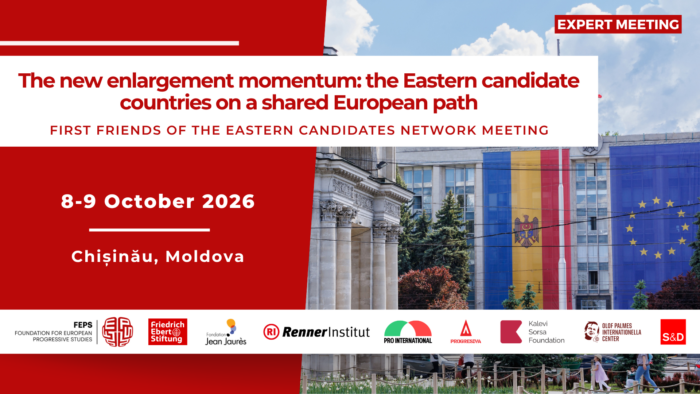
Chișinău, Moldova (Expert Meeting)
Online
Podgorica, Montenegro (Expert Meeting)
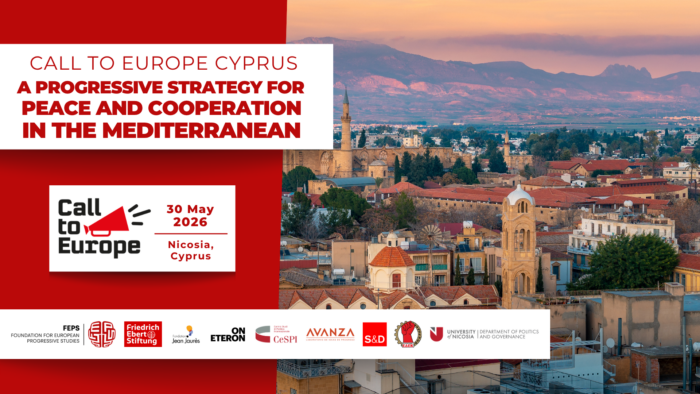
Nicosia, Cyprus
Load more...
Find all related Audiovisual
Audiovisual
21/09/2026
27/06/2026

05/06/2026

30/05/2026
Find all related news
News
Find all related in the media
In the media
“A civic revolution, not yet a social revolution”
Interview with László Andor, FEPS Secretary General, published by Fondation Jean-Jaurès (FR), analysing the electoral defeat of Viktor Orbán, the emergence of a broad opposition movement in Hungary, and the prospects for democratic renewal, EU relations and social change following what he describes as a “civic revolution” that has yet to deliver a social transformation.
“Money is coming! Will Péter Magyar deliver on his promise?”
Video Interview published on KlikkTV (HU), featuring László Andor, FEPS Secretary General, discussing EU funds to Hungary, their political conditionality, and the importance of fair distribution, rule of law and social investment within the European Union.
‘Bruselas, ¿te Quiero?’ Tras un verano cruel, Von der Leyen pide a Europa que “luche”
by Euronews 16/09/2025