
19/01/2018
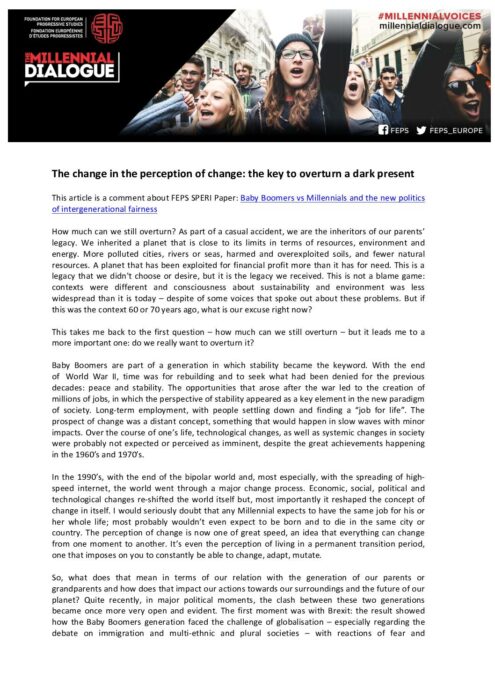
This article is a comment about FEPS SPERI Paper: Baby Boomers vs Millennials and the new politics of intergenerational fairness
How much can we still overturn? As part of a casual accident, we are the inheritors of our parents’ legacy. We inherited a planet that is close to its limits in terms of resources, environment and energy. More polluted cities, rivers or seas, harmed and overexploited soils, and fewer natural resources. A planet that has been exploited for financial profit more than it has for need. This is a legacy that we didn’t choose or desire, but it is the legacy we received. This is not a blame game: contexts were different and consciousness about sustainability and environment was less widespread than it is today – despite of some voices that spoke out about these problems. But if this was the context 60 or 70 years ago, what is our excuse right now?
This takes me back to the first question – how much can we still overturn – but it leads me to a more important one: do we really want to overturn it?
Baby Boomers are part of a generation in which stability became the keyword. With the end of World War II, time was for rebuilding and to seek what had been denied for the previous decades: peace and stability. The opportunities that arose after the war led to the creation of millions of jobs, in which the perspective of stability appeared as a key element in the new paradigm of society. Long-term employment, with people settling down and finding a “job for life”. The prospect of change was a distant concept, something that would happen in slow waves with minor impacts. Over the course of one’s life, technological changes, as well as systemic changes in society were probably not expected or perceived as imminent, despite the great achievements happening in the 1960’s and 1970’s.
In the 1990’s, with the end of the bipolar world and, most especially, with the spreading of high-speed internet, the world went through a major change process. Economic, social, political and technological changes re-shifted the world itself but, most importantly it reshaped the concept of change in itself. I would seriously doubt that any Millennial expects to have the same job for his or her whole life; most probably wouldn’t even expect to be born and to die in the same city or country. The perception of change is now one of great speed, an idea that everything can change from one moment to another. It’s even the perception of living in a permanent transition period, one that imposes on you to constantly be able to change, adapt, mutate.
So, what does that mean in terms of our relation with the generation of our parents or grandparents and how does that impact our actions towards our surroundings and the future of our planet? Quite recently, in major political moments, the clash between these two generations became once more very open and evident. The first moment was with Brexit: the result showed how the Baby Boomers generation faced the challenge of globalisation – especially regarding the debate on immigration and multi-ethnic and plural societies – with reactions of fear and discomfort. By voting to leave, Baby Boomers sent a signal of wanting a society that is closed in itself, that goes back to a model that no longer should have a place in our European societies. The same happened on the other side of the Atlantic, when it came to elect a bigot racist and misogynistic president. The confrontation between older generations and younger ones showed a clear distinction and a sharp contrast of what kind of society Millennials and Baby Boomers want. The results are in plain sight and they speak louder than any deep analysis.
What is, then, the brighter note in all of this? On a preliminary view, it seems that there has been an awakening in political engagement by young people that has met its response in more electoral turnout. But it also seems to point to a bigger sense of collectiveness and awareness of the need to reach results by a deeper community engagement. This needs to be the response for all of the challenges we are facing nowadays and that can only be solved if they are done together: climate change, sustainability, management of natural resources, fighting global poverty and food inequalities – starvation in some countries and obesity in others – and tackling inequalities by finding common ways to eliminate them. It is the change in the perception of change itself that must be paramount in determining the attitude of Millennials towards the solution of problems that our generation already faces today. To do so is to ensure that we don’t have to face a similar backlash in the future; and our way to guarantee that we leave the world a far better place to the generations after us than we encountered while growing up.
By João Albuquerque, President of the Young European Socialists.
Network

Find all related publications
Publications
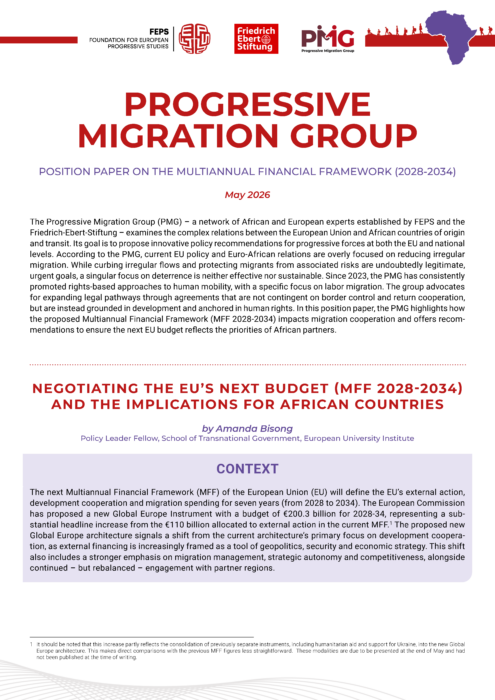
Find all related Progressive Post
Progressive Post
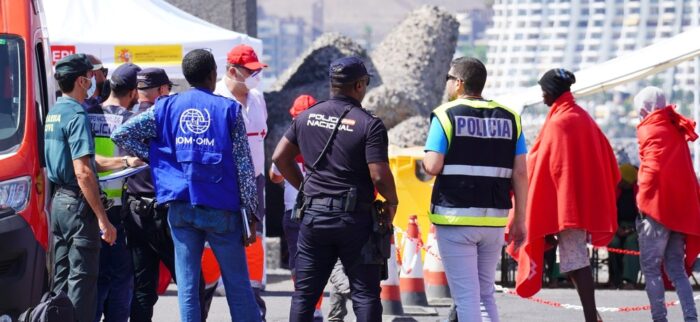
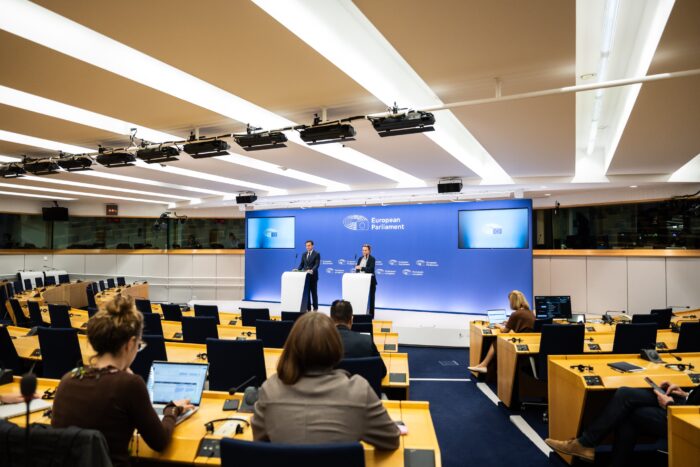

Find all related events
Events
Upcoming
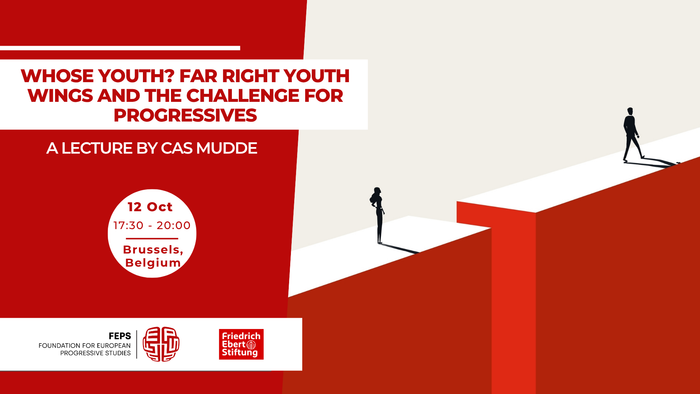
Past
02 - 04/07/2026
Warsaw, Poland (Training)
01 - 04/07/2026
Warsaw, Poland (Training)
Load more...
Find all related Audiovisual
Audiovisual

22/05/2026

23/04/2026

17/04/2026

29/01/2026
Find all related news
News


Find all related in the media
In the media
“Migrants: Amato to FEPS — ‘Socialists and populists fuel obsession’”
News article in Avanti! where Hedwig Giusto, FEPS Head of International Affairs, critiques how both populist and some socialist political forces are stoking fear around migration. Giusto calls for balanced migration policies that respect human rights, reinforce solidarity among member states, and reject securitarian obsessions.
Italy’s scheme to offshore asylum claims should not be a model for the rest of Europe
by The Guardian 16/10/2024