29/01/2026
Progressive Yearbook 2026

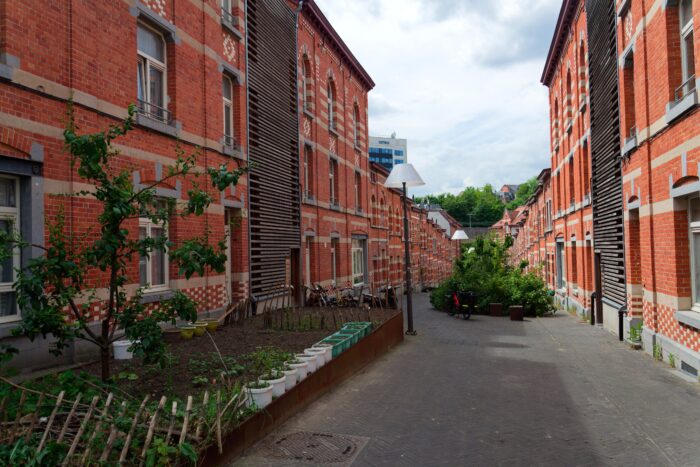
Photo album of the ‘FEPS’ New Year Reception & Progressive Yearbook launch‘ event in FEPS HQ, Brussels.

On 29 January, the FEPS’ traditional New Year Reception took place. At this event, FEPS launched a new edition of the Progressive Yearbook and unveiled FEPS Progressive Person of the YearMariana Mazzucato.

Find all related publications
Publications
18/06/2026

Institutional aspects of Ukrainian accession to the EU

Ukrainian accession to the European Union has major implications for the EU itself. It has […]
16/06/2026

Political parties in the EU and the challenges of enlargement 

Country analysis
16/06/2026

Positions on enlargement of the 27

What do EU political parties think?
11/05/2026

Place-based industrial policy

Places, people and power in European industrial policy
Find all related Progressive Post
Progressive Post
25/06/2026

A Social Democrat’s guide to Magnifica Humanitas

Pope Leo XIV speaks truth to AI tech power and inequality
18/06/2026

Made – or fade – in Europe?

The European Commission’s proposal for an Industrial Accelerator Act marks a significant step towards a […]
18/06/2026

Europe’s industrial future is a political choice

Europe is losing industrial jobs, productive capacity and economic sovereignty. The debate on the Industrial […]
Find all related Audiovisual
Audiovisual
05/06/2026

‘What drives enlargement? Regional cooperation, political shifts and sustainable development’ Flickr album

30/05/2026

‘A progressive strategy for peace and cooperation in the Mediterranean’ Flickr album

22/05/2026

‘Progressive Migration Group – Addis Ababa’ Flickr album

20/05/2026

‘Housing in Practice – Luxembourg’ Flickr album

Find all related events
Events
Upcoming
26/06/2026
Online

Next Left country case study – Canada

Presentation by the author
Past
12/06/2026
Online (Expert meeting)

A new EU Action Plan on Women, Peace and Security

Feminist Foreign Policy Progressive Voices Collective (FFPPVC)
24/06/2026
FEPS HQ

From compassion to crime

Documentary screening
Load more...
Find all related news
News

23/06/2026

FEPS Reacts: 10 years after Brexit

Written by FEPS Secretary-General László Andor 🔸 Brexit has been a case study in national self-harm. The […]
10/06/2026

FEPS Young Academics Network – Cycle 10

Call for new members - Deadline June 28, 2026
05/06/2026

Call for a progressive EU enlargement

Friends of the Western Balkans' Joint Statement
13/04/2026

Hungary’s civic revolution

FEPS' commentary on the outcomes of the Hungarian election
Find all related in the media
In the media

Une révolution civique, pas encore une révolution sociale

by Fondation Jean-Jaurès 06/05/2026
“A civic revolution, not yet a social revolution” Interview with László Andor, FEPS Secretary General, published by Fondation Jean-Jaurès (FR), analysing the electoral defeat of Viktor Orbán, the emergence of a broad opposition movement in Hungary, and the prospects for democratic renewal, EU relations and social change following what he describes as a “civic revolution” that has yet to deliver a social transformation.

Jön a pénz! Magyar Péter beváltja az ígéretét?

by KlikkTV 04/05/2026
“Money is coming! Will Péter Magyar deliver on his promise?” Video Interview published on KlikkTV (HU), featuring László Andor, FEPS Secretary General, discussing EU funds to Hungary, their political conditionality, and the importance of fair distribution, rule of law and social investment within the European Union.

España los forma, Europa los contrata: así es el mapa de la nueva fuga de cerebros

by El Confidencial 10/02/2026
Spain trains them, Europe hires them: the map of the new brain drain: László Andor, FEPS Secretary-General, discusses the 'brain drain' as a result of the EU’s single market and highlights the need for a fairer mobility and retention strategy across the EU.

‘Regreso al futuro. El gran reseteo’ by Lina Gálvez

by Tinta Libre 02/02/2026
“Back to the Future: The Great Reset” Opinion article by FEPS Vice-President, Lina Gálvez reflecting on the current global crisis marked by rising authoritarianism, digital power and extreme inequality, and tracing its roots through a historical analysis of capitalism — from the post-1945 social and geopolitical settlement led by social democratic forces, through neoliberal financialisation, to what she describes as a new phase of fascist capitalism.