A European Commission against the Social Contract

FEPS commentary on the MMF 2028-2034

18/07/2025

FEPS commentary on the MMF 2028-2034

By FEPS Secretary General László Andor

🔸Ursula von der Leyen is undoing what she built in her first mandate. The new Multiannual Financial Framework (MFF) proposal is another example. There was a kind of budget revolution in 2020, in response to the COVID-19 crisis, resulting in a surge in EU fiscal capacity to protect our people and our economy. Now, while nominally we speak about the largest ever MFF, the real value of key EU programmes is about to fall. But the nature of EU funds is also changing: workers, farmers, regions, and civil society are all set to lose. Ursula von der Leyen is challenging the very foundations of EU integration laid down by Jacques Delors. 

🔸It appears that the Commission learned the wrong lessons from the COVID-19 crisis. The Recovery and Resilience Fund (RRF) was an important part of the strategic response to the pandemic, but it is not a tool that could replace cohesion policy, where local and regional authorities play an essential role. National plans are important, but they should not dilute EU-level policies for investment, innovation and human capital development. Result orientation can play a part, but it cannot undermine the place-based character of cohesion instruments

🔸The ill-conceived centralisation and nationalisation will undermine the MFF’s potential for funding European public goods and kill the principle that EU cohesion policy should reach all regions and cities. The weakening of regionally defined pre-allocation will make it harder for local and regional authorities to do proper planning and pursue long-term development strategies. Denying regions’ direct engagement with the Commission to negotiate their cohesion programs can only create more distance between the EU and citizens.

🔸Invoking the Draghi Report helps highlight that a pivotal question in this MFF process is the investment capacity of the EU. The MFF cannot be the only source to fill the “investment gap”, but it should be a strategic tool driving effective solutions while safeguarding our social and environmental standards. The newly proposed Competitiveness Fund can offer a ray of hope, as long as it takes inspiration from the Juncker Plan and the subsequent InvestEU program, and it delivers a reduction of dependency on the United States in fields like defence, digitalisation and energy.

To succeed, the proposed governance structure should be reconsidered, with guarantees for all member states, for all territories across the EU, to fairly benefitting from the common resources. The Commission should also draw lessons from the Letta Report, which stressed that competitiveness and cohesion go hand in hand.

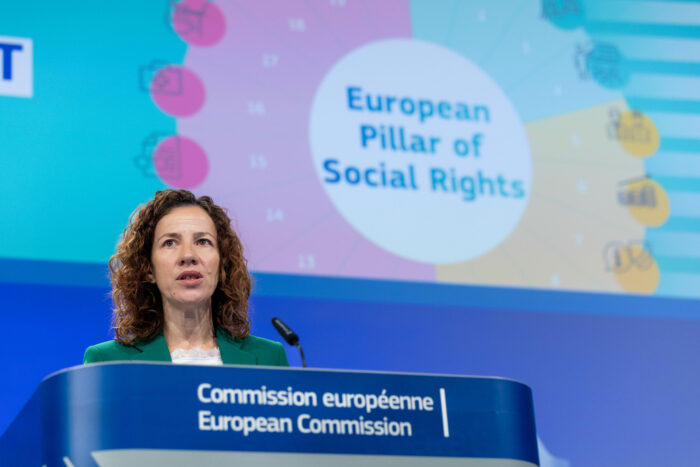
🔸While vowing to preserve the European Social Fund (ESF), the oldest and most fundamental EU instrument supporting social inclusion, von der Leyen offers no guarantee, despite a vaguely defined target of 14%, that there will be sufficient investments in the competitiveness and wellbeing of our workforce as well as commitments to implement the European Pillar of Social Rights.

With the ongoing housing crisis, high levels of poverty, and broader socio-economic uncertainties, the MFF should also be the tool that ensures the social dimension of competitiveness, building on our European model of social protection and empowerment. 

🔸The Commission has delivered some essential opening on the revenue side of the MFF, and it could have been much bolder in terms of volumes, but also the types of financing. Based on the COVID-19 experience, joint borrowing should become a standard in support of a mission-oriented investment approach. The opportunity should also be used to phase out rebates, which are a toxic legacy of the episode when the UK was an EU member. 

🔸The MFF proposal confronts the citizens with the hard truth that rebuilding Ukraine after the war will require strong support from the EU in the form of transfers. The sooner our citizens face this reality, the better it is, and hopefully the EU can also help create the pre-conditions of reconstruction. The Ukraine reconstruction programme should be designed in a way that EU regions bordering Ukraine (and the Black Sea) should also become direct beneficiaries. 

🔸The Commission is right to highlight that we live in a world of insecurity and uncertainty. But dealing with this new global reality purely through more flexibility and deregulation, which would result in more discretionary power for the Commission, is the wrong way.

Von der Leyen simply lacks support from the European Parliament and public trust to demand such powers and better solutions would need to be found here. 

🔸Von der Leyen’s MFF debacle is the consequence of her year-long effort to make the European Commission dysfunctional. Today, commissioners are blocked if they want to represent the rationale of their portfolios, and as a result, chaos and discord prevail within the Commission.

The EU needs a reset, and von der Leyen should use the summer period to reconsider her leadership approach and open up to a more constructive approach on the MFF as well. 

🔸The Foundation for European Progressive Studies will remain a constructive source of ideas to strengthen the investment capacity of the EU to deliver fair and effective solutions to the challenges of our time, through solidarity, equality and democracy.

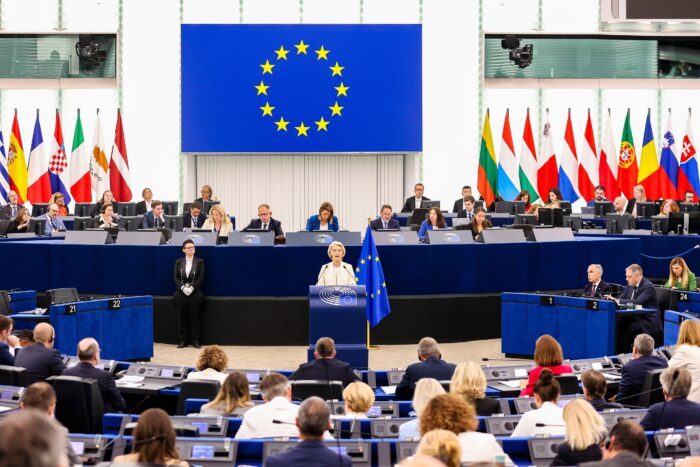
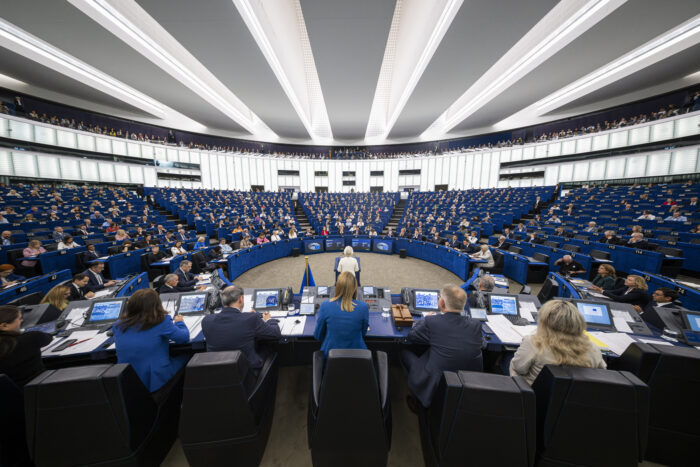
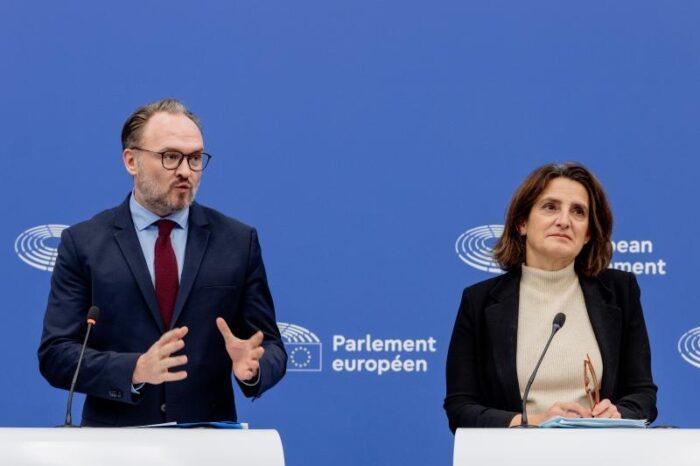
Photo credit: © European Union 2025 – Source : EP

Find all related publications
Publications
18/11/2025

Public investment in the proposed 2028-2034 EU budget

Needs, gaps and options
06/10/2025

Governing the global just transition from fossil fuels to clean energy

Litmus tests and proposals for COP30
30/09/2025

Healthy minds, stronger Europe

Progressive solutions for mental health and wellbeing in Europe
23/09/2025

Intergenerational solidarity in Europe

A progressive vision
Find all related events
Events
Upcoming
09/12/2025
European Parliament, Brussels (Expert meeting)

Tackling the Housing Crisis in Europe

Progressive ideas for affordable and sustainable housing policies
Past
17/11/2025
FEPS HQ, Brussels (Expert meeting)

New own resources in the MFF proposal

EU Investment Capacity Group 2025
13 - 15/11/2025
Vienna, Austria (Expert Meeting)

FEPS Young Academics Seminar

4th seminar of the 9th cycle
Load more...
Find all related news
News
04/12/2025

It is high time that the goal is set on “Quality”

FEPS commentary on the Quality Jobs Roadmap
21/10/2025

Maria João Rodrigues at PES Congress 2025

🇳🇱 🌹 FEPS attended the Party of European Socialists (PES) Congress in Amsterdam, which included […]
18/10/2025

FEPS at PES Congress 2025

🇳🇱 🌹Within PES Congress, there were full rooms on insightful discussion on a range of […]
10/09/2025

Von der Leyen – walking the walk at last?

FEPS reaction to The State of the European Union 2025
Find all related in the media
In the media

László Andor: Miből fejleszt az EU ezután?

by Portfolio 28/08/2025
“What will the EU develop from now on?” Analysis by FEPS Secretary General László Andor in Portfolio (HU), highlighting the new MFF’s shift toward increasing EU own-resources, boosting funding for strategic domains like defense, stabilisation and competitiveness, and calling for a flexible crisis-response mechanism such as the proposed Emergency Crisis Response Mechanism

Започва нов ЕС-бюджетен цикъл

by Novi Vremena 26/08/2025
“A new EU budget cycle begins” Article by FEPS Secretary General László Andor in Novi Vremena (BG), highlighting that while Europe must strengthen fiscal capacity to support balanced growth and strategic autonomy, priorities such as cohesion, defense, and social investment must be built into the next multiannual financial framework.

The need to strengthen policies for a Social Europe

by Le Club de Mediapart 29/10/2024
Article by Le Club Mediapart about the presentation of FEPS Primer's Greek edition, 'Social Europe: From Vision to Vigour' with László Andor and Björn Hacker in an event coorganised with ETERON in Athens.

Von der Leyen promised an EU commissioner to tackle the housing crisis – what would be their remit?

by Euronews 13/08/2024
Read this Euronews article featuring an interview with David Rinaldi, FEPS Director of Studies and Policy, in which he stresses that it’s now time for the EU to devise a housing initiative for the middle class too.