Wag the dog?

FEPS commentary on the US-Israel attack on Iran

03/03/2026

Written by FEPS Policy Analyst on International Relations Beatriz ABELLÁN and FEPS Secretary General László ANDOR

Wag the dog is a political term for the act of creating a diversion from a damaging issue usually through military force. The metaphor originally referred to an important or powerful entity (the dog) being controlled by a less important one (the tail). 

  • The US and Israel’s attacks on Iran are a blatant violation of international law and the UN charter. It is also illegal under US law, as it has not been approved by Congress.  
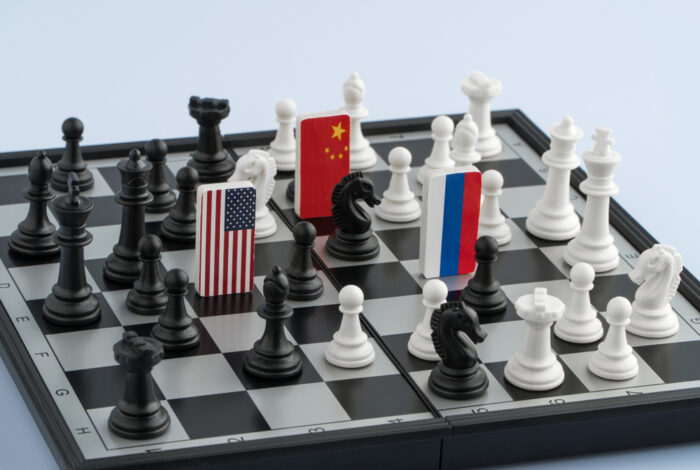
  • This war must be analysed from a legal and geopolitical view. Israel has a clear interest in incapacitating its main regional enemy and consolidating relations with Arab countries, specifically in the Gulf. The US interest is in controlling the Persian Gulf to influence global oil supplies and the energy inputs of China’s economy.  
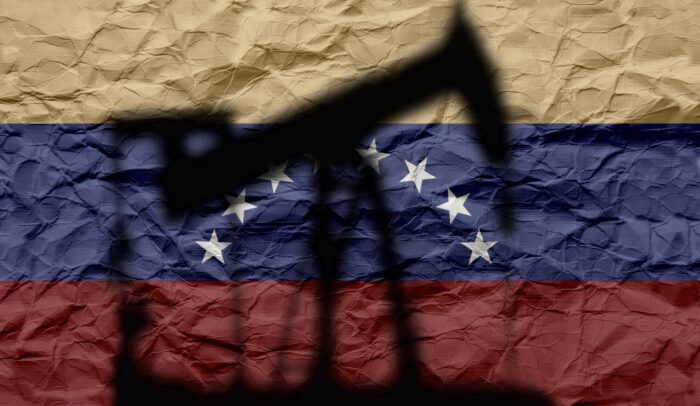
  • Netanyahu’s government advances its own political objectives in the region with systematic disregard for international law, including committing genocide against the Palestinian people. Meanwhile, US interventions to bring about regime change seem now a strategy from the Trump administration too (Venezuela and possibly others), despite its earlier rhetoric on peace.

Escalation in the region and beyond 

  • This war is unlike the exchanges of attacks carried out over the past nine months. The killing of Iran’s Supreme Leader has brought the conflict to another level and follows the violation of a ceasefire agreed in June.  
  • Iran’s retaliatory attacks on US bases, as well as unlawful targets of civilian infrastructure, in Gulf Countries and on a UK military base in Cyprus (EU soil) open up another risk of global escalation.  
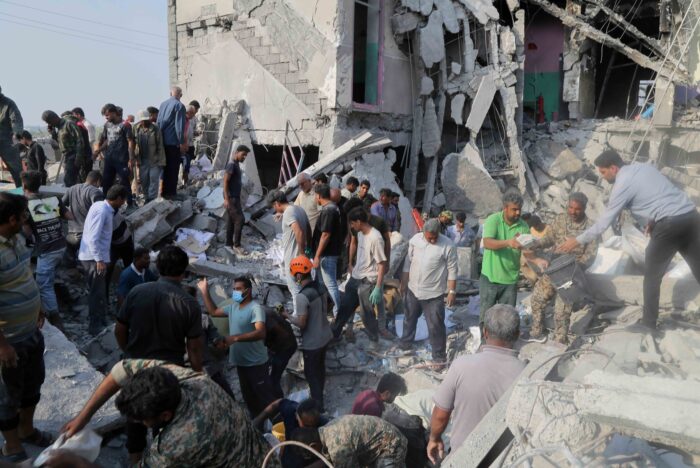
  • The regional repercussions are not only military but also social and economic, ranging from increased energy prices to forced displacement and disrupted connections, with a direct impact on the regional population and, globally, including the EU. 

Europe’s reactions and the US’ stake 

  • Apart from Spanish Prime Minister Pedro Sánchez, who is a leading voice in the defence of International Law, and more timidly, Ireland, the rest of the Member States and the EU Commission have failed to denounce the US and Israel’s violation of international law.  The UK, Germany, and France have jointly expressed their support with the US and Israel to protect their interests and support allies.  
  • The hypocrisy of some European leaders, and even some high-level EU officials, in their selective condemnation of international law violations comes as no surprise, but it also undermines support for the Ukrainian and Greenland sovereignty causes. 
  • Because of its insulated geographic position, the US is the actor that risks the least with this war, facing minimal chances of an attack on US land or suffering significantly from the increase in energy prices, maritime disruptions. Yet, Trump is facing internal discontent within the MAGA movement and also reproaches from the US Congress. Although it is not uncommon for U.S. military interventions to be employed to boost domestic electoral support ahead of (midterm) elections. 

Impacts on the Iranian people 

  • The losers of war are always civilians. Iranians, despite being for decades under a brutal regime, are the first to suffer from this violent escalation, from attacks on civilian infrastructure to the deterioration of living conditions. For decades, Iran’s population has been suffering from a brutal sanctions regime imposed by the US.  
  • Despite Trump’s words on the US stepping back after achieving its objectives, the future of the country remains uncertain. Past US regime change operations, such as those in Libya, Iraq, and Afghanistan, have not brought peace and prosperity to the country; but far from that, they have been followed by governance failure and the proliferation of criminal and extremist actors. 
  • Democracy in Iran can be supported without external aggression. The voices of the women in Iran must be put at the centre, without exploiting their struggle to justify a neocolonial war. 

Photo credits: Shutterstock/carlos110

Find all related publications
Publications
28/11/2025

Smarter spending today, safer societies tomorrow

Digitally-enabled capabilities for European defence
28/11/2025

More money, more dependence?

Financing European Union defence for autonomy and cooperation
28/11/2025

ReArm Europe

The impact and role of EU arms export controls
22/04/2025

Trade, trust, and transition: Shaping the next transatlantic chapter

Essays series by FEPS and Center for American Progress (CAP)
Find all related events
Events
Past
29/11/2025
Copenhagen, Denmark

Call to Europe Denmark 2025

Well-being for all
23/04/2025
FEPS HQ, Brussels (Expert meeting)

Funding for conflict prevention

The EU’s role as a peace actor amid shifting priorities
No more element
Find all related news
News
06/01/2026

Venezuela is not about drugs: Trump’s Regional Expansionism and Europe’s Test

FEPS Commentary on US military intervention in Venezuela
21/10/2025

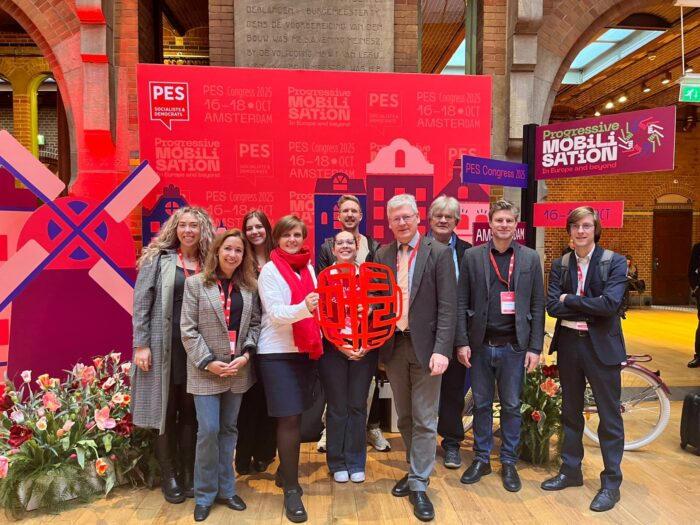
Maria João Rodrigues at PES Congress 2025

🇳🇱 🌹 FEPS attended the Party of European Socialists (PES) Congress in Amsterdam, which included […]
18/10/2025

FEPS at PES Congress 2025

🇳🇱 🌹Within PES Congress, there were full rooms on insightful discussion on a range of […]
13/03/2025

Europe’s defence strategy must be peace-oriented

FEPS Position Paper on European defence
Find all related in the media
In the media

‘Bruselas, ¿te Quiero?’ Tras un verano cruel, Von der Leyen pide a Europa que “luche”

by Euronews 16/09/2025
After a harsh summer, Von der Leyen calls on Europe to ‘fight’” Episode of Euronews’ Brussels, my Love? featuring Beatriz Abellán, FEPS Policy Analyst on International Relations, discussing Von der Leyen’s State of the Union speech, the EU’s trade deal with the United States, and the future of multilateralism. She also stresses that the EU’s credibility is at stake due to its delayed response to the genocide in Palestine.

Andor László: Fenntarthatóság vagy hadigazdaság Európában?

by Népszava 22/04/2025
“László Andor: Sustainability or war economy in Europe” Opinion article by FEPS Secretary General László Andor, published in Népszava (HU), discussing the EU’s need to balance its security response with addressing pressing social issues such as the housing crisis affecting most member states.

СТРАТЕГИЯТА ЗА ОТБРАНА НА ЕВРОПА ТРЯБВА ДА БЪДЕ ОРИЕНТИРАНА КЪМ МИРА

by Novi Vremena 27/03/2025
In the article "Europe’s defence strategy must be peace-oriented", the Bulgarian media Novi Vremena highlights FEPS position on European defence strategy presented by László Andor, David Rinaldi and Beatriz Abellán.