Human – Machine: new policies for the future of work

A team of fifteen European researchers is carrying out a study on the transformative impact […]

20 - 21/02/2018
European Parliament
Human – Machine: new policies for the future of work
56326
419-human-machine-new-policies-for-the-future-of-work
0

In order to give you access to our events, FEPS processes your personal data together with any other organiser of this event mentioned in the description of the event and in accordance with 'FEPS’ data protection policy.

A team of fifteen European researchers is carrying out a study on the transformative impact of automation on productivity, employment and socio-economic equality in order to prove European policy solutions. The first research findings were presented in Rome on November and in Tallinn on December.

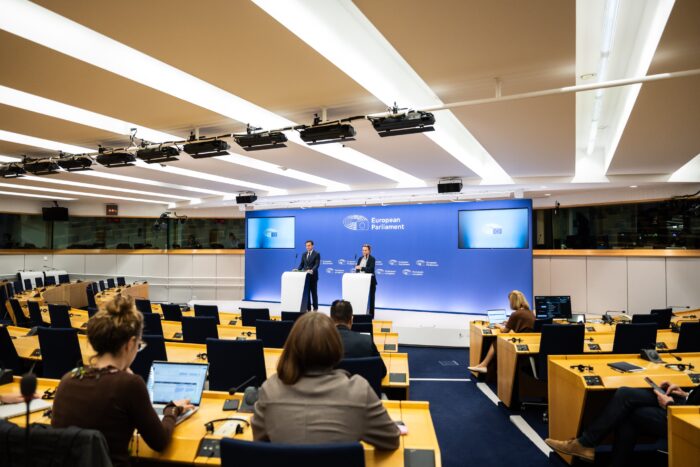
The conclusive event in Brussels, where the research group will present the final report, will take place in the European Parliament.

While AI is expected to deliver considerable benefits, it also creates new challenges and questions linked, for instance, to the future of work. From several points of view, there are many aspects of automation that are still largely unknown and need to be addressed. What sort of policy and institutional frameworks and values should guide AI design and use, as autonomous and self-taught machines become part of our everyday lives? And as AI permeates economies and societies, how can we ensure that it benefits society as a whole? Such questions become increasingly important to address and the European co-operation of all stakeholders is needed more than ever.

Therefore, the round-table event in Brussels will bring together policymakers, national and European parliamentarians, international stakeholders, AI experts from industry and academia, representatives of Socialist parties and of trade unions, to discuss opportunities and challenges of the AI era. It especially aims to give policymakers the tools they need to help their economies and societies prosper in a world that is increasingly digital and data-driven.

During the round-table event we’ll present the final report “Human – Machine: new policies for the future of work and we’ll also have a debate with the expected partecipation of : 

Sergei Stanishev – President, Party of European Socialists

Maria Joao Rodrigues – President, Foundation for European Progressive Studies

Patrizia Toia – Vice-Chair of Industry, Research and Energy Committee

Brando Benifei – MEP, Member of Committee on Employment and Social Affairs

Giacomo Filibeck – Deputy Secretary General, Party of European Socialists

Chiara Gribaud – Head of Labour Department, Italian Democratic Party

Diego Ciulli – Public Policy Manager, Google

David Rinaldi – Senior Economic Policy Advisor, Foundation for European Progressive Studies

Find all related publications
Publications
14/08/2026

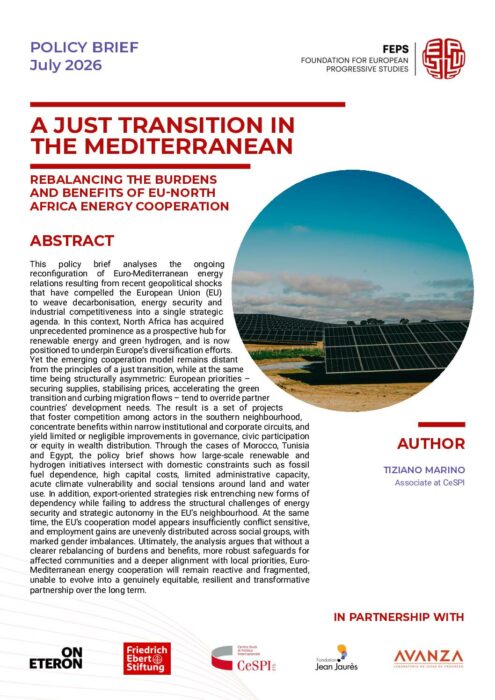
A just transition in the Mediterranean

Rebalancing the burdens and benefits of EU-North Africa energy cooperation
31/07/2026

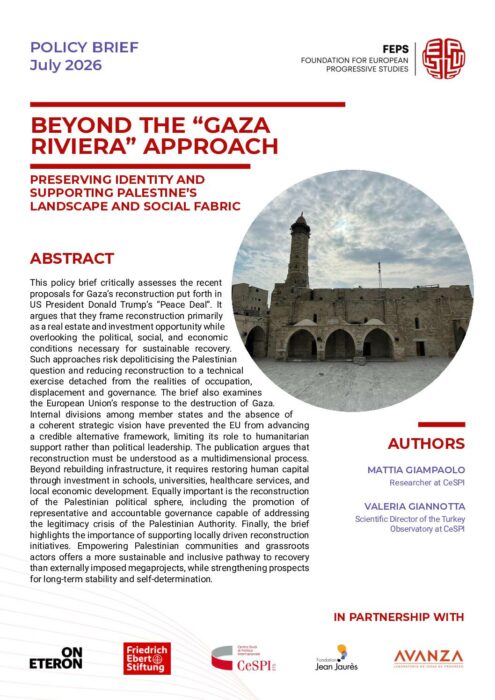
Beyond the “Gaza Riviera” Approach

Preserving identity and supporting Palestine’s landscape and social fabric
22/07/2026

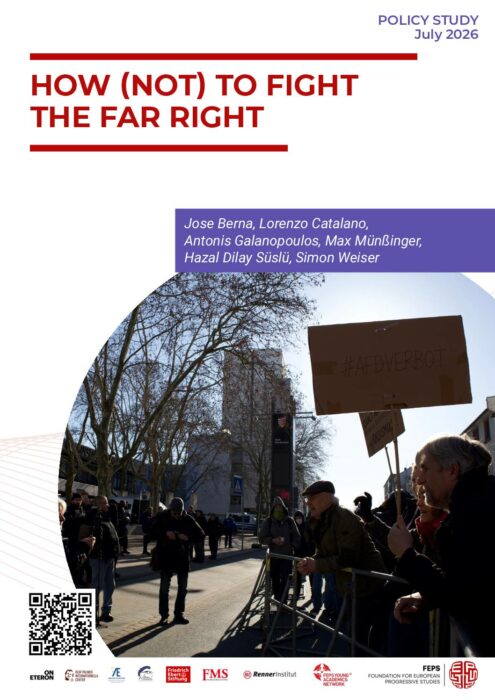
How (not) to fight the far right

FEPS YAN papers 9th cycle
20/07/2026

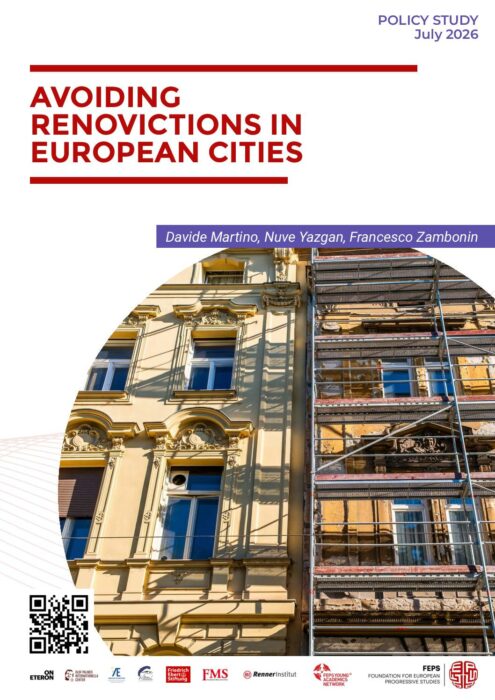
Avoiding renovictions in European cities

FEPS YAN papers 9th cycle
Find all related Progressive Post
Progressive Post

16/07/2026

Good luck! And don’t f**k it up…

Hungary beyond the elections: a fragile chance for LGBTQI+
02/07/2026

A pact: what else?

The entry into force of the EU’s Pact on Migration and Asylum on 12 June […]
02/07/2026

The EU Return Regulation: what lies behind the chants

The new EU ‘deportation bill’ was adopted by the European Parliament amid roaring applause, laughter […]
Find all related Audiovisual
Audiovisual
20/07/2026

‘DON’T let AI take over your capability to THINK and be CREATIVE’ with Katarina Barley

AI continues to remain a priority topic on the political agenda. As the EU leverages […]
20/07/2026

‘DON’T let AI take over your capability to THINK and be CREATIVE’ with Katarina Barley

AI continues to remain a priority topic on the political agenda. As the EU leverages […]
27/06/2026

The POLITICAL dimension of the US FIFA World Cup with Cas Mudde

📺🔊 Available on YouTube, Spotify & Apple Podcast This FIFA World Cup may be the […]
27/06/2026

The POLITICAL dimension of the US FIFA World Cup with Cas Mudde

📺🔊 Available on YouTube, Spotify & Apple Podcast This FIFA World Cup may be the […]
Find all related news
News
23/07/2026

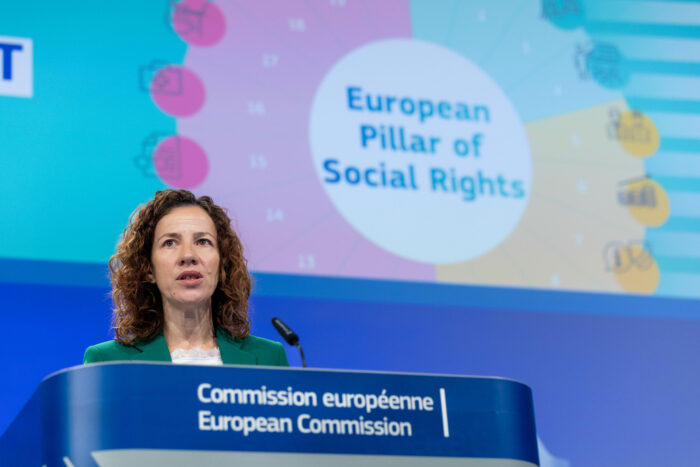
FEPS Reacts: European Commission communication on the Action Plan on the European Pillar of Social Rights

By Laszlo Andor, FEPS Secretary-General & François Balate, Policy Analyst on Social The communication on the […]
08/07/2026

Letter to Manfred Weber, Chair of the EPP Group, by FEPS President Nicolas Schmit 

Dear Mr Weber, You are European, but also German. One should be entitled to expect […]
23/06/2026

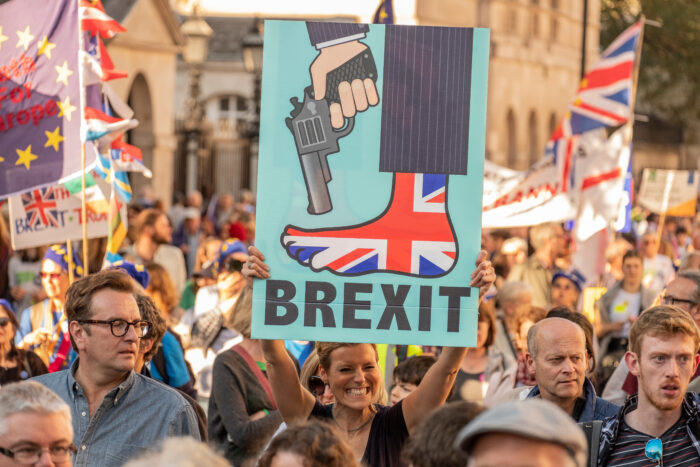
FEPS Reacts: 10 years after Brexit

Written by FEPS Secretary-General László Andor 🔸 Brexit has been a case study in national self-harm. The […]
05/06/2026

Call for a progressive EU enlargement

Friends of the Western Balkans' Joint Statement
Find all related in the media
In the media

Carta a Manfred Weber

by elDiario.es 17/07/2026
"Letter to Manfred Weber". FEPS President Nicolas Schmit wrote to Manfred Letter, leader of the EPP, on the outcome of the Return Relugation, available in Spanish on elDiario.es.

Open letter to Manfred Weber

by Social Europe 13/07/2026
FEPS President Nicolas Schmit's open letter to EPP leader Manfred Weber on the Return Regulation was featured in Social Europe

Elon Musk não existiria na Europa, porque nunca teria recebido tanto dinheiro de um orçamento público como recebeu nos EUA

by Expresso 24/06/2026
FEPS President and former Commissioner Nicolas Schmit explains how social democrats can regain the trust of EU citizens

Diez años del Brexit: la metamorfosis del euroescepticismo

by La Razón 24/06/2026
"Ten years of Brexit: the metamorphosis of Euroscepticism". This article from La Razón mentions FEPS policy brief "Countering the far right in the European Parliament", which examines the growing normalisation of far-right parties within the EP and analyses how their strategy has shifted from rejecting the EU to reshaping it from within.