The Future of the Visegrad Group: Possible Scenarios and Alliances

The first Roundtable in Berlin hosting academics and researchers from the Visegrad countries focused on […]
Speakers

24 - 25/10/2017
00:00:00 - 00:00:00
Rue Montoyer 40, 1000 Brussels Rue Montoyer 40, 1000 Brussels
The Future of the Visegrad Group: Possible Scenarios and Alliances
56245
378-the-future-of-the-visegrad-group-possible-scenarios-and-alliances
0

In order to give you access to our events, FEPS processes your personal data together with any other organiser of this event mentioned in the description of the event and in accordance with 'FEPS’ data protection policy.

The first Roundtable in Berlin hosting academics and researchers from the Visegrad countries focused on mapping the interests within the V4. The. During the European Roundtable with experts and politicians from the Visegrad countries and the EU level in Brussels, possible future scenarios for the V4 group will be sketched and progressive alliances examined. 

The Visegrad Group (V4) was founded in 1991 by the Presidents of the Czechoslovak Republic, Poland, and the Prime Minister of Hungary to overcome historic animosities and succeed in social transformation. Fostering European integration was an ultimate objective, as all four countries always believed in being part of the common European heritage. Today, the Visegrad group plays an active role in the European dialogue, however with different consequences for European integration: its initial Euro-enthusiasm seems to have weakened, the migration challenge has proven that the Visegrad countries are capable of one-cause mobilisation, however there are more and more visible cracks in this alliance. What is the perception of the Visegrad Group at the European level today? What role could it play in the processes of European integration? Are there any chances for progressive alliances in the region?

Check the programme

Find all related publications
Publications
28/08/2026

How can Europe’s missing middle be financed

Translating Chinese lessons for scaling industrial innovation
14/08/2026

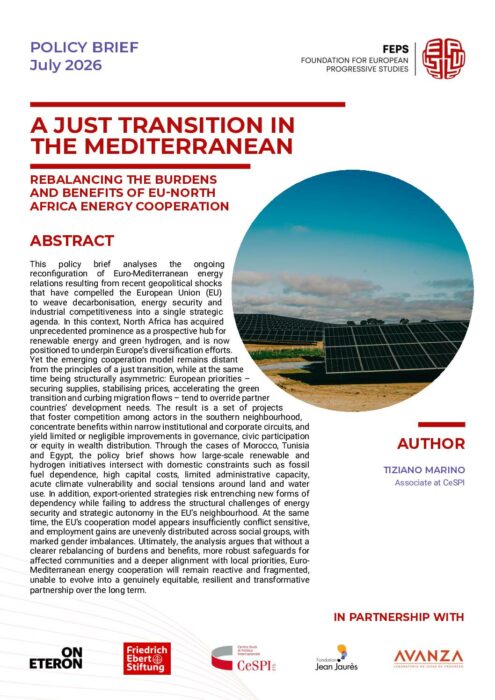
A just transition in the Mediterranean

Rebalancing the burdens and benefits of EU-North Africa energy cooperation
31/07/2026

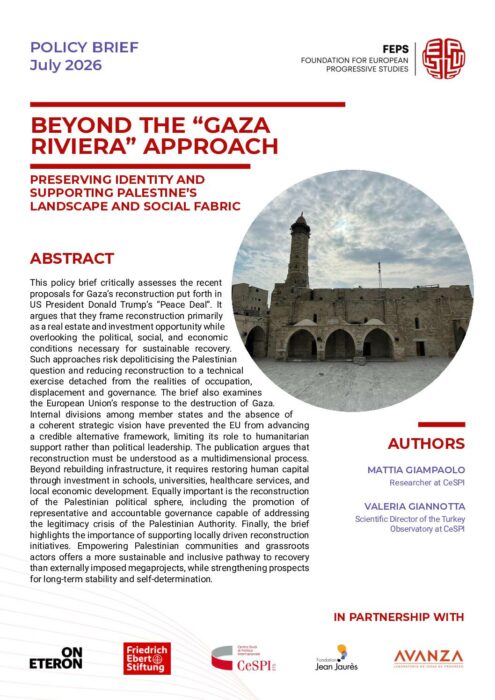
Beyond the “Gaza Riviera” Approach

Preserving identity and supporting Palestine’s landscape and social fabric
22/07/2026

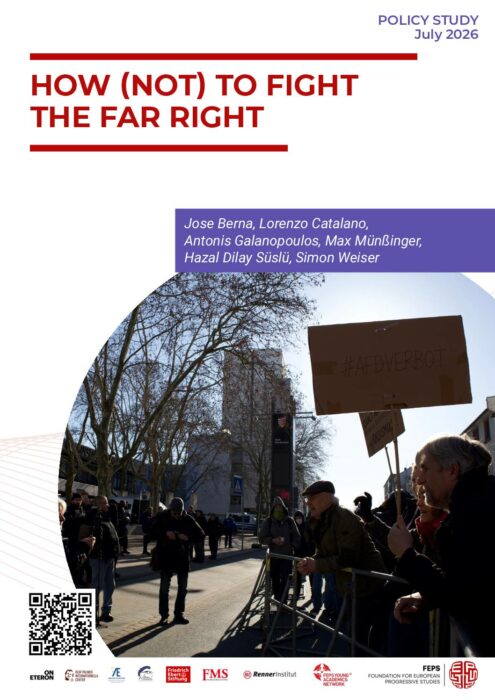
How (not) to fight the far right

FEPS YAN papers 9th cycle
Find all related Progressive Post
Progressive Post
21/09/2026

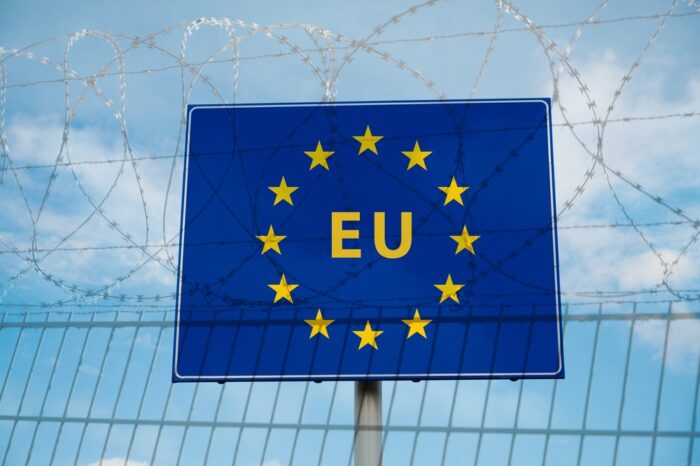
Can a fortress be attractive?

On the migration dimension of this year's State of the European Union speech
18/09/2026

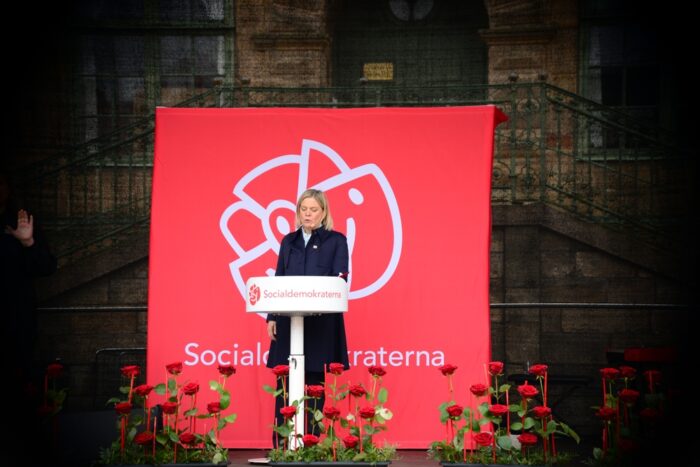
Sweden’s 2026 election: Social Democrats lost the battle but won the war?

In last week’s parliamentary elections in Sweden, the Swedish Social Democratic Party undoubtedly became the […]
18/09/2026

A State of the Union bereft of coherence and clarity

The State of the Union is a very special exercise for the president of the […]
Find all related Audiovisual
Audiovisual
21/09/2026

“Security policy? That’s NATO’s job – former EU Commissioners assess Ursula von der Leyen’s speech”

Biztonságpolitika? Az a NATO dolga – EU-s biztosok értékelték Ursula von der Leyen beszédét Article […]
28/08/2026

Translating Chinese lessons for scaling EU industrial innovation with Cornel Ban

Europe is good at creating new technologies and innovative ideas, but too often European companies […]
28/08/2026

Translating Chinese lessons for scaling EU industrial innovation with Cornel Ban

Europe is good at creating new technologies and innovative ideas, but too often European companies […]
20/07/2026

‘DON’T let AI take over your capability to THINK and be CREATIVE’ with Katarina Barley

AI continues to remain a priority topic on the political agenda. As the EU leverages […]
Find all related news
News
16/09/2026

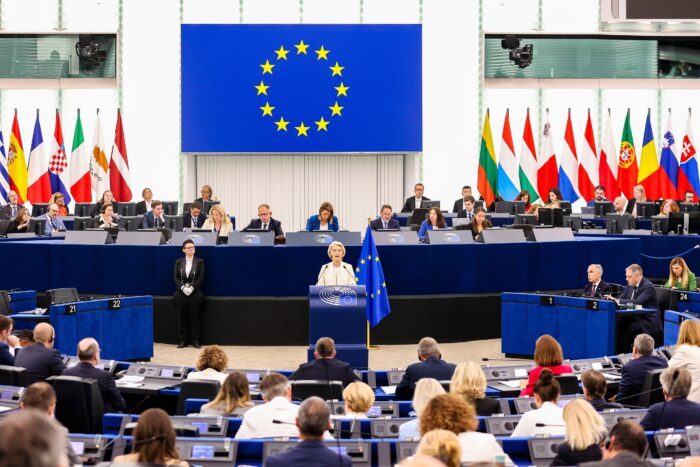
FEPS Reacts: State of the European Union 2026

The 2026 State of the Union felt more like ‘von der Leyen I’ than ‘von […]
23/07/2026

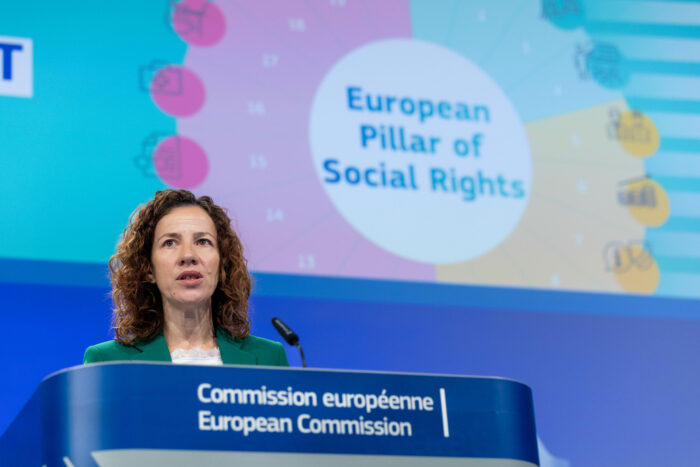
FEPS Reacts: European Commission communication on the Action Plan on the European Pillar of Social Rights

By Laszlo Andor, FEPS Secretary-General & François Balate, Policy Analyst on Social The communication on the […]
08/07/2026

Letter to Manfred Weber, Chair of the EPP Group, by FEPS President Nicolas Schmit 

Dear Mr Weber, You are European, but also German. One should be entitled to expect […]
23/06/2026

FEPS Reacts: 10 years after Brexit

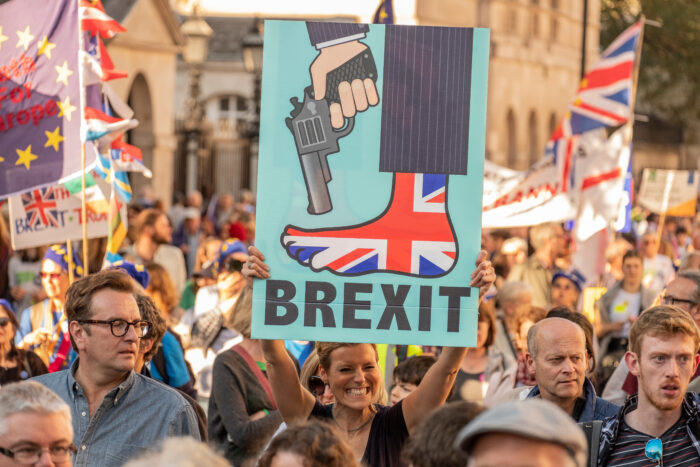
Written by FEPS Secretary-General László Andor 🔸 Brexit has been a case study in national self-harm. The […]
Find all related in the media
In the media

Канадскиот гамбит на Фон дер Лајен

by Racin.mk 21/09/2026
“Von der Leyen’s Canadian gambit” Opinion article by László Andor, FEPS Secretary General, published in Racin.mk (MK), analysing the EU’s growing rapprochement with Canada, the shift from geopolitics towards geoeconomics, and the need for Europe to reduce its dependence on the US while strengthening multilateralism. Andor also examines the Commission’s economic and social priorities, highlighting the need for stronger attention to living costs, labour and social policy.

Biztonságpolitika? Az a NATO dolga – EU-s biztosok értékelték Ursula von der Leyen beszédét

by Telex 21/09/2026
“Security policy? That’s NATO’s job – former EU Commissioners assess Ursula von der Leyen’s speech”. Article published in Telex (HU), featuring László Andor, FEPS Secretary General, analysing Ursula von der Leyen’s State of the Union address and discussing Europe’s economic competitiveness, investment gap, strategic vulnerabilities, AI, migration and the EU’s changing geopolitical position.

EU’s new cross‑border work rules favour recruitment, not workers, say critics

by EUObserver 16/09/2026
FEPS Policy Analyst on Social François Balate discusses the latest EU Labour Mobility Package under Commissioner Roxana Mînzatu zatu for the EUObserver.

Andor László: A szabadkereskedelem vége és a gazdasági hadviselés korszaka

by Portfolio 11/09/2026
"The end of free trade and the era of economic warfare" Read this article by FEPS Secretary General László Andor on the far-reaching repercussions from the terrorist attack on the twin towers of the World Trade Centre in New York, notably for the international economy.