
Policy Study
23/10/2026
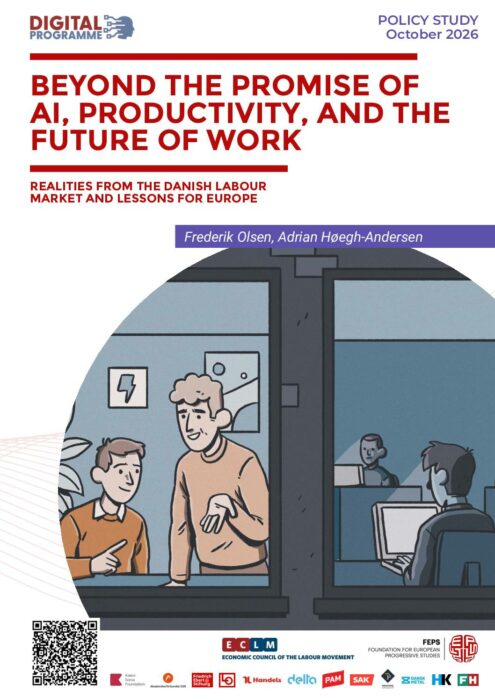
Artificial intelligence (AI) is spreading rapidly across European workplaces, but will it deliver the productivity gains that policymakers and businesses expect and crucially, will workers benefit?
This policy study examines the impact of AI on the Danish labour market, where workplace AI adoption is the highest in the EU. Denmark provides an important early case for understanding how AI can reshape work in a highly digitalised economy built on the Nordic model of industrial relations.
The study finds that AI has clear potential to raise productivity, particularly in knowledge-intensive tasks, but that these gains are likely to materialise gradually. Using various economic analyses, the study shows that there is no robust evidence of significant effects on wages, employment or working hours. At the same time, AI adoption is unevenly distributed, with younger, more highly educated and higher-earning workers more likely to use AI at work, raising concerns about widening existing inequalities.
The study argues that Europe should focus not simply on faster AI adoption, but on better adoption. Investments in digital infrastructure and innovation must be matched by lifelong learning, active labour-market policies, worker involvement, collective bargaining and social dialogue. It reiterates a key message: a pro-worker approach to AI is not a barrier to productivity and competitiveness, it is a precondition for achieving them.
This publication was launched at the FEPS-Nordic Digital Programme closing conference in Stockholm.
This policy study is part of the FEPS–Nordic Digital Programme, a collaborative research and policy initiative led by the Foundation for European Progressive Studies (FEPS) in cooperation with Nordic think tanks and trade unions.
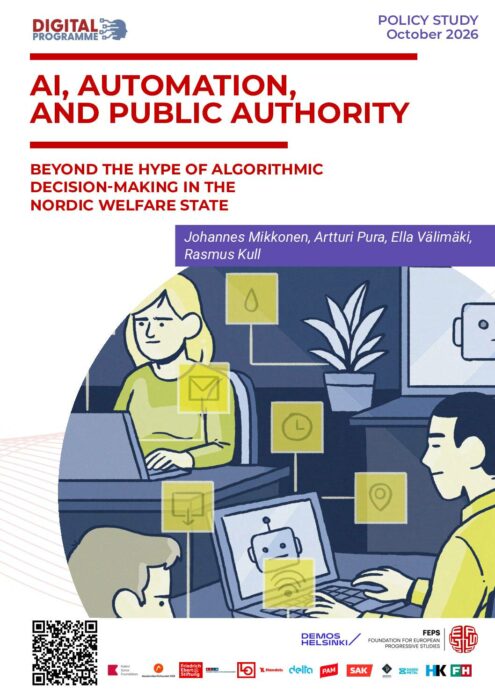
In 2025-2026, the programme has continued to focus on AM at the workplace, but also examined the impact of AI on decision-making, the public sector and worker productivity, empowering workers and shaping a fairer digital future.
Network











Related events
Find all related publications
Publications
Find all related Progressive Post
Progressive Post



Find all related events
Events
No upcoming events at the moment.



Find all related Audiovisual
Audiovisual
20/07/2026
20/07/2026