FEPS Reacts: The new EU Framework for Climate Resilience

Necessary foundations but little action

30/10/2026

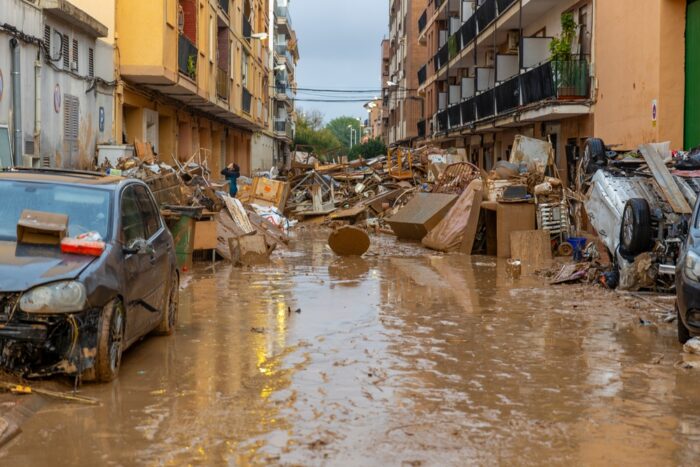
While some may have been surprised by the disastrous consequences of climate hazards over the summer, the state of climate adaptation in the EU has been well-known for a while (see numerous reports from the European Environmental Agency, the European Court of Auditors and civil society organisations). The “summer of truth”, expression used by the Commission to designate the 2026 summer, may aggravate more than one scientist, who have warned decision-makers of the consequences of climate change and the need for adaptation for decades. Earlier this year, the conclusions from the European Scientific Advisory Board on Climate Change were crystal clear: current adaptation actions are “insufficient to prevent avoidable impacts and to manage escalating climate risks”. A new resilience framework was therefore a vital but complex task to fulfil for DG CLIMA, considering the diversity and breadth of policies needed and the current lukewarm, if not chilly, political atmosphere surrounding climate action.

The Communication on the EU Framework for Climate Resilience, published on October 26, proposes a European Climate Resilience Law that sets a common objective to “continuously enhance the climate resilience of social, economic and ecological systems to short-, medium- and long-term climate risks”, with a reference global warming trajectory of 3°C by 2100, climate risk assessments at both EU and national levels, a Union strategic plan on climate resilience and national strategic plans on climate resilience. The Communication also proposes a series of “enabling measures” to support resilience and adaptation and commits to developing different sectoral initiatives, mainstreaming a resilience approach in all policies and preparing a Union strategic plan on climate resilience. As expected in the context of tense MFF negotiations, the Communication highlights investment needs of EUR 70 billion per year to close the adaptation gap but does not propose dedicated funding.

Here are a few key takeaways from the Commission’s Communication and Climate Resilience Law Proposal:

The systematic use of a common global warming scenario was one of the recommendations of the European Scientific Advisory Board on Climate Change.

2. Mandatory EU and national climate risk assessments to be carried out every 5 years

This was also a recommendation from the Advisory Board. Although Annexes II and III of the Law provide indications on the content of the risk assessments, a more detailed methodology would be useful to further harmonise risk assessments and ensure their quality.  

3. Regrouping disparate adaptation planning/reporting duties under one national strategic plan on climate resilience, with the participation of subnational levels

This simplification is a positive development considering the unnecessary dispersal of adaptation information through different plans and strategies. However, the weaknesses of adaptation reporting identified by the European Court of Auditors, as being mainly descriptive and lacking quantified assessments, are not clearly addressed. Attention should also be paid to coherence with other planning tools and strategies, to avoid policies cancelling each other out. National strategic plans must become efficient planning and reporting tools, that allow for monitoring, evaluation and learning and improve the accountability of governments on adaptation efforts.  

4. Highlighting the interactions between climate resilience and socio-economic conditions through the reference to the Anti-Poverty Strategy and the obligations of employers

Addressing the underlying social drivers of climate risks and protecting workers from extreme weather events and heat are two essential elements to enhance resilience for all citizens, especially for vulnerable groups and regions.

5. Promoting nature-based solutions

In addition to reducing climate change impacts and supporting climate mitigation, nature-based adaptations often provide a plethora of wider economic, environmental, social and health benefits. Now that the priority is set on paper, concrete policies are needed to foster NbS and respect nature restoration engagements.    

  1. Little to no concrete initiatives to address the lack of implementation of adaptation policies

The lack of implementation at national and subnational levels and of quantifiable progress is a key weakness across the EU. Supporting regional and local authorities, the levels at which many adaptation policies need to be implemented, is tricky but essential. The Communication and Law Proposal do not seem to provide clear actions to address this issue. While the proposed online tools and platforms may be useful, further guidance and capacity building for local authorities is needed. 

2. A 20th-century definition of climate resilience, with the aim to withstand disturbances without seeking to address the dynamics that produce risks

The concept of resilience has greatly evolved throughout the last decades. The original definition of returning to a normal situation after disturbances has evolved to include reflections on what a “normal” situation is and what transformations are needed to reduce risks. Real and long-lasting resilience cannot be achieved if the dynamics that produce climate change and climate risks are not transformed.

3. An insufficient focus on prevention

Prevention is only mentioned in the context of “promoting insurance instruments that incentivise prevention”. However, much more can be done to prevent risks from arising, rather than bearing the costs and consequences of managing and recovering from realised risks.  

4. A narrow understanding of justice, reduced to “taking into account” vulnerable groups and regions when developing policies

Promoting justice and equity goes beyond “taking into account” some people and requires adopting a human rights approach. A “just resilience by design” principle must preserve the ecological conditions that make dignified life possible for all its citizens, present and future.

5. An incomplete accountability framework

The Resilience Framework does not propose adaptation targets, although they are key to define a clear vision for a climate-proof future, to guide policies and allow for tangible progress assessments. The four EU resilience indicators proposed, while useful, mostly focus on economic losses; a few additional indicators of the social dimensions of resilience would reinforce the Framework. Proposing democratic processes to define what are “tolerable” levels of residual risk would also be a key step to ensure accountability. Finally, the Framework provides limited considerations on risk ownership, only addressing “policy risk owners”. A more precise approach should be adopted to integrate the private sector and households and define responsibilities throughout the risk management / adaptation cycle.

To learn more about the challenges and solutions for a just resilience in Europe, stay tuned for our upcoming study and recommendations by Céline Charveriat.

Commentary by Chloe Deffet, Climate Policy Analyst, with input from Celine Charveriat.

Photo credits: © EEA, 2024. European Climate Risk Assessment.  

Find all related publications
Publications
21/10/2026

The role of technological neutrality in EU climate policymaking

Assessment and alternatives for strategic policies
06/10/2026

Taking the temperature of the EU’s clean industry strategy

Competitiveness and resilience of heat pumps
20/07/2026

A toolkit for countering climate misinformation

FEPS YAN papers 9th cycle
03/07/2026

Renewing European progressive leadership in climate, energy and industry

Europe is living through a time of constant disruption: geopolitical and economic shocks, a cost-of-living […]
Find all related Progressive Post
Progressive Post
18/09/2026

A State of the Union bereft of coherence and clarity

The State of the Union is a very special exercise for the president of the […]
22/04/2026

The European Green Deal was under siege in 2025, but it is still standing

2025 was a hard year for the European Green Deal, with far more steps backwards […]
24/03/2026

The adaptation deal

Who pays for European resilience?
Find all related events
Events
02 DEC 2026

Silver Rose Awards 2026

Brussels, Belgium
Find all related news
News
16/09/2026

FEPS Reacts: State of the European Union 2026

The 2026 State of the Union felt more like ‘von der Leyen I’ than ‘von […]
27/11/2025

Is a bad COP outcome better than no outcome at all?

FEPS Commentary on COP30
10/09/2025

Von der Leyen – walking the walk at last?

FEPS reaction to The State of the European Union 2025
26/02/2025

FEPS reaction to the European Commission’s Clean Industrial Deal

What Teresa Ribera presented today is an ambitious plan that makes the case for Europe […]
Find all related in the media
In the media

COP climate talks not fit for purpose and need reform, say climate leaders

by Reuters 15/11/2024
Read this Reuters article about the open letter calling for a comprehensive reform of the climate conferences, with Maria João Rodrigues, FEPS President, among the signatories

Las COP ya “no sirven” y deben ser reformadas, claman expertos en política climática

by La Vanguardia 15/11/2024
"COPs are “no longer useful” and in need of reform, say climate policy experts" Read this article of La Vanguardia about an open letter sent to Simon Stiell, Executive Secretary of the UN Framework Convention on Climate Change, calling for a comprehensive reform of the climate conferences. Maria João Rodrigues, FEPS President, is among the signatories.

Ласло Андор: Европа трябва да създаде нов модел за икономически растеж

by dir.bg 14/03/2024
'Europe must create a new model for economic growth'. Interview by Laszlo Andor, FEPS Secretary General

Цената на прехода – зелен, дигитален и демографски

by BNT 13/03/2024
'The cost of transition - green, digital and demographic' BNT Interview with László Andor about the three major transformations the world is facing.