
17 - 18/04/2026
Barcelona, Spain
Fira Barcelona Gran Via - Carrer dels Alts Forns, 14, Sants-Montjuïc, 08038
English version of the agenda
(Spanish version of the agenda available below)
The first Global Progressive Mobilisation (GPM) meeting took place in Barcelona, Spain, bringing together political leaders, activists, thinkers and representatives of progressive parties and movements from all continents.
Conceived as an open political process, the GPM offered a common space where all participants engage as equal partners, across regions, movements and generations, united by a clear commitment to democracy, the rule of law, social justice, tackling climate change and international cooperation.
Born from an idea developed during the PES Congress in Amsterdam by PES President Stefan Löfven, Spanish Prime Minister Pedro Sánchez and the President of Brazil, Lula da Silva, the Global Progressive Mobilisation was a moment of collective construction which fostered common reflection and coordinated action on key challenges of our time – from peace and international law to the defence of democracy and fundamental rights, from a just green and digital transition to fair economic governance and humane migration policies.
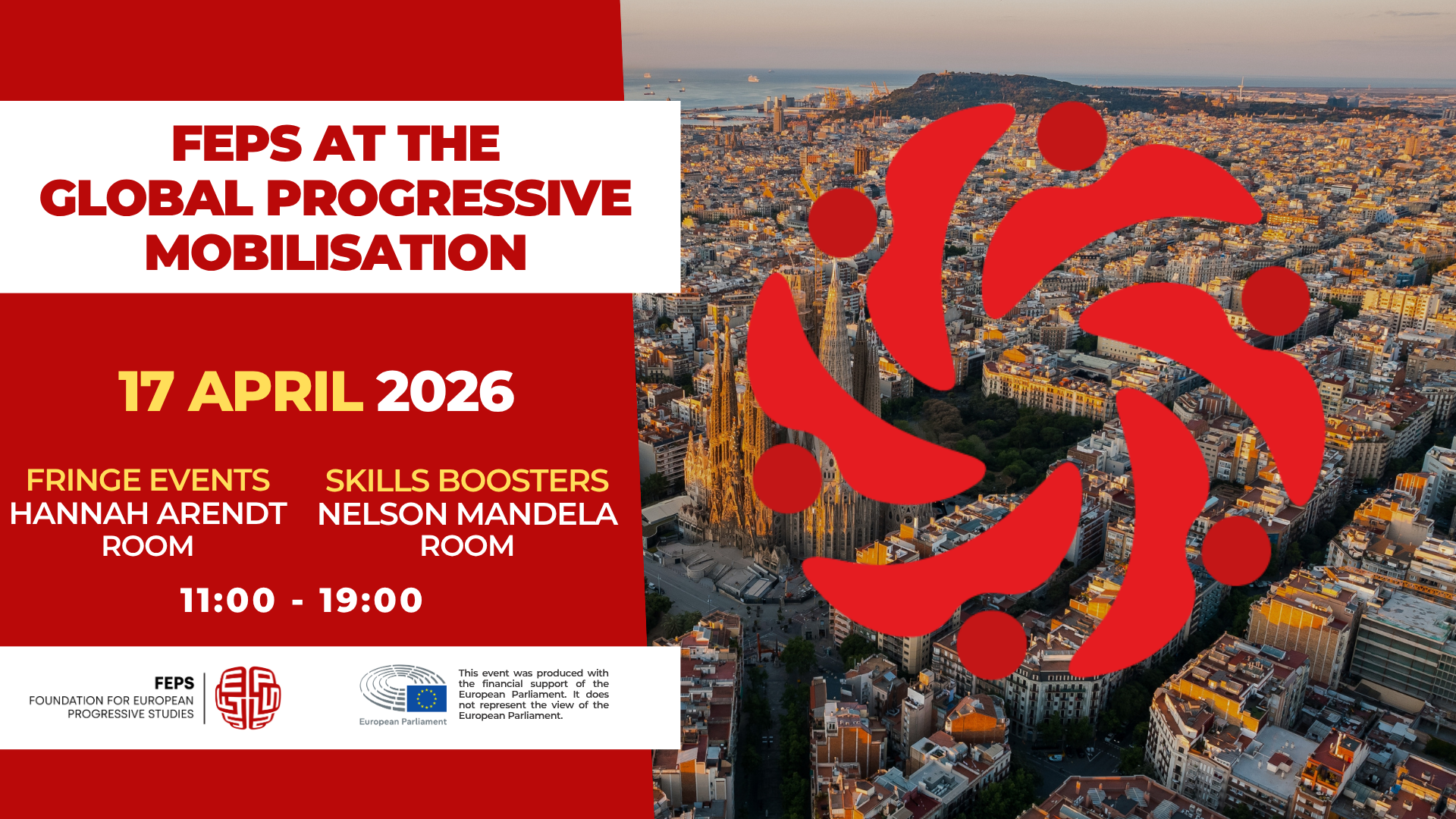
FEPS took part in the conference with a series of fringe events in the Hannah Arendt room with live translation into Spanish!
11:00 – 12:00 Gender, politics, and the understanding of equality among Generation Z with Friedrich-Ebert-Stiftung Madrid and Friedrich-Ebert-Stiftung Vienna
Young men are moving right, young women are moving left. This is a familiar claim in emerging academic analysis and media narratives about Generation Z’s political attitudes and voting behaviour. During the Global Progressive Mobilisation, this FEPS event takes that assumption as a starting point for a discussion of what actually holds up, what doesn’t, and why, when it comes to Gen Z’s “gender divide”.
Presenting an analysis of recent European Social Survey data, alongside detailed insights from 17 focus groups with young people in five countries (Germany, Greece, Poland, Spain, Sweden), the FEPS-led Project EqualiZe added nuance to the discussion. The project’s findings show clear gender differences in some domains (notably left–right orientation and attitudes to gender equality), but far less divergence in others (including migration and general views on democracy). Building on these findings, and in conversation with participants, the side event explored how young people themselves make sense of these differences, and what may help explain them.
It also engaged a crucial question: how should progressives frame gender equality and feminism when speaking with younger generations, not only in Europe, but beyond, and what does this mean for strengthening democratic trust and participation across genders? For this critical debate, the event brought together EqualiZe researchers, leading policymakers working on gender equality and young progressive activists.
With:
- Gefjon Off, Postdoctoral Researcher, University of Hamburg (co-author of FEPS Policy study)
- Elena Avramovska, Senior Researcher for Democracy, Society and Youth, Friedrich Ebert Foundation (editor of FEPS Policy Study)
- Irja Vaateri, Secretary General of Young European Socialists (YES)
- Lina Gálvez Muñoz, S&D Member of the European Parliament; Chair, Committee on Women’s Rights and Gender Equality (FEMM); Chair of the FEPS Scientific Council
- Philipp Türmer, Federal Chair of the Young Socialists (Jusos) in the SPD
Moderated by Matteo Dressler, FEPS Policy Analyst on Democracy and Participation
12:00 – 13:00 A new moonshot: Rethinking prosperity for people with Global Progress Foundation
- Opening by FEPS President Nicolas Schmit
- Conversation between Teresa Ribera, Executive Vice-President of the European Commission for a Clean, Just and Competitive Transition, FEPS Progressive Person of the Year 2023-2024, and Mariana Mazzucato, Professor at University College London, Founding Director of the UCL Institute for Innovation and Public Purpose. Author of Mission Economy: a moonshot guide to changing capitalism, and the forthcoming The Common Good Economy: a new compass. FEPS Progressive Person of the Year 2025-2026.
- Closing remarks from FEPS Secretary General László Andor
13:00 – 14:00 Digital minimum age: The ban and beyond
Considering initiatives announced in Australia, Denmark, Spain, Germany and France to introduce a minimum digital age for social media, the discussion should move beyond the binary question of “ban or not to ban”. It should instead explore which supporting measures are needed, while anticipating the unintended consequences of minimum age laws, such as exclusion, privacy risks, regulatory fragmentation, and, most crucially, democratic engagement.
Progressive should articulate a coherent, long-term vision for how we want our children to mature into a society where they can engage in mature discussions in democratic and digital spaces.
Critically, the debate must address how to avoid alienating young people at a time when progressives need to expand their electorate: how do we communicate with them when they have limited access to online spaces, and how do we ensure they don’t fall into the same algorithmic traps once they reach the minimum digital age? Any regulatory response must be connected to platform accountability, algorithmic transparency and accessible online and offline spaces for young people to socialise.
With:
- Laura Ballarín Cereza, S&D MEP; Chair and member, IMCO Committee; former FEPS YAN.
- Katarina Barley, S&D MEP, Vice-President, European Parliament; member of IMCO Committee; Rapporteur for the LIBE opinion on the report “Impact of social media and the online environment on young people”
- Matthias Pfeffer, Journalist, author and advisor; Founder of PfefferMedia and the Council for European Public Space; co-author of the book ‘The open future and its enemies”
Moderated by Monty Aal, FEPS Policy Analyst on Digital and Aoife Maguire, FEPS Communication Officer
14:00 – 15:00 Renewing progressive leadership in climate and industry with Friedrich-Ebert-Stiftung Just Climate and SOLIDAR
Europe and the world as a whole are entering a critical phase in the fight against climate change and biodiversity loss. Progress in limiting emissions and deploying renewable energies is happening, but it needs to be accelerated. However, the economy and industries are struggling to decarbonise within a very challenging geo-economic context.
Simultaneously, conservative and populist forces, influenced by powerful lobbies defending entrenched economic interests, are pushing back against climate and environmental policies under the pretence of competitiveness and simplification. Increasing political polarisation and international geopolitical tensions weaken trust and hinder cooperation.
In this difficult context, progressive actors need to move from a reactive stance to a proactive strategy. It is time to develop a renewed and inspiring eco-social leadership that weaves climate action, social protection and economic prosperity into a forward-looking vision. How can we achieve this? The session explored the different forms of leadership that can reinvigorate the progressives’ climate engagement and rebuild trust with citizens and workers.
With:
- Mariana Mazzucato, Professor at University College London, Founding Director of the UCL Institute for Innovation and Public Purpose. Author of Mission Economy: a moonshot guide to changing capitalism, and the forthcoming The Common Good Economy: a new compass. FEPS Progressive Person of the Year 2025-2026.
- Manon Dufour, Executive Director, E3G Brussels Office
- Mikael Leyi, Secretary General, Solidar
Moderated by Chloé Deffet, FEPS Policy Analyst on Climate and Environment and Stephan Thalhofer, Policy Advisor, FES Just Climate Competence Centre.
15:00 – 16:00 Progressive action and multilateralism in a fragmented world: EU-Latin America relations in times of disruption
The international order is facing profound uncertainty. Rising protectionism, democratic backsliding, blatant disregard of the international rules-based order, and the erosion of multilateral frameworks are reshaping global politics. The second Trump administration has accelerated these trends (through the revival of the Monroe Doctrine), strained alliances and challenged the foundations of a rules-based global system.
In this context, cooperation between the European Union and Latin America is more vital than ever. Beyond the risks, the GPM presented an opportunity to strengthen progressive alliances and renew multilateralism. How can both regions deepen trade ties while ensuring fairness and sustainability? How can they effectively mobilise global action for a reformed and revitalised rules-based multilateral order? Can EU-Latin American cooperation lead in setting ambitious climate policies and shaping inclusive, transparent digital governance?
With:
- Leire Pajín, S&D Member of the European Parliament; Vice-Chair of the Delegation to the Euro-Latin American Parliamentary Assembly (ES)
- Axel Kicillof, Governor of Buenos Aires Province; Former Minister of Economy of Argentina (2013-2015) (AR)
- Pedro Silva Pereira, Member of FEPS Scientific Council; Vice-President of the European Parliament (2019-2024); S&D Member of the European Parliament (2014-2024) (PT)
- Aloizio Mercadante, President of BNDES; Former Minister of Education of Brazil (2015-2016); Former Minister of Science and Technology of Brazil (2011-2012) (BR)
- Nathalie Tocci, Director of Instituto Affari Internazionali (IAI); Professor, John Hopkins University SAIS; Senior Fellow, Institute for European Policymaking, University of Bocconi (IT)
- Pablo Monroy Conesa, Diplomat; Director General for South America, Ministry of Foreign Affairs of Mexico (MX)
Hosted by Thainá Leite, FEPS Project Management Coordinator and Beatriz Abellán, FEPS Policy Analyst on International Relations
16:00 – 17:00 Next Left: navigating through the grand unravelling and beyond with Karl-Renner-Institut and the support of Rafael Campalans Foundation
In contemporary reality, democratic politics and parties often find themselves in a position where they feel compelled to protect, defend and react. And yet, when they do, they are often perceived as too distant or reacting too late.
This workshop examined trends in societies amid the grand unravelling, disruptions, and wars across two dimensions: socio-economic and international. We explored what they reveal and what the centre-left can learn from them as they forge their own path in the short- and mid-term. In such a context of confrontation and destabilisation, is there a space for renewed social democracy to persevere and thrive?
With:
- Andreas Schieder, MEP (S&D), Head of the Austrian SPÖ-EU-Delegation, Chair Next Left Research Programme
- Hana Jalloul, MEP (S&D), Secretary, International Policy and Development Cooperation of the Spanish Socialist Workers’ Party (PSOE); Vice-President, Socialist International
- Kata Tüttő, President, European Committee of the Regions
- Paul Magnette, President, Socialist Party, Belgium; Former Mayor of Charleroi
- Kaisa Vatanen, Vice-President, FEPS; Chief Client Officer, Datapraxis
- Alberto Bondesio Martínez, MP (PSC), Parliament of Catalonia
- João Martis Pereira, President, Young European Socialists
- Esther-Mirjam Sent, Chair, PvdA; Professor, Radboud University
- Chiara Braga, President of the PD parliamentary group in the Italian parliament
- Christophe Clergeau, Vice-President of the S&D Group
- Matthias Ecke, MEP of the S&D Group
Moderated by Ania Skrzypek, FEPS Director for Research and Training
16:00 – 17:00 Reclaiming the progressive narrative on migration with the Party of European Socialists (PES) in the Anna Lindh room
Progressives must reshape the migration debate with confidence and ambition. Today, there is a clear political divide. On the one hand, the far-right is driving a fear-driven public discussion and shifting to increasingly aggressive language and policies. On the other hand, progressives promote a pragmatic approach that is based on rights and values, on responsibility and fairness.
Across the world, attempts to normalise punitive and exclusionary approaches to migration are increasing. The hardline anti-migration practices pursued by many right-wing governments around the world are also eroding long-standing taboos and human rights-focused approaches in Europe, making progressive leadership more necessary than ever.
This comes in sharp contrast to the progressive approach. The evidence is clear: inclusive, rights-based migration and integration policies work. By highlighting successful models of inclusion, recognising migrants’ economic and social contributions, and reaffirming the universal values of human rights and equality, progressives – including the current Spanish government – can reclaim the narrative and present a forward-looking vision grounded in solidarity, opportunity, and empowerment.
This panel explored how progressives can reclaim the narrative and build public confidence in inclusive policies that reflect the diverse and dynamic societies we are building.
With
- Elma Saiz Delgado, Minister for Inclusion, Social Security and Migration of Spain
- Anna Terrón Cusí, Senior Fellow at Migration Policy Institute, former Secretary of State for Immigration and Emigration of the Government of Spain (2010-2012), and member of the Progressive Migration Group (PMG)
- Ana Catarina Mendes, MEP and Chair of the PES Migration and Integration Network, Portugal
- Aina Calvo Sastre, Secretary of State for Security of the Government of Spain
- Philippe Close, Mayor of Brussels, PS Belgium
- Lisa Pelling, Director of Arena Idé and member of the FEPS Scientific Council, Sweden
- Ferruccio Pastore, Director of FIERI and member of the PMG
Hosted by Hedwig Giusto, FEPS Head of the International Programmes and Editor in Chief of the Progressive Post
Skill boosters with Foundation Max Van der Stoel and Karl-Renner-Institut in the Nelson Mandela room
Three training sessions took place at the fringe of the GPM, with training manuals available to participants, on topics including:
- 11:00-12:00 How to talk about politics… with ordinary people?
- 13:00-14:00 Beyond the echo chambers: Building alliances for progressive change
- 18:00-19:00 Mind the movement: Practical tools for activists’ mental health
Those workshops were your opportunity to sharpen your political toolkit in just 45 minutes! These fast-paced, hands-on sessions gave participants everything they needed to train in three crucial skills for our movement’s present and future. Skill Boosters energised the message, strengthened the impact and helped turn progressive ideas into real change.
Versión de la Agenda en Castellano
La primera reunión de la Global Progressive Mobilisation (GPM) tendrá lugar en Barcelona, y reunirá a líderes políticos, activistas, pensadores y representantes de partidos y movimientos progresistas de todos los continentes.
Concebida como un proceso político abierto, GPM ofrece un espacio común en el que todos los participantes colaboran como socios en pie de igualdad, más allá de las regiones, los movimientos y las generaciones, unidos por un claro compromiso con la democracia, el Estado de derecho, la justicia social, la lucha contra el cambio climático y la cooperación internacional.
Nacida de una idea desarrollada durante el Congreso del PSE en Ámsterdam por el presidente del PSE, Stefan Löfven, el presidente del Gobierno español, Pedro Sánchez, y el presidente de Brasil, Lula da Silva, la Movilización Progresista Global será un momento de construcción colectiva que fomentará la reflexión común y la acción coordinada sobre los retos clave de nuestro tiempo: desde la paz y el derecho internacional hasta la defensa de la democracia y los derechos fundamentales. Desde una transición verde y digital justa hasta una gobernanza económica equitativa y unas políticas migratorias humanas.
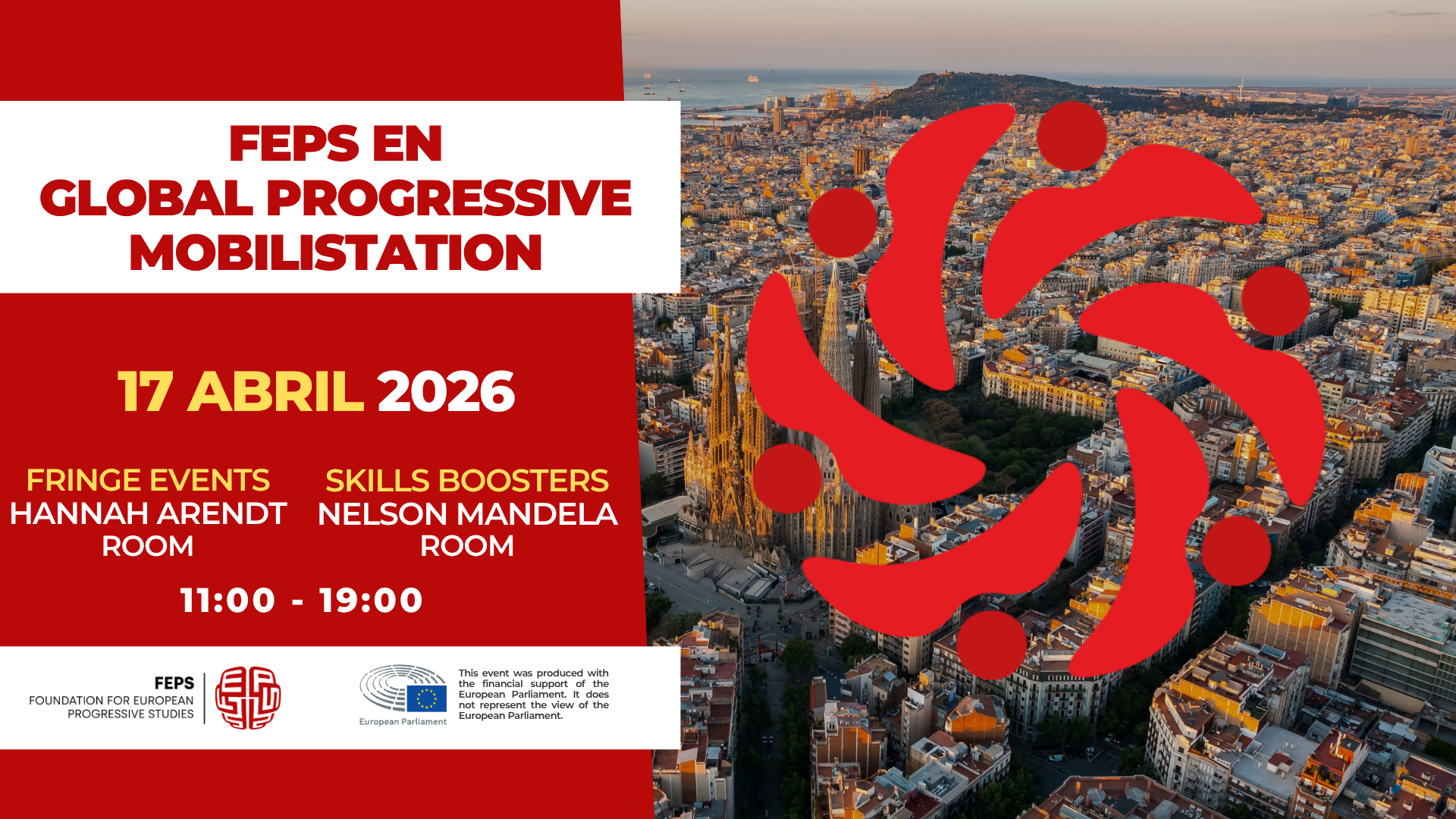
FEPS participará en la conferencia con una serie de actos paralelos en la sala Hannah Arendt y en la sala Anna Lindh:
11:00 – 12:00 Género, política y comprensión de la igualdad entre la Generación Z, con la Fundación Friedrich Ebert de Madrid y la Fundación Friedrich Ebert de Viena
En esta sesión se debatirá la conocida afirmación de que los hombres jóvenes se están desplazando hacia la derecha, mientras que las mujeres jóvenes lo hacen hacia la izquierda. A partir de los nuevos datos de la Encuesta Social Europea y de los resultados de grupos focales de cinco países, obtenidos a través del proyecto EqualiZe liderado por FEPS, se pondrá de relieve dónde existen diferencias de género reales y dónde no.
Además, basándose en los resultados del proyecto, reunirá a investigadores, responsables políticos y activistas para debatir sobre cómo se debería enfocar desde el progresismo la igualdad de género para las generaciones más jóvenes, con el objetivo de reforzar la participación democrática entre todos los géneros.
Con:
- Gefjon Off, investigador postdoctoral, Universidad de Hamburgo (coautor del estudio publicado por FEPS)
- Elena Avramovska, investigadora sénior en democracia, sociedad y juventud, Fundación Friedrich Ebert (editora del estudio publicado por FEPS)
- Irja Vaateri, secretaria general de las Juventudes Socialistas de Europa (YES)
- Lina Gálvez Muñoz, diputada del S&D en el Parlamento Europeo; presidenta de la Comisión de Derechos de la Mujer e Igualdad de Género (FEMM); presidenta del Consejo Científico de FEPS.
Moderated by Matteo Dressler, FEPS Policy Analyst on Democracy and Participation
12:00 – 13:00 Un nuevo gran desafío: repensar la prosperidad para la gente
- Apertura a cargo de Nicolas Schmit, presidente de FEPS.
- Conversación entre Teresa Ribera, vicepresidenta ejecutiva para una transición limpia, justa y competitiva de la Comisión Europea, y Mariana Mazzucato, ‘Personalidad Progresista del Año’ de FEPS, profesora en University College London , directora y fundadora del Instituto UCL para la Innovación y el Propósito Público.
- Cierre del secretario general de FEPS, László Andor
13:00 – 14:00 Edad mínima para el uso de las redes sociales: la prohibición y más allá
Teniendo en cuenta las iniciativas anunciadas en Australia, Dinamarca, España, Alemania y Francia para introducir una edad mínima para el uso de las redes sociales, el debate debería ir más allá de la disyuntiva binaria de «prohibir o no prohibir». En su lugar, debería explorar qué medidas de apoyo son necesarias, al tiempo que se anticipan las consecuencias no deseadas de las leyes de edad mínima, como la exclusión, los riesgos para la privacidad, la fragmentación normativa y, lo que es más importante, la participación democrática.
Los progresistas deberían articular una visión coherente y a largo plazo sobre cómo queremos que nuestros hijos maduren en una sociedad en la que puedan participar en debates maduros en espacios digitales democráticos.
Es fundamental que el debate aborde cómo evitar alienar a los jóvenes en un momento en que los progresistas necesitan ampliar su electorado: ¿Cómo nos comunicamos con ellos cuando tienen un acceso limitado a los espacios en línea, y cómo nos aseguramos de que no caigan en las mismas trampas algorítmicas una vez que alcancen la edad digital mínima? Cualquier respuesta regulatoria debe estar vinculada a la responsabilidad de las plataformas, la transparencia algorítmica y la disponibilidad de espacios accesibles, tanto dentro como fuera de internet, para que los jóvenes puedan socializar.
Con:
- Katarina Barley, eurodiputada del S&D, vicepresidenta del Parlamento Europeo; miembro de la Comisión IMCO; ponente de la opinión de la Comisión LIBE sobre el informe «Impacto de las redes sociales y el entorno en línea en los jóvenes»
- Laura Ballarín Cereza, eurodiputada del S&D; presidenta y miembro de la Comisión IMCO; antigua miembro de FEPS YAN.
Moderated by Monty Aal, FEPS Policy Analyst on Digital and Aoife Maguire, FEPS Communication officer
14:00 – 15:00 Renovar el liderazgo progresista en materia de clima e industria con la Fundación Friedrich Ebert Just Climate y SOLIDAR
Europa, y el mundo en su conjunto, se encuentra en una fase crítica de la lucha contra el cambio climático y la pérdida de biodiversidad. Se están logrando avances en la reducción de emisiones y el despliegue de energías renovables, pero es necesario acelerarlos. Sin embargo, la economía y las industrias tienen dificultades para descarbonizarse en un contexto geoeconómico muy complejo.
Al mismo tiempo, las fuerzas conservadoras y populistas, influidas por poderosos grupos de presión que defienden fuertes intereses económicos, están rechazando las políticas climáticas y medioambientales con el pretexto de la competitividad y la simplificación. La creciente polarización política y las tensiones geopolíticas internacionales debilitan la confianza y obstaculizan la cooperación.
En este difícil contexto, los actores progresistas deben pasar de una postura reactiva a una estrategia proactiva. Es hora de desarrollar un liderazgo ecosocial renovado e inspirador que entrelace la acción climática, la protección social y la prosperidad económica en una visión de futuro. ¿Cómo podemos lograrlo? La sesión explorará las diferentes formas de liderazgo que pueden revitalizar el compromiso climático de los progresistas y reconstruir la confianza con la ciudadanía y los trabajadores.
Con:
- Mariana Mazzucato, galardonada con el premio «Personalidad Progresista del Año» de FEPS, profesora del University College London, fundadora y directora del Instituto para la Innovación y el Interés Público de la UCL y autora de *Mission Economy: A Moonshot Guide to Changing Capitalism*
- Manon Dufour, directora ejecutiva de la oficina de E3G en Bruselas
- Mikael Leyi, Secretario General de Solidar
Moderated by Chloé Deffet, FEPS Policy Analyst on Climate and Environment
15:00 – 16:00 Acción progresista y multilateralismo en un mundo fragmentado: las relaciones entre la UE y América Latina en tiempos agitados.
El orden internacional se enfrenta a una profunda incertidumbre. El auge del proteccionismo, el retroceso de la democracia, el desprecio flagrante del orden internacional basado en normas y la erosión de los marcos multilaterales están reconfigurando la política mundial. La segunda administración Trump ha acelerado estas tendencias (mediante el resurgimiento de la Doctrina Monroe), ha tensado las alianzas y ha puesto en tela de juicio los cimientos de un sistema global basado en normas.
En este contexto, la cooperación entre la Unión Europea y América Latina es más vital que nunca. Más allá de los riesgos, el momento actual ofrece una oportunidad para fortalecer las alianzas progresistas y renovar el multilateralismo. ¿Cómo pueden ambas regiones profundizar sus lazos comerciales garantizando al mismo tiempo la equidad y la sostenibilidad? ¿Cómo pueden movilizar eficazmente la acción global en favor de un orden multilateral basado en normas reformado y revitalizado? ¿Puede la cooperación entre la UE y América Latina liderar el establecimiento de políticas climáticas ambiciosas y la configuración de una gobernanza digital inclusiva y transparente?
Con:
- Pedro Silva Pereira, miembro del Consejo Científico de FEPS; vicepresidente del Parlamento Europeo (2019-2024); diputado al Parlamento Europeo por el Grupo S&D (2014-2024) (PT)
- Leire Pajín, Diputada al Parlamento Europeo por el Grupo S&D; vicepresidenta de la Delegación ante la Asamblea Parlamentaria Euro-Latinoamericana (ES)
- Aloizio Mercadante, Presidente del BNDES; exministro de Educación de Brasil (2015-2016); exministro de Ciencia y Tecnología de Brasil (2011-2012) (BR)
- Axel Kicillof, Gobernador de la Provincia de Buenos Aires; Ex Ministro de Economía, Argentina (2013–2015) (AR)
- Nathalie Tocci, directora del Instituto Affari Internazionali (IAI); profesora de la Escuela de Estudios Internacionales Avanzados (SAIS) de la Universidad Johns Hopkins; investigadora principal del Instituto para la Elaboración de Políticas Europeas de la Universidad Bocconi (IT)
- Pablo Monroy Conesa, Diplomático; Director General para Sudamérica, Ministerio de Relaciones Exteriores de México (MX)
Hosted by Thainá Leite, FEPS Project Management Coordinator and Beatriz Abellán, FEPS Policy Analyst on International Relations
16:00 – 17:00 Del miedo al futuro: recuperar el discurso progresista sobre la migración en la sala Anna Lindh
Los progresistas deben reformular el debate sobre la migración con confianza y ambición. Hoy existe una clara división política. Por un lado, la extrema derecha está impulsando un debate público basado en el miedo y adoptando un lenguaje y unas políticas cada vez más agresivas. Por otro lado, los progresistas promueven un enfoque pragmático basado en los derechos y los valores, en la responsabilidad y la equidad.
En todo el mundo, están aumentando los intentos de normalizar enfoques punitivos y excluyentes respecto a la migración. Las prácticas duras contra la migración adoptadas por muchos gobiernos de derecha también están erosionando tabúes de larga data y enfoques centrados en los derechos humanos en Europa, lo que hace que el liderazgo progresista sea más necesario que nunca.
Esto contrasta claramente con el enfoque progresista. La evidencia es clara: las políticas migratorias y de integración inclusivas y basadas en derechos funcionan. Al destacar modelos exitosos de inclusión, reconocer las contribuciones económicas y sociales de los migrantes, y reafirmar los valores universales de los derechos humanos y la igualdad, los progresistas —incluido el actual gobierno español— pueden recuperar el relato y presentar una visión de futuro basada en la solidaridad, la oportunidad y el empoderamiento.
Este panel explorará cómo los progresistas pueden recuperar la narrativa y generar confianza pública en políticas inclusivas que reflejen las sociedades diversas y dinámicas que estamos construyendo.
Con:
- Elma Saiz Delgado, ministra de Inclusión, Seguridad Social y Migraciones de España
- Anna Terrón Cusí, investigadora sénior en el Migration Policy Institute, ex secretaria de Estado de Inmigración y Emigración del Gobierno de España (2010-2012) y miembro del Progressive Migration Group (PMG)
- Ana Catarina Mendes, eurodiputada y presidenta de la Red de Migración e Integración del PES, Portugal
- Aina Calvo Sastre, secretaria de Estado de Seguridad del Gobierno de España
- Lisa Pelling, directora de Arena Idé y miembro del Consejo Científico de FEPS, Suecia
- Ferruccio Pastore, director de FIERI y miembro del PMG
- ¡Más ponentes se anunciarán próximamente!
Moderado por Hedwig Giusto, responsable de Programas Internacionales de FEPS y editora jefe de Progressive Post.
16:00 – 17:00 Next Left: navegando las crisis y más allá con Karl-Renner-Institut
En la realidad actual, la política democrática y los partidos se ven a menudo en una situación en la que se sienten obligados a proteger, defender y reaccionar. Sin embargo, cuando lo hacen, son percibidos como demasiado distantes o como si reaccionaran demasiado tarde.
Este taller examinará las tendencias en las sociedades en medio de la gran desintegración, las perturbaciones y las guerras en dos dimensiones: la socioeconómica y la internacional. Exploraremos qué puede la centroizquierda aprender de ellas mientras traza su propio camino a corto y medio plazo. En un contexto de confrontación y desestabilización como este, ¿hay espacio para que una socialdemocracia renovada persevere y prospere?
Con:
- Andreas Schieder, Eurodiputado (S&D), jefe de la delegación austriaca del SPÖ en la UE, presidente del programa de investigación Next Left
- Hana Jalloul, Eurodiputada (S&D), secretaria de Política Internacional y Cooperación al Desarrollo del Partido Socialista Obrero Español (PSOE); vicepresidenta de la Internacional Socialista
- Kata Tüttő, Presidenta del Comité de las Regiones de la UE
- Paul Magnette, Presidente del Partido Socialista de Bélgica; ex alcalde de Charleroi
- Kaisa Vatanen, Vicepresidenta de FEPS; directora de atención al cliente de Datapraxis
- Alberto Bondesio Martínez, MP (PSC), Parlamento de Cataluña
- João Martis Pereira, Presidente de las Juventudes Socialistas de Europa
- Esther-Mirjam Sent, Presidenta, PvdA; Profesora, Radboud University
- Chiara Braga, Presidenta del grupo parlamentario del PD en el parlamento italiano.
- Christophe Clergeau, Vicepresidente del S&D
- Matthias Ecke, Eurodiputado (S&D);
Moderado por Ania Skrzypek, Directora de Investigación y Formación en FEPS
Talleres de desarrollo de habilidades con la Fundación Max Van der Stoel y el Instituto Karl-Renner, sala Nelson Mandela
Se celebrarán tres sesiones formativas en el marco del GPM, con manuales de formación a disposición de los participantes, sobre temas como:
- 11:00-12:00 ¿Cómo hablar de política…con gente de a pie?
- 13:00-14:00 Más allá de las cámaras de eco: Forjar alianzas para un cambio progresista.
- 18:00-19:00 Herramientas prácticas de salud mental para activistas
Perfecciona tus herramientas políticas en solo 45 minutos. Estas sesiones prácticas y dinámicas proporcionarán a los participantes todo lo necesario para formarse en tres habilidades cruciales para el presente y el futuro de nuestro movimiento. Los «Skill Boosters» dinamizan el mensaje, refuerzan el impacto y ayudan a convertir las ideas progresistas en cambios reales.
Network
Related events
Find all related publications
Publications
Find all related Progressive Post
Progressive Post
Find all related events
Events
Brussels, Belgium (Expert meeting)
FEPS HQ
European Parliament (Expert Meeting)
Amsterdam, Netherlands
Load more...
Stockholm, Sweden (Expert Meeting)
Dublin, Ireland
Dublin (expert meeting)
European Parliament
Load more...
Find all related Audiovisual
Audiovisual
20/07/2026
20/07/2026
27/06/2026

30/05/2026
Find all related news
News

Find all related in the media
In the media
“A civic revolution, not yet a social revolution”
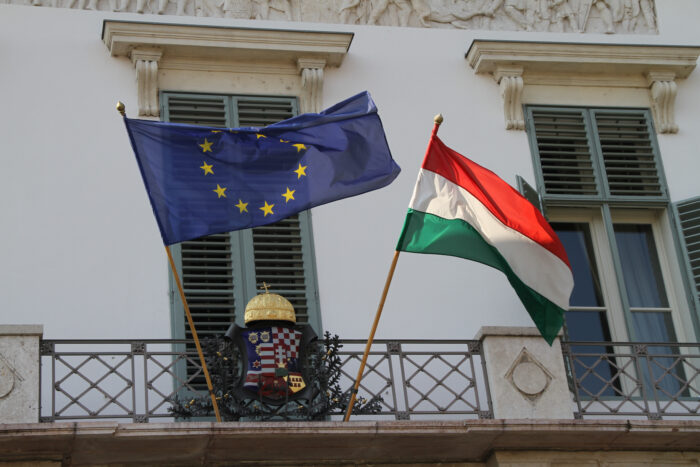
Interview with László Andor, FEPS Secretary General, published by Fondation Jean-Jaurès (FR), analysing the electoral defeat of Viktor Orbán, the emergence of a broad opposition movement in Hungary, and the prospects for democratic renewal, EU relations and social change following what he describes as a “civic revolution” that has yet to deliver a social transformation.
“Money is coming! Will Péter Magyar deliver on his promise?”
Video Interview published on KlikkTV (HU), featuring László Andor, FEPS Secretary General, discussing EU funds to Hungary, their political conditionality, and the importance of fair distribution, rule of law and social investment within the European Union.
“Back to the Future: The Great Reset”
Opinion article by FEPS Vice-President, Lina Gálvez reflecting on the current global crisis marked by rising authoritarianism, digital power and extreme inequality, and tracing its roots through a historical analysis of capitalism — from the post-1945 social and geopolitical settlement led by social democratic forces, through neoliberal financialisation, to what she describes as a new phase of fascist capitalism.