10/09/2025

FEPS reaction to The State of the European Union 2025

By FEPS Secretary General László Andor with inputs from FEPS Policy Analysts

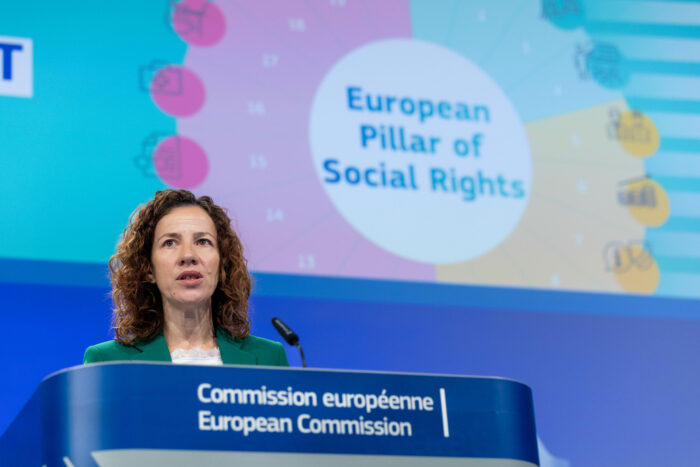
🔸Ursula von der Leyen introduced her SOTEU speech by highlighting European independence. Europeans have been rightly concerned about the humiliation suffered in the context of the EU-US trade negotiations. As compared to the importance of this, von der Leyen only touch upon some details of the trade debacle towards the end of her speech and did not deliver a convincing strategy about reducing dependency in the foreseeable future. 

🔸Solidarity with Ukraine was something von der Leyen preferred to talk about in the first half hour of the speech on the state of the European Union. This is still a unifying subject, since Europeans sacrificed so much to defend Ukraine, while the end of the war is still not in sight. It is encouraging nevertheless that the Commission is already preparing for the reconstruction and worked out a viable financial plan too. Von der Leyen’s preoccupation with missing children in Ukraine – something she also voiced during the televised discussion with Donald Trump in the White House – deserves attention, not least because it will require not only organising a conference on EU territory but also a diplomatic engagement with the Russian Federation. 

🔸In a striking contrast with Ukraine, von der Leyen for nearly two years turned her head away from the genocidal destruction committed by the Israeli army in Gaza. This speech represents a marked shift in her position. But this is too little and too late. The silence of the EU in critical times will not be forgotten, and the actions from now onwards need to be consistent and forceful to really drive the process towards the desired two-state solution. 

🔸Similarly to Gaza, the chapter on Social Europe was included in the speech to gain support among those critical about von der Leyen’s inaction in the last year. Yes, the commitment to eradicate poverty by 2050 is welcome. The upcoming strategy must be comprehensive, supported by ambitious financial means, and rooted in respect and inclusion. And there are high expectations for the Quality Jobs Act too. We also welcome the list of concrete ideas to tackle the housing crisis (including the revision of state aid rules and the foreseen legal initiative on short-term rentals). These are key elements to ensure that the right to affordable and sustainable housing is enforced and lived by all.

🔸Supported by EP President Roberta Metsola, von der Leyen packaged the speech in right-wing economic ideology. They want to be proud of an EU that can cut red tape. However, the bogus omnibus process would need to be reconsidered to ensure that EU actions support real growth and prosperity. The beginnings of a genuine EU industrial policy were hinted at the SOTEU speech, but we need more guarantees that all this leads to a full implementation of the Draghi and Letta Reports. On the other hand, while von der Leyen promises simplification, she also comes forward with ideas for new bureaucratic procedures, like the European Defence Semester, which might not be the best way forward. 

🔸 Von der Leyen evaded the question of EU fiscal capacity, which is understandable after the mixed reactions to the presentation of her half-baked MFF proposal in July. But this is also a question of providing sufficient investment capacity to underpin the EU’s climate and digital ambitions. On one hand, the Commission states its intention to stay the course on the European Green deal. On the other hand, it proposes to roll back on key environmental regulations through the omnibus proposals. On one hand, the Commission’s President calls for supporting fact-based media for better informed citizens. On the other, she plans for an unlimited and uncritical development of AI. Von der Leyen too often appears as a split personality. 

🔸Von der Leyen knows that the EU stands for democracy and the rule of law. Yet, her appeal to a “pro-democratic majority” rings hollow, given the EPP’s cooperation with the far right in the European Parliament on a variety of issues. The Commission president says that she will listen to everyone. At the same time, she highlights her consultations with industries, while an engagement with civil society defending European citizens’ rights and health is nowhere to be found. With such contradictions, it is hard to expect enthusiasm for the SOTEU speech delivered today.

Photo credits: European Union, 2025

Find all related publications
Publications
03/07/2026

Renewing European progressive leadership in climate, energy and industry

Europe is living through a time of constant disruption: geopolitical and economic shocks, a cost-of-living […]
30/06/2026

How National and Regional Partnership Plans can support just transition regions in the next MFF

Policy recommendations
16/06/2026

Political parties in the EU and the challenges of enlargement 

Country analysis
16/06/2026

Positions on enlargement of the 27

What do EU political parties think?
Find all related Progressive Post
Progressive Post
25/06/2026

A Social Democrat’s guide to Magnifica Humanitas

Pope Leo XIV speaks truth to AI tech power and inequality
18/06/2026

Made – or fade – in Europe?

The European Commission’s proposal for an Industrial Accelerator Act marks a significant step towards a […]
18/06/2026

Europe’s industrial future is a political choice

Europe is losing industrial jobs, productive capacity and economic sovereignty. The debate on the Industrial […]
Find all related events
Events
Upcoming
30 - 01/10/2026
Brussels, Belgium

FEPS Policy Conference 2026

Towards a sustainable European sovereignty
Past
02 - 04/07/2026
Warsaw, Poland

Empowering youth

FEPS activities in the framework of YES Summer Camp
01 - 04/07/2026
Warsaw, Poland (Training)

Friends of Eastern Partnership (FoEP)

What do social democracy and progressivism mean in the Eastern Partnership region? This year’s edition […]
Load more...
Find all related news
News
23/06/2026

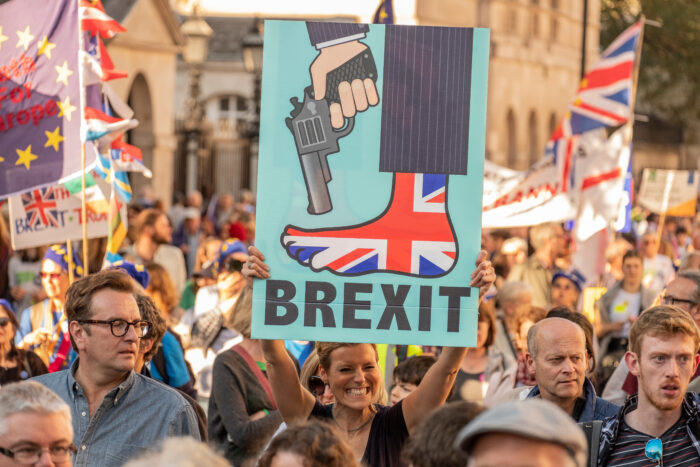
FEPS Reacts: 10 years after Brexit

Written by FEPS Secretary-General László Andor 🔸 Brexit has been a case study in national self-harm. The […]
10/06/2026

FEPS Young Academics Network – Cycle 10

Call for new members - Deadline June 28, 2026
05/06/2026

Call for a progressive EU enlargement

Friends of the Western Balkans' Joint Statement
13/04/2026

Hungary’s civic revolution

FEPS' commentary on the outcomes of the Hungarian election
Find all related in the media
In the media

Une révolution civique, pas encore une révolution sociale

by Fondation Jean-Jaurès 06/05/2026
“A civic revolution, not yet a social revolution” Interview with László Andor, FEPS Secretary General, published by Fondation Jean-Jaurès (FR), analysing the electoral defeat of Viktor Orbán, the emergence of a broad opposition movement in Hungary, and the prospects for democratic renewal, EU relations and social change following what he describes as a “civic revolution” that has yet to deliver a social transformation.

Jön a pénz! Magyar Péter beváltja az ígéretét?

by KlikkTV 04/05/2026
“Money is coming! Will Péter Magyar deliver on his promise?” Video Interview published on KlikkTV (HU), featuring László Andor, FEPS Secretary General, discussing EU funds to Hungary, their political conditionality, and the importance of fair distribution, rule of law and social investment within the European Union.

España los forma, Europa los contrata: así es el mapa de la nueva fuga de cerebros

by El Confidencial 10/02/2026
Spain trains them, Europe hires them: the map of the new brain drain: László Andor, FEPS Secretary-General, discusses the 'brain drain' as a result of the EU’s single market and highlights the need for a fairer mobility and retention strategy across the EU.

‘Regreso al futuro. El gran reseteo’ by Lina Gálvez

by Tinta Libre 02/02/2026
“Back to the Future: The Great Reset” Opinion article by FEPS Vice-President, Lina Gálvez reflecting on the current global crisis marked by rising authoritarianism, digital power and extreme inequality, and tracing its roots through a historical analysis of capitalism — from the post-1945 social and geopolitical settlement led by social democratic forces, through neoliberal financialisation, to what she describes as a new phase of fascist capitalism.