
Download
Why the Left needs Europolitics
Policy Study
13/04/2016
This paper starts from the observation of a structural trend of depoliticisation that cuts across all levels of governance within the European multi-level polity. The consensual logic of the European institutions not only favours the status quo at the EU level, but increasingly also weighs down on national politics. In contrast to many scholars’ expectations, traditional ‘left-right’ party competition has not been transposed to the European level. Rather, the ‘mainstream vs. fringe’ party logic at work in the European Parliament has become also more common in a number of member-states. This paper asks why and in what way this depoliticising trend constitutes a particular challenge for social democracy and points to possible pathways for a politicisation that is conducive to a progressive project for Europe.
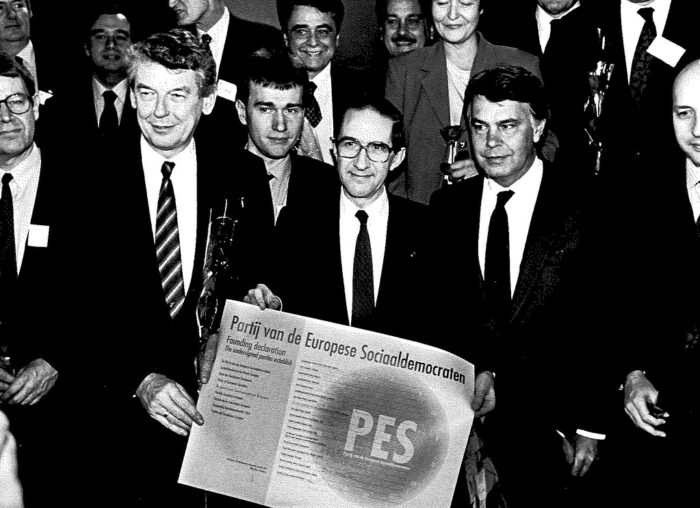
We first review the current state of development of a European party system (‘Europarty system’), and identify two main challenges ahead: (1) ‘Deepening’, that is, ‘vertical integration’ of all levels within a party organisation, from the European party federations to the grassroots level. (2) ‘Widening’, pertaining to the ‘horizontal integration’ of the Europarty system in a double-sense, across the whole range of EU member-states and across all party-political familles spirituelles. While the social-democratic family has often taken the lead on both dimensions, the paper recommends additional steps to be taken in order to draw other left forces into a progressive project, vital for the future of European democracy.
As regards point (1), ‘deepening’, the paper assesses attempts at connecting grassroots activists to the European level, for instance in the form of PES city groups, and finds ‘embryonic Euro-partisanship structures’ to have emerged around the 2014 European election campaign. Central issues for the further development in this area pertain to the establishment of coordination structures, the pooling and sharing of resources and investment in IT systems and new media. Point (2), the ‘widening’ of the Europarty system, requires extending the debate about alternatives for Europe to forces outside of the current pro-EU alliance of social democrats, Christian democrats and liberals. While the top-candidate procedure of the 2014 EP elections was a step into this direction (notably with the fielding of Green and Left Party candidates), the campaign has not gone beyond a personalised version of the established consensus logic. The paper then reflects on the strength of a left coalition in the European Parliament and argues for ‘agonistic pluralism’ in the form of a competitive multi-party approach.
The paper gives four policy recommendations:
- A genuine, democratic and pluralistic Europolitics based on the strengthening of Europarties, which should develop the institutional clout to disagree on European policies on the left-right axis.
- A vertical integration and deepening of the links between all organisational units – from local activists to the executive – and territorial levels in the structure of Europarties and Eurofoundations.
- A widening of Europarties to reach out to social and political forces that have so far been outside the mainstream EU political process, also including those from more reluctant national backgrounds and eurosceptic leanings.
- An institutional reform to entrust responsibility for the EU budget to European institutions and allow genuine democratic control by European citizens through the EP.
Network

Find all related publications
Publications
Find all related Progressive Post
Progressive Post
Find all related events
Events
Past

01 - 03/12/2025
FEPS HQ, Brussels
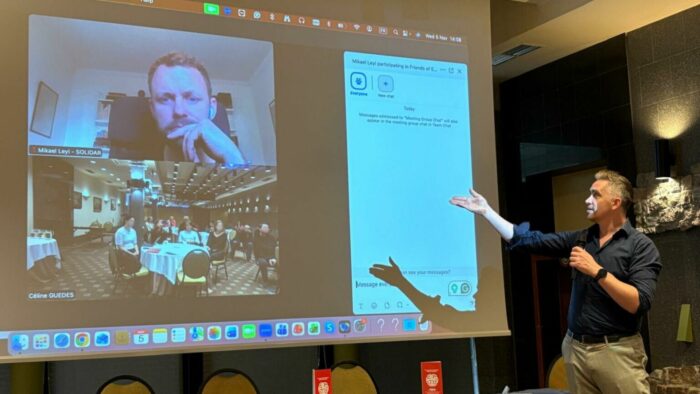
04 - 06/11/2025
Vilnius, Lithuania (Training)
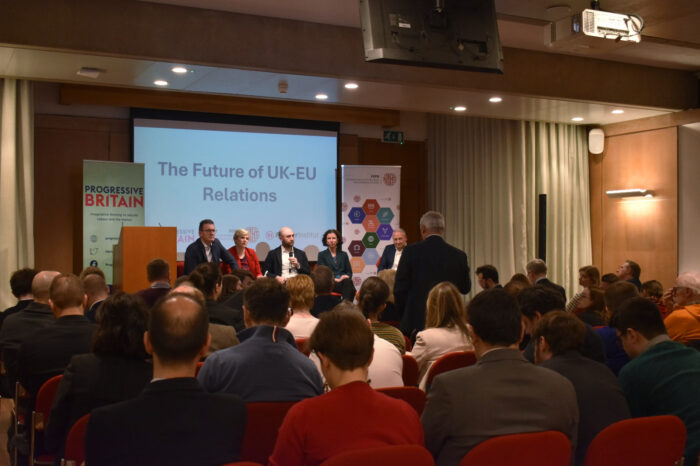
14 - 16/12/2025
Oxford, United Kingdom (Expert Meeting)
Load more...
Find all related Audiovisual
Audiovisual
26/02/2026
26/02/2026
13/12/2024
28/06/2024
Find all related news
News

Find all related in the media
In the media
“Back to the Future: The Great Reset”
Opinion article by FEPS Vice-President, Lina Gálvez reflecting on the current global crisis marked by rising authoritarianism, digital power and extreme inequality, and tracing its roots through a historical analysis of capitalism — from the post-1945 social and geopolitical settlement led by social democratic forces, through neoliberal financialisation, to what she describes as a new phase of fascist capitalism.
László Andor: «En Hongrie, malgré l’érosion de la popularité d’Orbán, la gauche peine à regagner en crédibilité»
by Le Figaro 25/08/2025