
Policy Study
20/07/2026
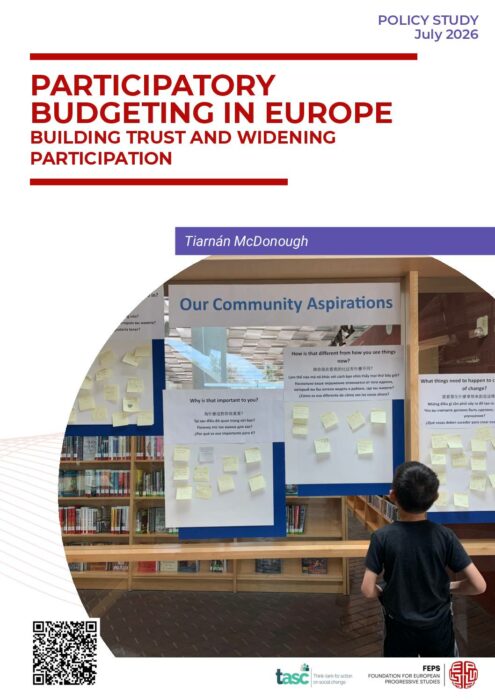
In an era of rising populism and declining trust in democracy, policymakers at the local and EU levels have increasingly turned to ‘democratic innovations’, such as participatory budgeting, as a way of fostering civic engagement among those traditionally marginalised from local advocacy and politics.
Participatory budgeting was first conceived of as a radical programme for rebuilding democracy and addressing historic inequalities in post-dictatorship Brazil.
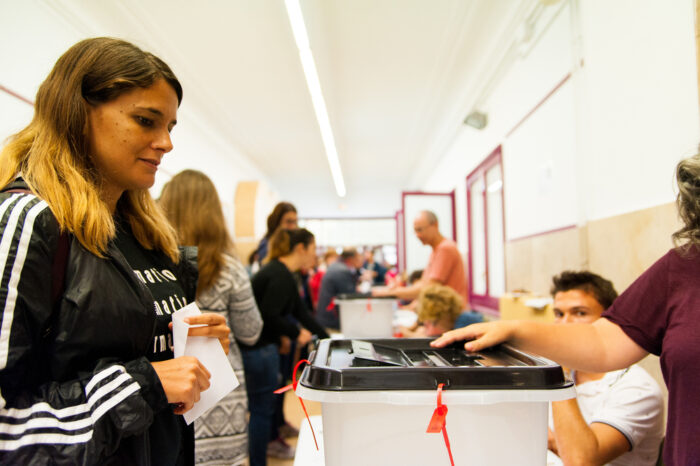
The participatory budgets that have proliferated in Europe in recent decades are generally exercises in selecting projects for discretionary spending. In most cases, this involves members of the public submitting project ideas, which are then voted on by city residents.
This policy study presents findings from five case studies. Two of these (Dublin and Warsaw) involved fieldwork with local politicians, city officials and residents who had participated in local participatory budgets. These are supplemented by three smaller illustrative cases (Gent, Helsinki and Marseille) based on desk research.
The aim of these case studies is to understand how those implementing participatory budgets have sought to enable a more diverse cohort of people to take part, particularly among those from disadvantaged neighbourhoods and marginalised groups.
These findings are used to consider how policymakers can learn from local participatory budgets to encourage greater active citizenship among those at greater risk of marginalisation in the current climate of polarisation and pessimism. The study also reflects on the inspiration that its findings may have on EU-level debates of budgeting and actively involving citizens in policymaking.
Our findings identify a wide range of tactics and approaches trialled and adopted by those designing participatory budgets across Europe to reduce the risk that they are dominated by wealthier neighbourhoods and residents.
Network
Find all related publications
Publications
Find all related Progressive Post
Progressive Post
Find all related events
Events

Find all related Audiovisual
Audiovisual
27/06/2026

17/04/2026
26/02/2026
26/02/2026
Find all related news
News

Find all related in the media
In the media
“A civic revolution, not yet a social revolution”
Interview with László Andor, FEPS Secretary General, published by Fondation Jean-Jaurès (FR), analysing the electoral defeat of Viktor Orbán, the emergence of a broad opposition movement in Hungary, and the prospects for democratic renewal, EU relations and social change following what he describes as a “civic revolution” that has yet to deliver a social transformation.
“Money is coming! Will Péter Magyar deliver on his promise?”
Video Interview published on KlikkTV (HU), featuring László Andor, FEPS Secretary General, discussing EU funds to Hungary, their political conditionality, and the importance of fair distribution, rule of law and social investment within the European Union.
“Back to the Future: The Great Reset”
Opinion article by FEPS Vice-President, Lina Gálvez reflecting on the current global crisis marked by rising authoritarianism, digital power and extreme inequality, and tracing its roots through a historical analysis of capitalism — from the post-1945 social and geopolitical settlement led by social democratic forces, through neoliberal financialisation, to what she describes as a new phase of fascist capitalism.