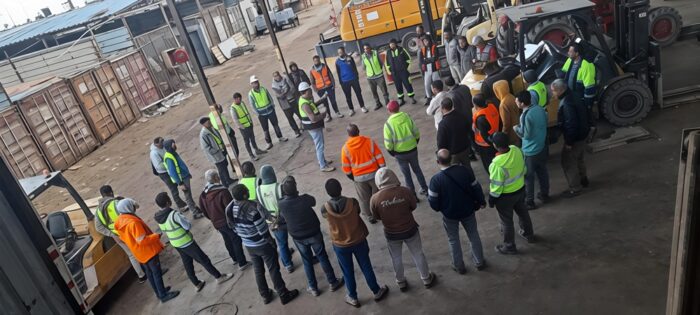
Expected labour market effects of the Green Deal Industrial Plan (2)

A regional labour policy approach

Policy Study

17/02/2025

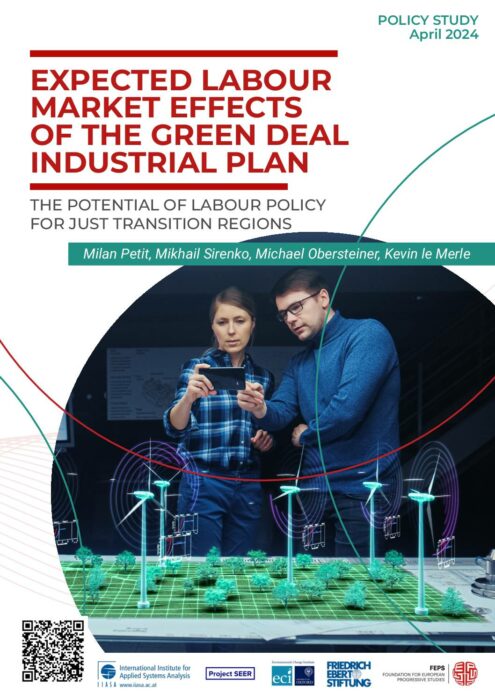
The policy study presents the potential impact of green industrial policies, such as the Green Deal Industrial Plan, on the European manufacturing workforce. The study uses the SEER model (estimating Socioeconomic Effects of the European green deal implementation and Reform) to explore how the future of the European labour market could look under various future scenarios related to the European Green Deal (EGD). It adopts a multi-level approach, presenting results at European, national and regional levels.  

This study provides insights on European manufacturing trends for 2025-2035, on the projected effects of the Green Deal Industrial Plan on the labour market and on the potential complimentarity between labour policies and the Green Deal Industrial Plan. It allows to identify different manufacturing labour market profiles in the EU and shows that the effectiveness of green industrial policies depends heavily on local labour market conditions. The study highlights key challenges for policy-makers, such as coordinating policies between regions.  

The study is the second part of the research “Expected labour market effects of the Green Deal Industrial Plan”. The first study focused on the potential of labour policy for Just Transition regions, while the present one proposes an EU-wide analysis. A third upcoming study will present actor-centred policy recommendations for a socially just and well-functioning European labour market.

Network
Environmental Change Institute
Friedrich-Ebert-Stiftung (FES)
International Institute for AppliedSystems Analysis (IIASA)
PEAS Center
Project SEER
Systems Transformation Hub
Related publications
15/04/2024

Expected labour market effects of the Green Deal Industrial Plan (1)

The potential of labour policy for Just Transition regions
Find all related publications
Publications
28/08/2026

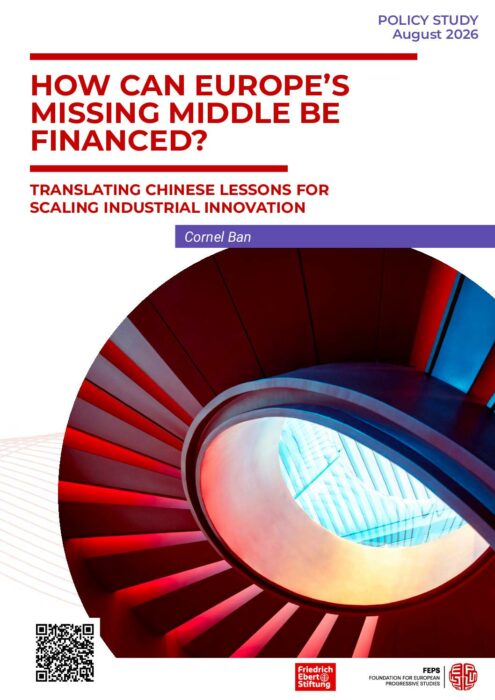
How can Europe’s missing middle be financed

Translating Chinese lessons for scaling industrial innovation
03/07/2026

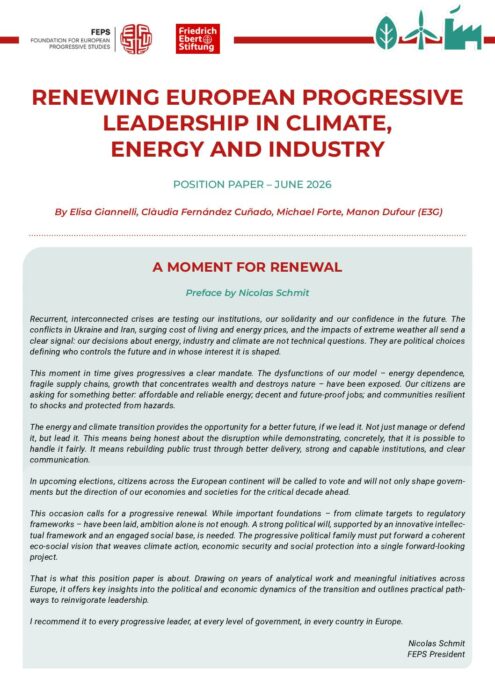
Renewing European progressive leadership in climate, energy and industry

Europe is living through a time of constant disruption: geopolitical and economic shocks, a cost-of-living […]
30/06/2026

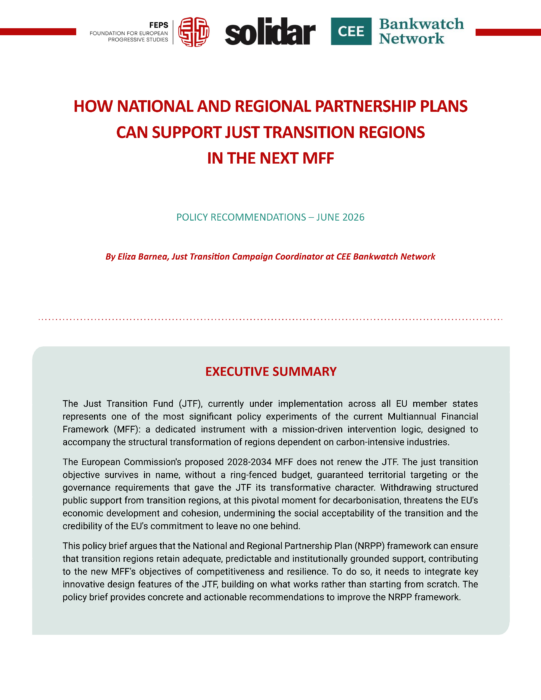
How National and Regional Partnership Plans can support just transition regions in the next MFF

Policy recommendations
11/05/2026

Place-based industrial policy

Places, people and power in European industrial policy
Find all related Progressive Post
Progressive Post
25/09/2026

Gen Z’s political divide isn’t really about gender 

Progressives risk misreading Generation Z by treating social media, the manosphere and changing gender norms […]
18/09/2026

A State of the Union bereft of coherence and clarity

The State of the Union is a very special exercise for the president of the […]
25/06/2026

A Social Democrat’s guide to Magnifica Humanitas

Pope Leo XIV speaks truth to AI tech power and inequality
Find all related events
Events
16 OCT 2026

Big tech in Ireland and the EU

Dublin (expert meeting)
17 OCT 2026

Building a digital Europe of equal opportunities

Dublin, Ireland
23 OCT 2026

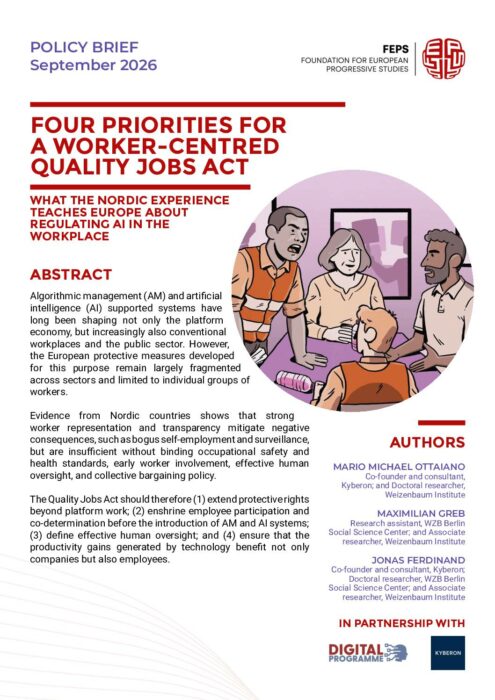
How AI affects jobs, public services, and workers’ rights in the Nordics and the EU

Stockholm, Sweden (Expert Meeting)
03 NOV 2026

Bridging competitiveness and shared prosperity through employee ownership

Brussels, Belgium
Find all related Audiovisual
Audiovisual
28/08/2026

Translating Chinese lessons for scaling EU industrial innovation with Cornel Ban

Europe is good at creating new technologies and innovative ideas, but too often European companies […]
28/08/2026

Translating Chinese lessons for scaling EU industrial innovation with Cornel Ban

Europe is good at creating new technologies and innovative ideas, but too often European companies […]
20/07/2026

‘DON’T let AI take over your capability to THINK and be CREATIVE’ with Katarina Barley

AI continues to remain a priority topic on the political agenda. As the EU leverages […]
20/07/2026

‘DON’T let AI take over your capability to THINK and be CREATIVE’ with Katarina Barley

AI continues to remain a priority topic on the political agenda. As the EU leverages […]
Find all related news
News
16/09/2026

FEPS Reacts: State of the European Union 2026

The 2026 State of the Union felt more like ‘von der Leyen I’ than ‘von […]
29/01/2026

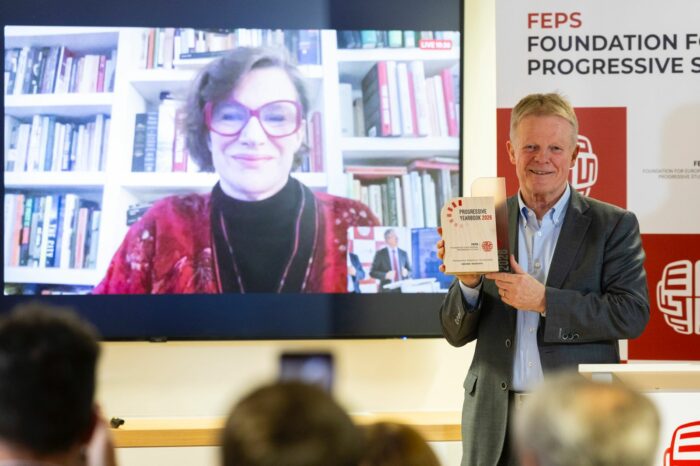
Marianna Mazzucato awarded FEPS ‘Progressive Person of the Year’

FEPS Progressive Person of the Year 2025-2026
21/10/2025

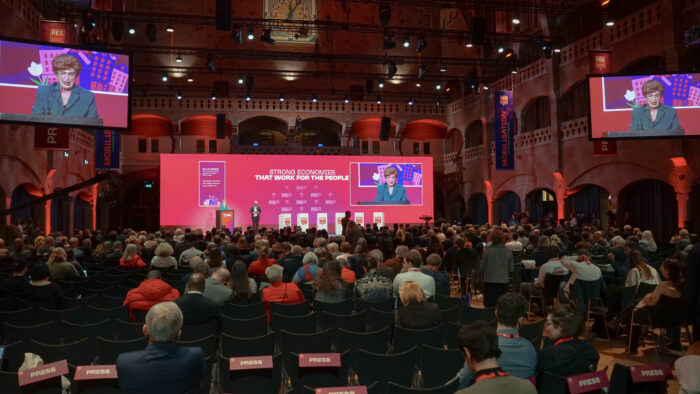
Maria João Rodrigues at PES Congress 2025

🇳🇱 🌹 FEPS attended the Party of European Socialists (PES) Congress in Amsterdam, which included […]
18/10/2025

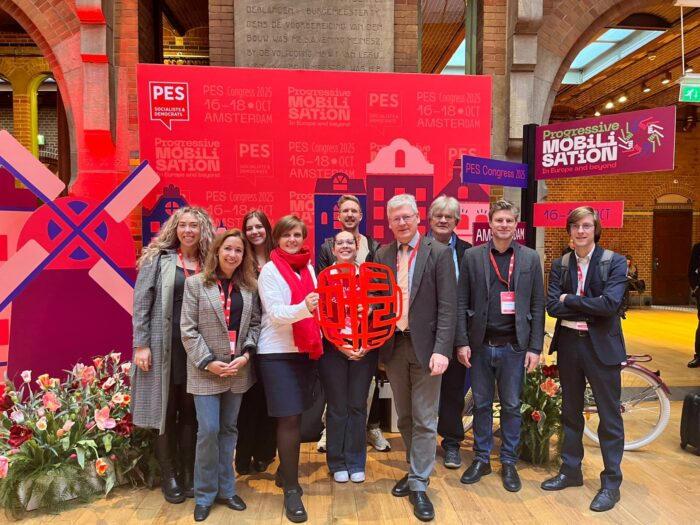
FEPS at PES Congress 2025

🇳🇱 🌹Within PES Congress, there were full rooms on insightful discussion on a range of […]
Find all related in the media
In the media

EU’s new cross‑border work rules favour recruitment, not workers, say critics

by EUObserver 16/09/2026
FEPS Policy Analyst on Social François Balate discusses the latest EU Labour Mobility Package under Commissioner Roxana Mînzatu zatu for the EUObserver.

Jön a pénz! Magyar Péter beváltja az ígéretét?

by KlikkTV 04/05/2026
“Money is coming! Will Péter Magyar deliver on his promise?” Video Interview published on KlikkTV (HU), featuring László Andor, FEPS Secretary General, discussing EU funds to Hungary, their political conditionality, and the importance of fair distribution, rule of law and social investment within the European Union.

España los forma, Europa los contrata: así es el mapa de la nueva fuga de cerebros

by El Confidencial 10/02/2026
Spain trains them, Europe hires them: the map of the new brain drain: László Andor, FEPS Secretary-General, discusses the 'brain drain' as a result of the EU’s single market and highlights the need for a fairer mobility and retention strategy across the EU.

‘Regreso al futuro. El gran reseteo’ by Lina Gálvez

by Tinta Libre 02/02/2026
“Back to the Future: The Great Reset” Opinion article by FEPS Vice-President, Lina Gálvez reflecting on the current global crisis marked by rising authoritarianism, digital power and extreme inequality, and tracing its roots through a historical analysis of capitalism — from the post-1945 social and geopolitical settlement led by social democratic forces, through neoliberal financialisation, to what she describes as a new phase of fascist capitalism.