European populism and anti-gender narratives

Links between the EU and North Macedonia

Policy Study

13/07/2026

At a time when gender equality stands as a fundamental EU value and a measurable condition in the enlargement process, this policy study examines how anti-gender mobilisation in North Macedonia is not an isolated phenomenon but a manifestation of a broader pan-European trend.

The narratives deployed by the coordinated radical right, framing gender equality as a “foreign imposition” or elite manipulation, mirror discourses that have gained traction across EU member states, from Italy and Poland to Germany and France.

Understanding this dynamic is critical, as backsliding on gender equality in candidate countries poses a direct challenge not only to domestic democratic standards but also to EU cohesion and its internal legislative agenda, particularly in the context of the Gender Equality Strategy 2026-2030.

The study recalls that gender mainstreaming and the fight against gender-based discrimination are core obligations under the EU acquis, making them essential benchmarks in the accession process. By analysing the North Macedonian case alongside comparative insights from Croatia, Germany, Hungary, Italy and Poland, the publication offers critical perspectives for both internal EU policy debates and the enlargement framework.

It reveals how anti-gender groups undermine progress toward Reform Agenda goals and require a more comprehensive EU response. This is a crucial strategic question: to what extent can a country’s anti-gender backsliding be a key argument in accession negotiations for the EU to make effective demands? 

To address these challenges, the study presents recommendations for European institutions, including:

  • Embedding gender equality more explicitly in enlargement negotiations
  • Systematically monitoring anti-gender backlash in both member states and candidate countries
  • Providing targeted support to intersectional feminist actors on the ground

In doing so, it helps secure the EU’s commitment to non-discrimination and equal opportunities as the Union strengthens conditionality frameworks tied to accession and rule-of-law mechanisms.

In light of security considerations, it was decided not to publicly disclose the identities of the authors; their names are held in confidence by FEPS.

For more information regarding the project and this publication, please do not hesitate to contact Ania Skrzypek, Director for Research and Training, FEPS, (ania.skrzypek@feps-europe.eu) and Julia Wild, Acting Gender Portfolio Coordinator and Project Officer, FEPS (julia.wild@feps-europe.eu).

Related events
23/03/2026
Skopje, North Macedonia (Expert meeting)
European populism and anti-gender narratives

Across Europe, democratic institutions are facing increasing pressure from illiberal populism, with gender equality emerging […]
Find all related publications
Publications
09/11/2026

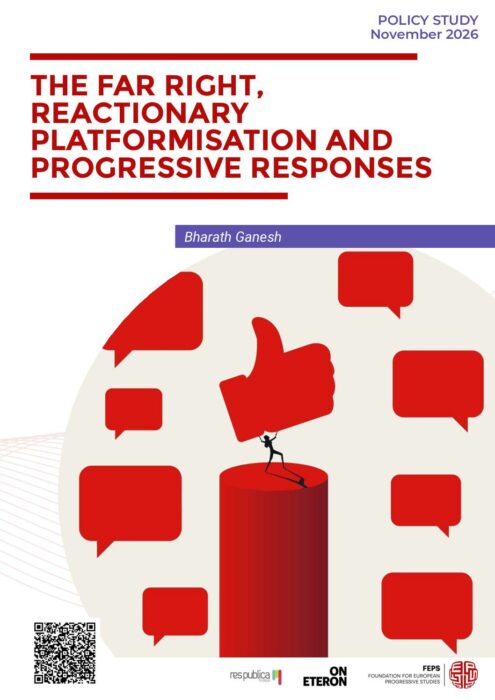
The far right, reactionary platformisation and progressive responses

The far right is thriving on social media, and this is no accident. This policy […]
13/10/2026

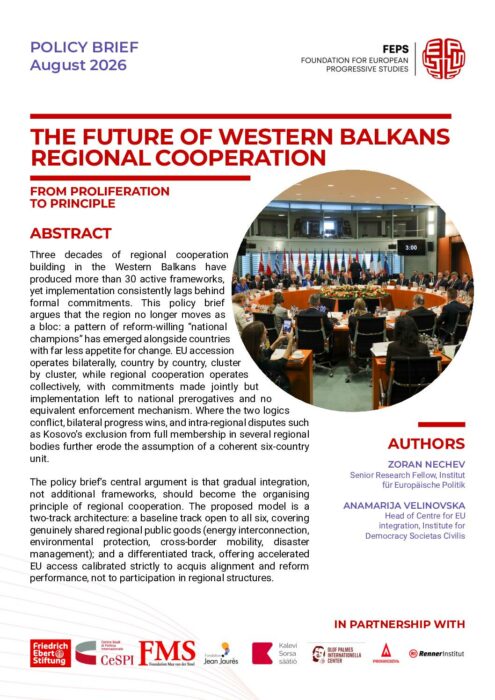
The future of Western Balkans regional cooperation

From proliferation to principle
13/07/2026

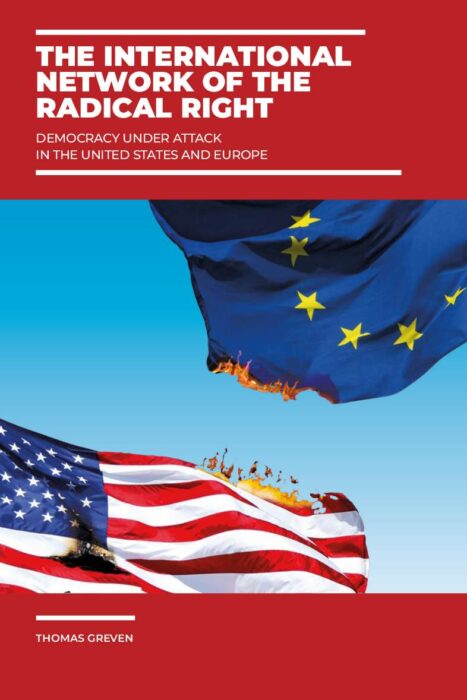
The international network of the radical right

Democracy under attack in the United States and Europe
16/06/2026

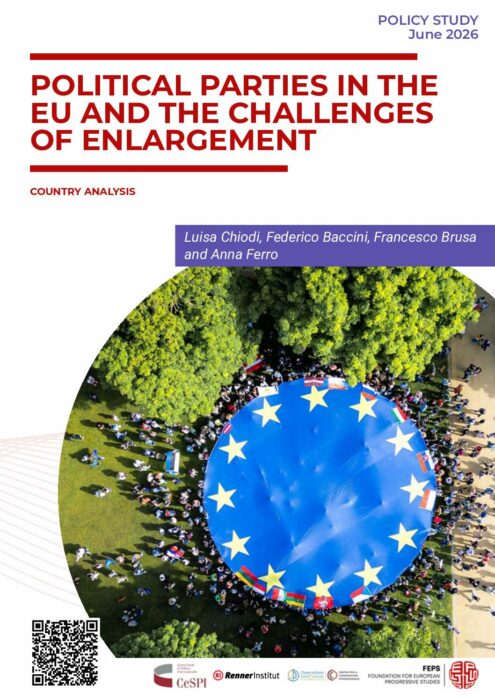
Political parties in the EU and the challenges of enlargement 

Country analysis
Find all related Progressive Post
Progressive Post
05/11/2026

If you want peace, prepare for equality

I have always been struck by how little attention we pay to patriarchal culture when […]
05/11/2026

The Women, Peace and Security agenda amid shifting geopolitics

While the current conflictual and geopolitical environment makes the Women, Peace and Security agenda ever […]
05/11/2026

The EU’s next WPS plan must act on tech, not just mention it

The EU is drafting its next action plan on Women, Peace and Security, and technology […]
Find all related events
Events
03 NOV 2026

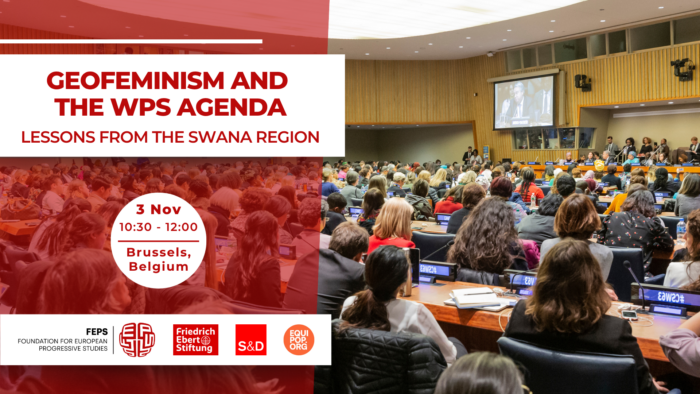
Geofeminism and the WPS agenda: Lessons from the SWANA region

Brussels, Belgium (Expert meeting)
17 OCT 2026

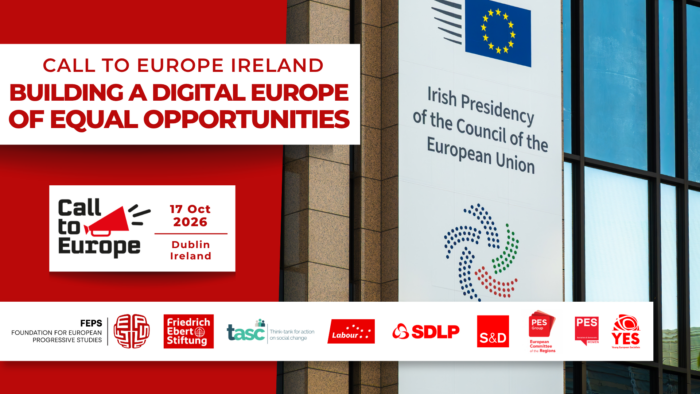
Building a digital Europe of equal opportunities

Dublin, Ireland
16 OCT 2026

Big tech in Ireland and the EU

Dublin (expert meeting)
16 OCT 2026

Housing in Practice – Ireland

Dublin, Ireland (Expert meeting)
Load more...
Find all related Audiovisual
Audiovisual
05/06/2026

‘What drives enlargement? Regional cooperation, political shifts and sustainable development’ Flickr album

23/04/2026

‘An enlargement for a new generation ’ better natures; is it feasible?’ Flickr album

Photo album of the ‘An enlargement for a new generation‘ event in Brussels, Belgium. The […]
09/03/2026

“Muscular MASCULINITY is reinforcing itself in the realm of SECURITY” Toni Haastrup & Lina Gálvez

🎧 In the spirit of #IWD2026, listen to the latest episode of FEPS Talks focusing […]
09/03/2026

“Muscular MASCULINITY is reinforcing itself in the realm of SECURITY” Toni Haastrup & Lina Gálvez

🎧 In the spirit of #IWD2026, listen to the latest episode of FEPS Talks focusing […]
Find all related news
News
23/10/2026

Notice of vacancy – Policy Analyst on Gender Equality

Apply before 23 November 2026
16/09/2026

FEPS Reacts: State of the European Union 2026

The 2026 State of the Union felt more like ‘von der Leyen I’ than ‘von […]
05/06/2026

Call for a progressive EU enlargement

Friends of the Western Balkans' Joint Statement
05/03/2026

The new EU Gender Equality Strategy 2026-2030

Commentary by the Feminist Foreign Policy Progressive Voices Collective (FFPPVC)
Find all related in the media
In the media

Frågan om jämställdhet splittrar unga svenskar

by dagens arena 29/10/2026
"The issue of gender equality divides young Swedes" - FEPS Policy Analyst on Democracy Matteo Dressler discusses the findings of the EqualiZe policy study in the Swedish context.

Une révolution civique, pas encore une révolution sociale

by Fondation Jean-Jaurès 06/05/2026
“A civic revolution, not yet a social revolution” Interview with László Andor, FEPS Secretary General, published by Fondation Jean-Jaurès (FR), analysing the electoral defeat of Viktor Orbán, the emergence of a broad opposition movement in Hungary, and the prospects for democratic renewal, EU relations and social change following what he describes as a “civic revolution” that has yet to deliver a social transformation.

Jön a pénz! Magyar Péter beváltja az ígéretét?

by KlikkTV 04/05/2026
“Money is coming! Will Péter Magyar deliver on his promise?” Video Interview published on KlikkTV (HU), featuring László Andor, FEPS Secretary General, discussing EU funds to Hungary, their political conditionality, and the importance of fair distribution, rule of law and social investment within the European Union.