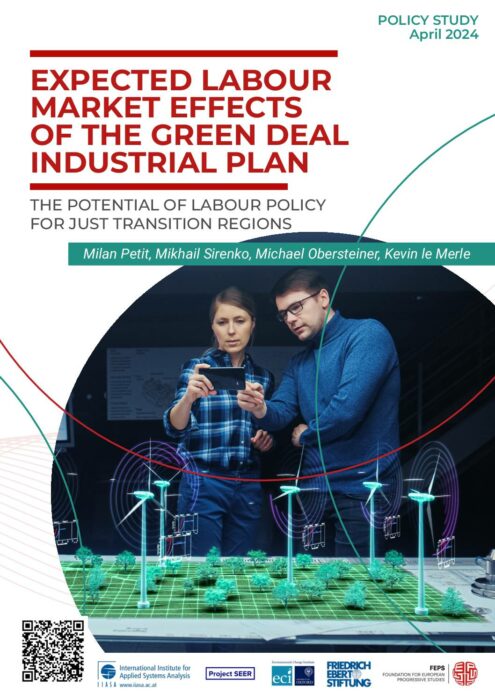
Expected labour market effects of the Green Deal Industrial Plan (2)

A regional labour policy approach

Policy Study

17/02/2025

The policy study presents the potential impact of green industrial policies, such as the Green Deal Industrial Plan, on the European manufacturing workforce. The study uses the SEER model (estimating Socioeconomic Effects of the European green deal implementation and Reform) to explore how the future of the European labour market could look under various future scenarios related to the European Green Deal (EGD). It adopts a multi-level approach, presenting results at European, national and regional levels.  

This study provides insights on European manufacturing trends for 2025-2035, on the projected effects of the Green Deal Industrial Plan on the labour market and on the potential complimentarity between labour policies and the Green Deal Industrial Plan. It allows to identify different manufacturing labour market profiles in the EU and shows that the effectiveness of green industrial policies depends heavily on local labour market conditions. The study highlights key challenges for policy-makers, such as coordinating policies between regions.  

The study is the second part of the research “Expected labour market effects of the Green Deal Industrial Plan”. The first study focused on the potential of labour policy for Just Transition regions, while the present one proposes an EU-wide analysis. A third upcoming study will present actor-centred policy recommendations for a socially just and well-functioning European labour market.

Network
Environmental Change Institute
Friedrich-Ebert-Stiftung
International Institute for AppliedSystems Analysis (IIASA)
PEAS Center
Project SEER
Systems Transformation Hub
Related publications
15/04/2024

Expected labour market effects of the Green Deal Industrial Plan (1)

The potential of labour policy for Just Transition regions
Find all related publications
Publications
25/03/2026

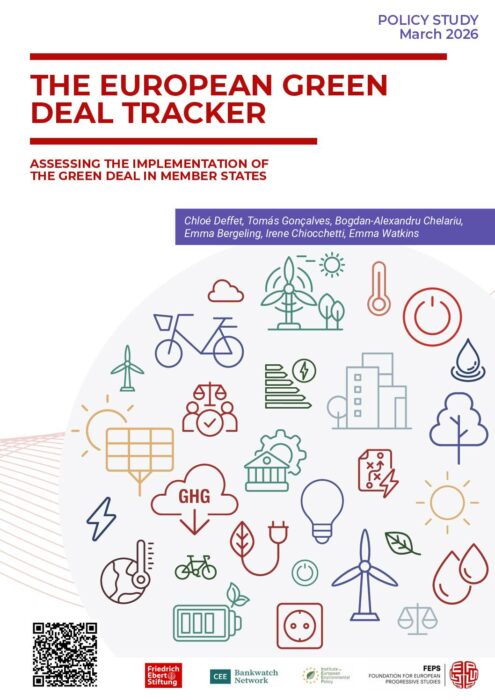
The European Green Deal tracker

How well is your member state implementing key policies of the Green Deal? The European […]
18/03/2026

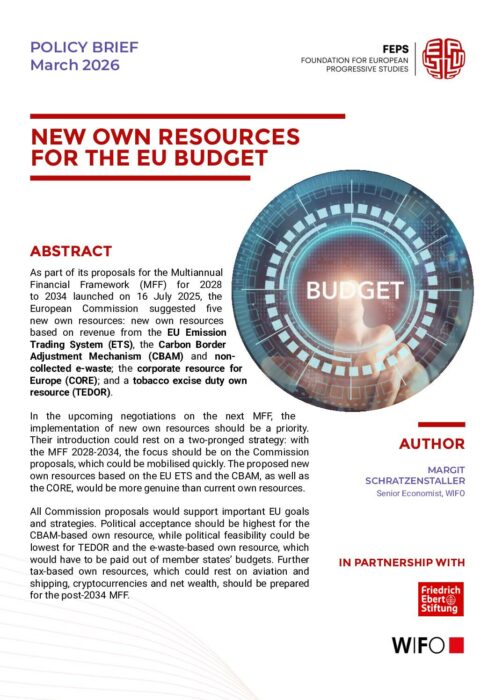
New own resources for the EU budget

As part of its proposals for the Multiannual Financial Framework (MFF) for 2028 to 2034 […]
03/03/2026

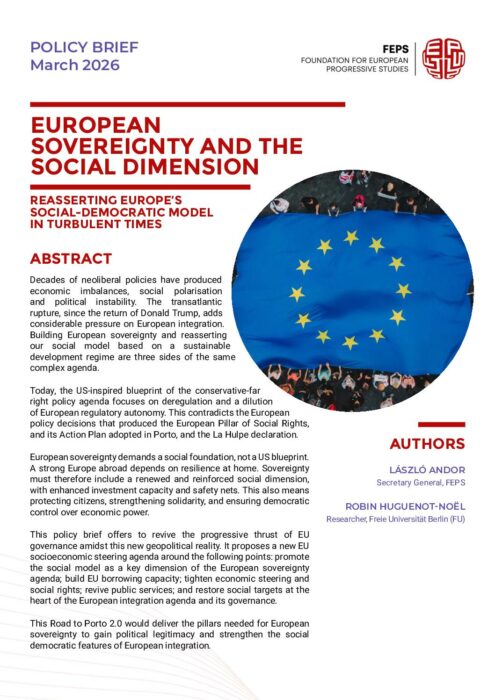
European sovereignty and the social dimension

Reasserting Europe’s social-democratic model in turbulent times
29/01/2026

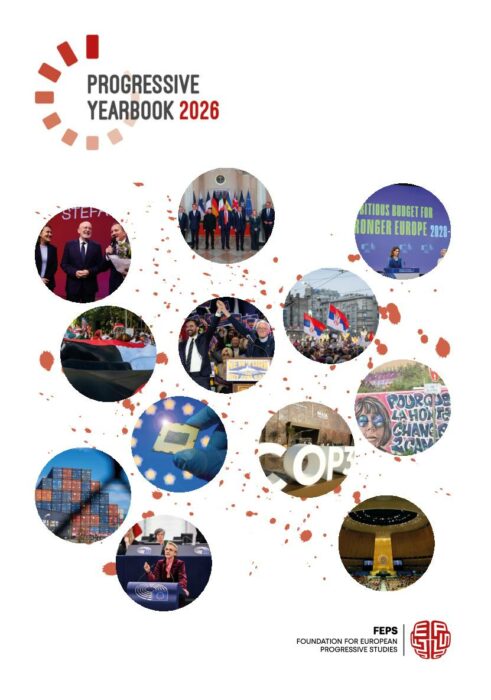
Progressive Yearbook 2026

In an eerie manner, 2025 resembled the ‘time of monsters’, which, according to the great […]
Find all related Progressive Post
Progressive Post
24/03/2026

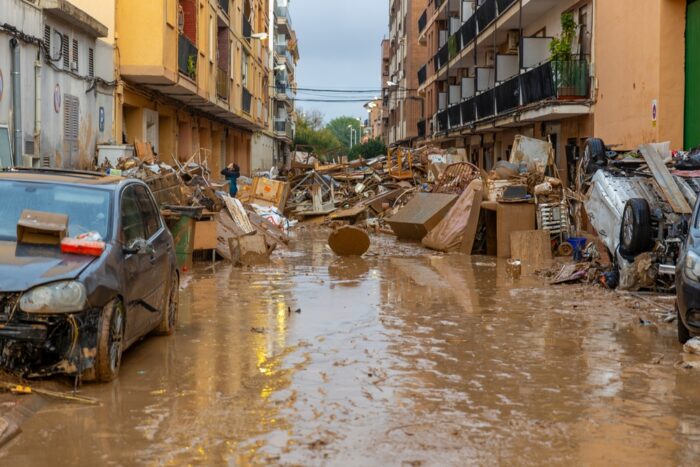
The adaptation deal

Who pays for European resilience?
24/03/2026

Workers are inadequately protected against deadly heat at work

Across the EU, 33 per cent of workers report being exposed to at least one […]
24/03/2026

Green urban policies require the people’s support

Hedwig Giusto interviews Matteo Lepore
Find all related events
Events
Upcoming
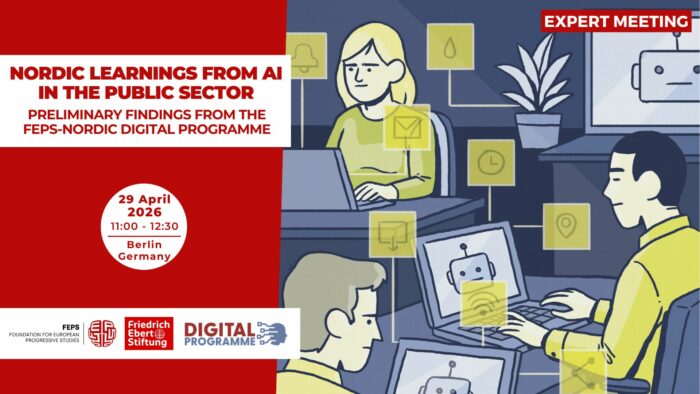
29/04/2026
Berlin, Germany (Expert meeting)

Nordic learnings from AI in the public sector

Preliminary findings from the FEPS-Nordic Digital Programme
Past
25/03/2026
FEPS HQ

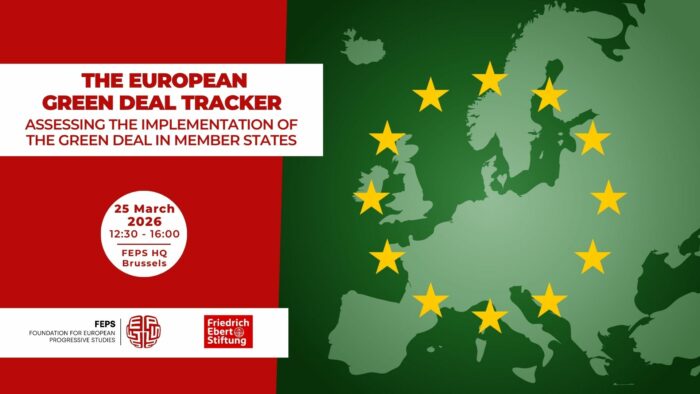
The European Green Deal tracker

Assessing the implementation of the Green Deal in member states
03 - 04/02/2026
FEPS HQ

Go Beyond: Zero deaths at work

Brussels visit
Load more...
Find all related Audiovisual
Audiovisual
25/03/2026

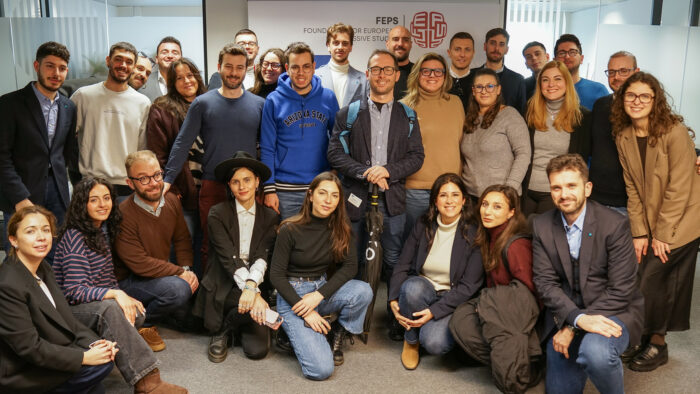
‘The European Green Deal tracker’ Flickr album

Photo album of ‘The European Green Deal Tracker” event at FEPS HQ. In this event, […]
26/02/2026

“Those who have A LOT, must PAY MORE” Nicolas Schmit | FEPS Talks Podcast

🎧 Listen to the latest episode of FEPS Talks with FEPS President Nicolas Schmit! 🇪🇺 […]
26/02/2026

“Those who have A LOT, must PAY MORE” Nicolas Schmit | FEPS Talks Podcast

🎧 Listen to the latest episode of FEPS Talks with FEPS President Nicolas Schmit! 🇪🇺 […]
04/02/2026

‘Developing a clean industry gender agenda in times of deregulation and policy backlash’ Flickr album

Photo album of the ‘Developing a clean industry gender agenda in times of deregulation and […]
Find all related news
News
29/01/2026

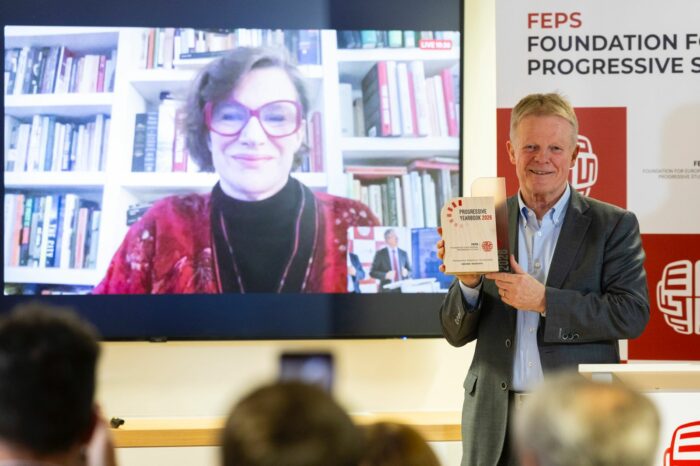
Marianna Mazzucato awarded FEPS ‘Progressive Person of the Year’

FEPS Progressive Person of the Year 2025-2026
21/10/2025

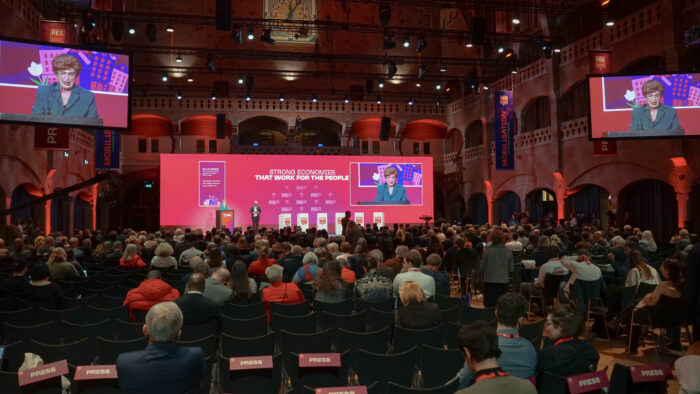
Maria João Rodrigues at PES Congress 2025

🇳🇱 🌹 FEPS attended the Party of European Socialists (PES) Congress in Amsterdam, which included […]
18/10/2025

FEPS at PES Congress 2025

🇳🇱 🌹Within PES Congress, there were full rooms on insightful discussion on a range of […]
10/09/2025

Von der Leyen – walking the walk at last?

FEPS reaction to The State of the European Union 2025
Find all related in the media
In the media

España los forma, Europa los contrata: así es el mapa de la nueva fuga de cerebros

by El Confidencial 10/02/2026
Spain trains them, Europe hires them: the map of the new brain drain: László Andor, FEPS Secretary-General, discusses the 'brain drain' as a result of the EU’s single market and highlights the need for a fairer mobility and retention strategy across the EU.

‘Regreso al futuro. El gran reseteo’ by Lina Gálvez

by Tinta Libre 02/02/2026
“Back to the Future: The Great Reset” Opinion article by FEPS Vice-President, Lina Gálvez reflecting on the current global crisis marked by rising authoritarianism, digital power and extreme inequality, and tracing its roots through a historical analysis of capitalism — from the post-1945 social and geopolitical settlement led by social democratic forces, through neoliberal financialisation, to what she describes as a new phase of fascist capitalism.

“Talking with the enemy” – POLITICO Brussels Playbook, January 13

by POLITICO 13/01/2026
Read Nicolas Schmit, FEPS President-elect, in the 'POLITICO Brussels Playbook'. He calls for stronger European solidarity and a more assertive EU stance to defend its digital rules - particularly in the face of US sanctions.

László Andor: Miből fejleszt az EU ezután?

by Portfolio 28/08/2025
“What will the EU develop from now on?” Analysis by FEPS Secretary General László Andor in Portfolio (HU), highlighting the new MFF’s shift toward increasing EU own-resources, boosting funding for strategic domains like defense, stabilisation and competitiveness, and calling for a flexible crisis-response mechanism such as the proposed Emergency Crisis Response Mechanism