FEPS Newsletter 27 Oct 2026 – 🌿 EU’s Clean Industry Strategy & Technological neutrality

And new momentum for enlargement – If you have problems displaying this email, follow this […]

27/10/2026
And new momentum for enlargement –

If you have problems displaying this email, follow this link

Environment
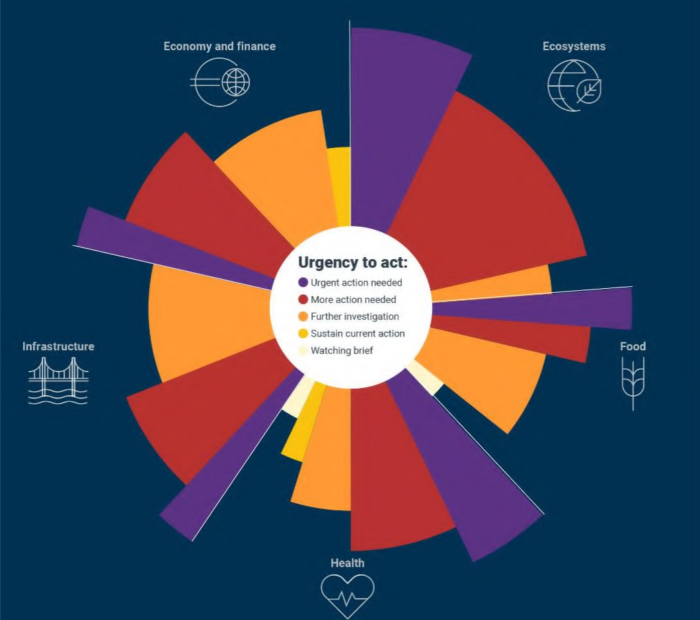
Taking the temperature of the EU’s clean industry strategy

6 OCTOBER – FEPS HQ

Taking the temperature of the EU’s clean industry strategy

Competitiveness and resilience of heat pumps


The seminar presented the policy study “Taking the temperature of the EU’s clean industry strategy” with one of its authors, Francesca Guadagno, Economist at the wiiw, on the competitiveness and resilience of the European heat pump industry.

The analysis examines five core heat pump components – compressors, heat exchange units (HEUs), fans, controllers and refrigerants – across four dimensions: production levels; international competitiveness; trade balances and import dependencies; and innovation capacities.


The analysis allows for a wide understanding of the position of the EU industry and individual member states and identifies which components would benefit from an assertive industrial policy.

Taking the temperature of the EU’s clean industry strategy

By Francesca Guadagno, Doris Hanzl-Weiss and Ioannis Gutzianas – By FEPS, in cooperation with FES Just Climate.

The role of technological neutrality in EU climate policymaking

POLICY STUDY

The role of technological neutrality in EU climate policymaking

Assessment and alternatives for strategic policies 


The principle of technological neutrality means that regulation should neither mandate nor discriminate against specific technologies, allowing markets to determine outcomes. Although widely used as a guiding principle of EU policymaking, FEPS new policy study shows that the principle of technological neutrality is actually inadequate for most decarbonisation policies.

By Thomas Fröhlich – By FEPS, in cooperation with FES Just Climate.

Enlargement

8-9 OCTOBER – CHIȘINĂU, MOLDOVA

The new enlargement momentum: the Eastern candidate countries on a shared European path

First Friends of the Eastern Candidates Network Meeting 


Russia’s full-scale invasion of Ukraine has reshaped Europe’s geopolitical landscape and accelerated the strategic importance of EU Enlargement towards the Eastern candidate countries. The first Friends of the Eastern Candidates (FoEC) Network meeting discussed this new momentum for enlargement and the major democratic challenges facing Moldova, Ukraine and Georgia.

The new enlargement momentum: the Eastern candidate countries on a shared European path

By FEPS, in cooperation with FES, S&D Group, CeSPI, Fondation Jean-Jaurès, Kalevi Sorsa Foundation, Karl-Renner-Institut, Olof Palme International Center, Pro International and Progresiva.

The future of Western Balkans regional cooperation

POLICY BRIEF

The future of Western Balkans regional cooperation

From proliferation to principle


This policy brief argues that while regional cooperation should operate collectively, the Western Balkans region does not move as a bloc. In fact, EU accession operates bilaterally, country by country, cluster by cluster. Gradual integration, rather than additional frameworks, should be the organising principle of regional cooperation.

By Zoran Nechev and Anamarija Velinovska – By FEPS, in collaboration with Friedrich-Ebert-Stiftung, CeSPI, Karl-Renner-Institut, Pro International, Kalevi Sorsa Foundation, Olof Palme International Center, Fondation Jean-Jaurès and Progresiva. 

PROGRESSIVE PAGE

A wider European Union must also be a deeper one

By Steven Blockmans, Deputy Director of ICDS, and Associate Senior Fellow and previously Research Director at CEPS (Brussels)

A wider European Union must also be a deeper one

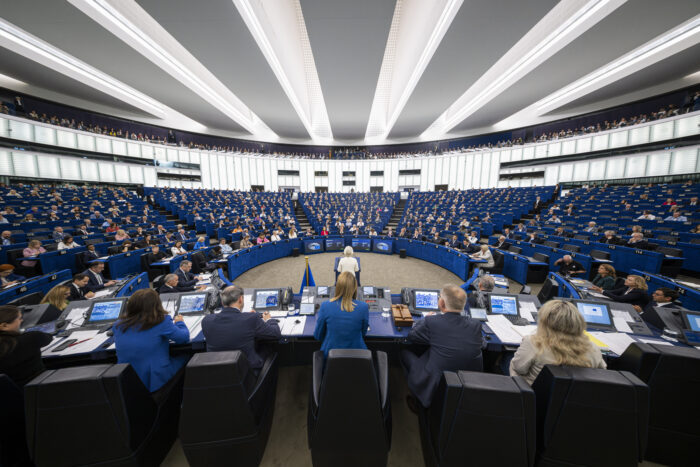
The EU needs a credible plan for governing an enlarged Union, not an assumption that its institutions will somehow adapt afterwards.


Widening and deepening the EU must go hand in hand. The EU cannot leave institutional weaknesses unresolved or risk further undermining its decision-making capacity. Read more.

Photo credits: European Union 2026

Events
Bridging competitiveness and shared prosperity through employee ownership 
 

📅  3 NOVEMBER

📍 BRUSSELS, BELGIUM

Employee ownership: Bridging competitiveness and shared prosperity

Fringe event at the EO Days 2026 


Employee ownership (EO) is gaining momentum across Europe, but it remains fragmented, advancing country by country with little cross-border exchange of knowledge, models and policy tools. This fringe event will look at where employee ownership stands today and what stands in its way. Register now! 

For the impactful EU-UK partnership in the rapidly changing world
 

📅  3 NOVEMBER

📍 FEPS HQ

For the impactful EU-UK partnership in the rapidly changing world
Fringe event at the EU-UK Progressive Forum


How can the EU and the UK build a deeper partnership grounded in shared democratic values and common interests?


The event will examine how to move the relationship from transactional to strategic, what role the UK should play in Europe and how cooperation can extend beyond security into areas such as climate, digital and energy. Register here.

News

NOTICE OF VACANCY

Join FEPS as a Policy Analyst on Gender Equality


Are you passionate about EU affairs and an expert in gender equality? Have you worked on feminism, anti-discrimination policy, equal opportunities, social investment or demography?

Notice of vacancy – Policy Analyst on Gender Equality

In this role, you will steer and implement a coherent portfolio of FEPS (co-)funded projects (including its development and consolidation) aimed at impacting policies, political debates and/or public awareness related to the EU’s approach to gender equality. Apply now to join our team!

Progressive Post
Home is where the house is

DOSSIER

Home is where the house is


In Europe, housing costs are rising faster than incomes, making housing a political issue around which elections are often decided.

Read the analysis of the crisis and its opportunities:

📚 Read more.

Photo credits: Shutterstock / FatimeBarut


Was this email forwarded to you?

Copyright © 2026 FEPS Europe, All rights reserved.

You are receiving this email because you participated in one of FEPS’ events and/or have registered for FEPS’ newsletter.

If you wish not to receive FEPS’ communications anymore, please click here: unsubscribe now. We use tracking pixels in our newsletters to measure engagement. Manage your preferences or unsubscribe at any time.


Foundation for European Progressive Studies
Avenue des Arts, 46 – 1000 Bruxelles

+32 223 46 900 – info@feps-europe.eu

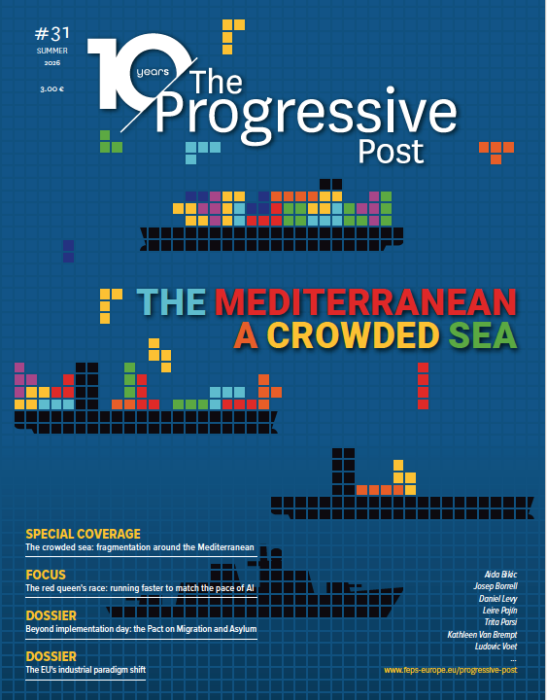
Find all related Progressive Post
Progressive Post
05/11/2026

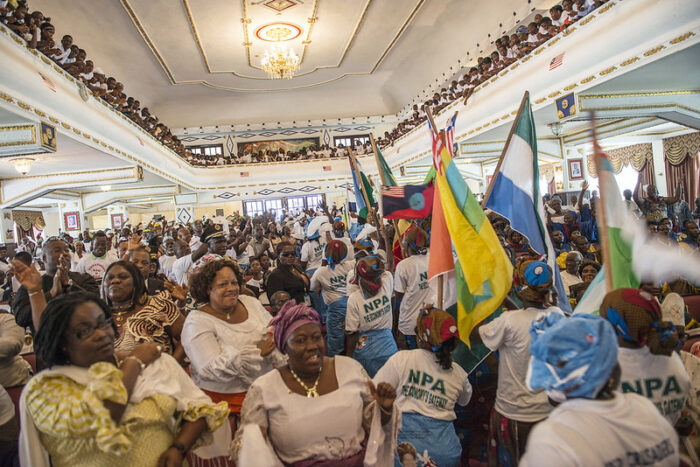
If you want peace, prepare for equality

I have always been struck by how little attention we pay to patriarchal culture when […]
05/11/2026

The Women, Peace and Security agenda amid shifting geopolitics

While the current conflictual and geopolitical environment makes the Women, Peace and Security agenda ever […]
05/11/2026

The EU’s next WPS plan must act on tech, not just mention it

The EU is drafting its next action plan on Women, Peace and Security, and technology […]
Find all related Magazine
Magazine
  • cover book

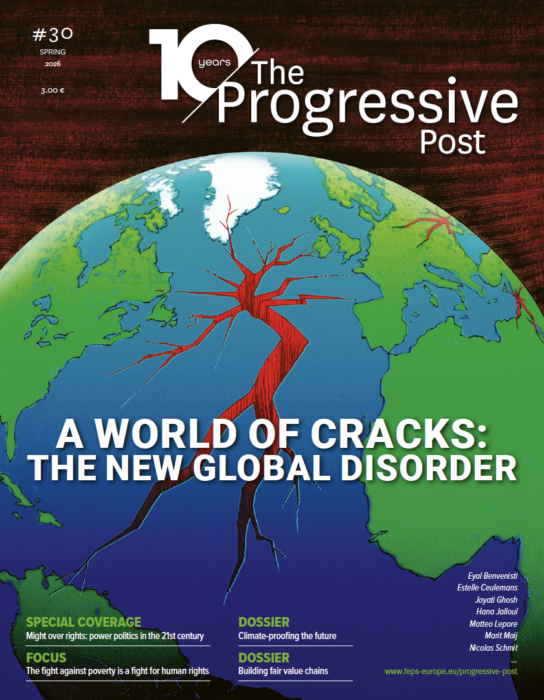
    Issue #30 Progressive Post

Issue #30

A world of cracks: the new global disorder
  • cover book

    Issue #29 Progressive Post

Issue #29

Does peace still have a chance?
Find all related publications
Publications
04/11/2026

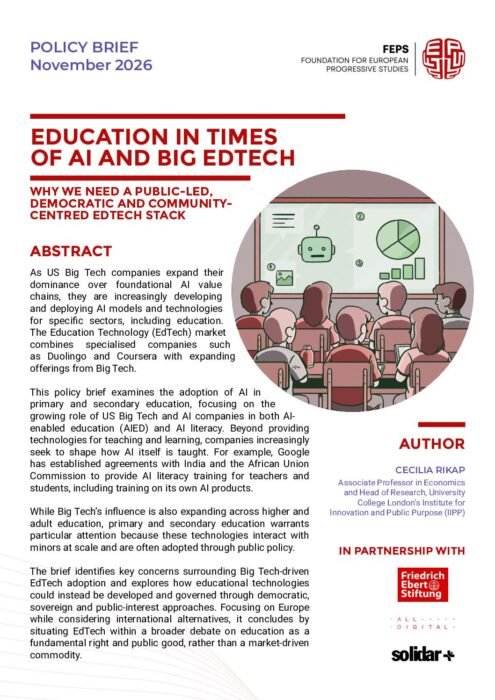
Education in times of AI and Big EdTech

Why we need a public-led, democratic and community-centred EdTech stack
04/11/2026

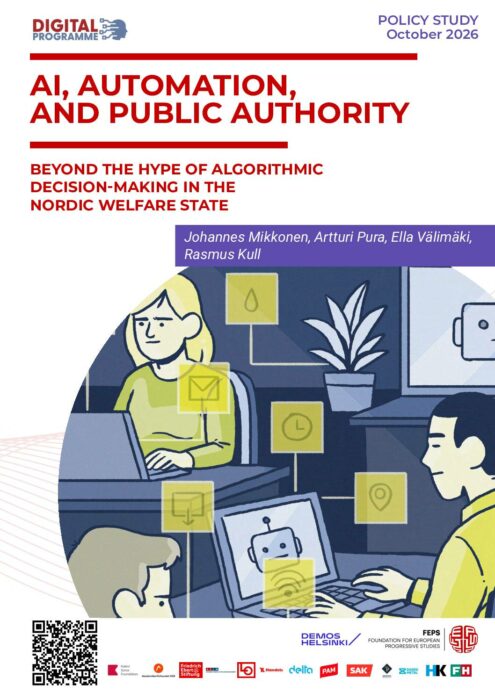
AI, automation, and public authority

Beyond the hype of algorithmic decision-making in the Nordic Welfare State
23/10/2026

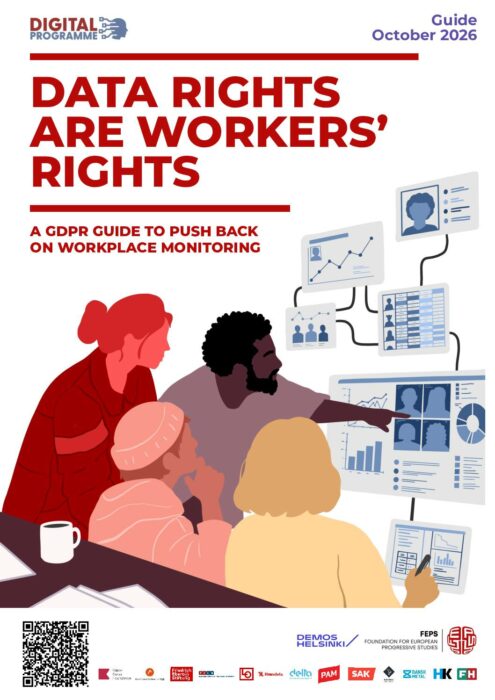
Data rights are workers’ rights

A GDPR guide to push back on workplace monitoring
23/10/2026

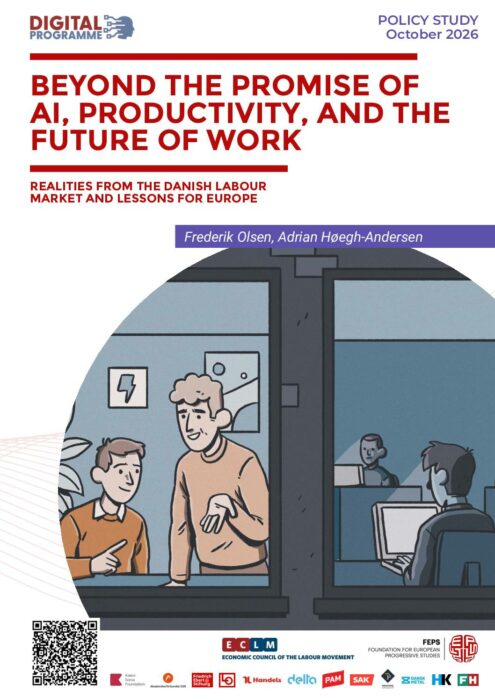
Beyond the promise of AI, productivity and the future of work

Realities from the Danish Labour Market and lessons for Europe
Find all related news
News
30/10/2026

FEPS Reacts: The new EU Framework for Climate Resilience

Necessary foundations but little action
23/10/2026

Notice of vacancy – Policy Analyst on Gender Equality

Apply before 23 November 2026
16/09/2026

FEPS Reacts: State of the European Union 2026

The 2026 State of the Union felt more like ‘von der Leyen I’ than ‘von […]
23/07/2026

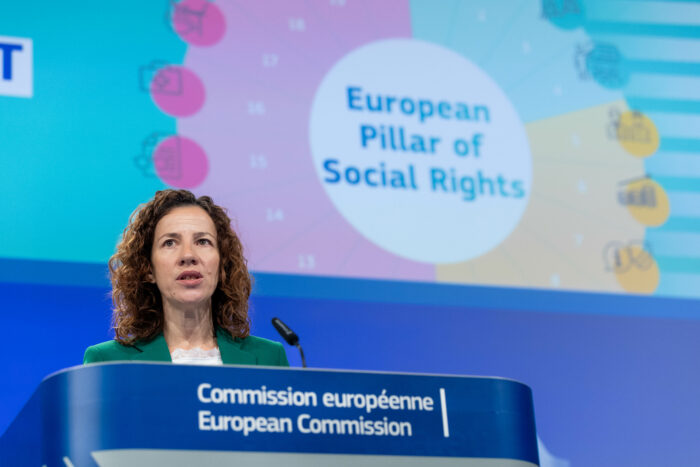
FEPS Reacts: European Commission communication on the Action Plan on the European Pillar of Social Rights

By Laszlo Andor, FEPS Secretary-General & François Balate, Policy Analyst on Social The communication on the […]
Find all related in the media
In the media

Frågan om jämställdhet splittrar unga svenskar

by dagens arena 29/10/2026
"The issue of gender equality divides young Swedes" - FEPS Policy Analyst on Democracy Matteo Dressler discusses the findings of the EqualiZe policy study in the Swedish context.

Brazil’s Lula survives Bolsonaro scare, safeguarding EU democratic ally on climate and trade

by EUobserver 26/10/2026
Read EUobserver's analysis of what comes next after Brazil's elections, which includes comments from Thainá Leite, Project Coordinator at FEPS

Франција е Франција – но Франција е и Европа

by Racin.mk 21/10/2026
“France is France – but France is also Europe.” In an opinion piece for Racin.mk, László Andor, Secretary General of FEPS, argues that France’s youth protests, set against a latent budget crisis and growing precarity (schools, housing), risk benefiting Marine Le Pen, and that France, despite bending the EU’s fiscal rules, has also propped up European growth.

La Regina, il problema dei divari territoriali è una questione europea

by Regione Basilicata 22/09/2026
“La Regina: territorial disparities are a European issue” News article published by ANSA (IT), featuring Raffaele La Regina, participant in the FEPS Young Academics Network, discussing territorial and social inequalities across Europe, the need to reconcile competitiveness and cohesion, and the role of European cohesion policy, industrial policy and investment in ensuring that no region is left behind.