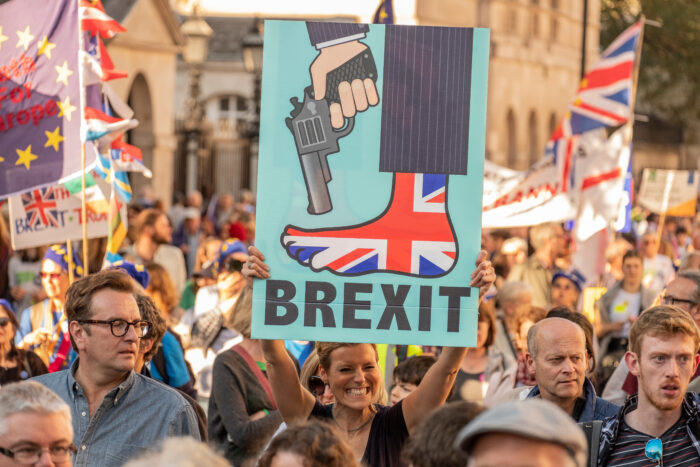
FEPS Newsletter 31 May 2024 – 🌱 Just transition

One week until the EU elections! – If you have problems displaying this email, follow […]

31/05/2024
One week until the EU elections! –

If you have problems displaying this email, follow this link

Every vote counts! By voting in next week’s EU elections, you have the power to shape the future of the European Union. A future in which we must continue the path towards a just transition, now under threat.


In recent months, we have seen a well-coordinated effort to rewind the EU’s climate ambitions. One claim is that taking care of our environment hurts poor people and regions. But this is not true. A just transition protects both the environment and the people.


The following publications show how it is done.

Just Transition
A positive narrative for a Just Transition

By Inanna Tribukait and Kevin Le Merle – In collaboration with Solidar


This policy study analyses the reactionary backlash against the socio-ecological transition and how to counter it with political communications. Not only do the authors recommend a conscious choice of medium, but also tangible and positive examples that make a difference in peoples’ lives. On top of that, the process of policymaking, including identifying the right goals, forms part of the set of recommendations.


By Milan Petit, Mikhail Sirenko, Michael Obersteiner and Kevin Le Merle – In collaboration with Friedrich-Ebert-Stiftung (FES), Project SEER, Environmental Change Institute and International Institute for Applied Systems Analysis 


A research team from project SEER, assesses the effectiveness of complementing the GDIP with labour market policies in Just Transition regions, highlighting the challenges of labour shortages and structural unemployment.

Read 'Expected labour market effects of the Green Deal Industrial Plan'

The study provides insights into the structural mismatch in labour markets, emphasising the need for labour mobility, while regional case studies from Belgium, Spain, Czechia, Poland and Sweden offer in-depth perspectives on the local effects of the socio-ecological transition. The report concludes with policy recommendations, emphasising a systems approach for a balanced, effective transition.

 
Policy Study
Read 'How can RepowerEU consolidate recovery?'

By Franco Tomassoni and Tiago Santos Pereira – In collaboration with FES, Colabor and Institut Emile Vandervelde


The question “How can RepowerEU consolidate recovery?” is the focus of this policy study published within the FEPS Recovery Watch series. Analysing the case studies of the National Recovery and Resilience Plans of Denmark, Estonia, France, Portugal, and Spain, the researchers demonstrate that European energy policy still lacks significant cross-border infrastructure investments, as well as the need for further monitoring and evaluation to reach a concept of energy security that puts European resilience at the centre.

Progressive Post

PROGRESSIVE PAGE

Navigating the greenlash

Putting people at the heart of climate action in Europe

Article by Mikael Leyi, Secretary General of SOLIDAR

 
Navigating the greenlash

The Greenlash has recently gained momentum in the EU. Yet, climate action is indispensable and stay a high priority for Europeans. It is time to dispel the myth that climate action is a burden and instead highlight how well-planned and implemented sustainable policies directly improve lives and benefit all.


Any climate and environmental action should be accompanied by a socioeconomic impact assessment and by measures that aim to tackle the inequalities that are connected to it. Through a just and inclusive transition, we can ensure that Europeans grasp the immediate and long-term benefits of embracing a sustainable future. Read more.

Photo Credits: Shutterstock/IlonaLablaika

News
FEPS is in the news

MEDIA

Ahead of the EU elections and the upcoming Hungarian Presidency of the EU, FEPS Secretary General László Andor has recently conducted several interviews for different European media:

SURVEY

Shape your next FEPS event experience!


Recently attended an event at FEPS headquarters? We want to hear from you!


Your insights are very important for us as we continually strive to enhance the quality of our events and ensure they meet your expectations. By taking just a few moments to complete this brief survey, you’ll provide us with valuable information that will help us improve future events and tailor our offerings to better suit your needs.

Shape Your Next FEPS Event Experience!

Was this email forwarded to you?

Copyright © 2024 FEPS Europe, All rights reserved.

You are receiving this email because you participated in one of FEPS’ events and/or have registered for FEPS’ newsletter.

If you wish not to receive FEPS’ communications anymore, please click here: unsubscribe now


Foundation for European Progressive Studies
Avenue des Arts, 46 – 1000 Bruxelles

+32 223 46 900 – info@feps-europe.eu

Find all related Progressive Post
Progressive Post
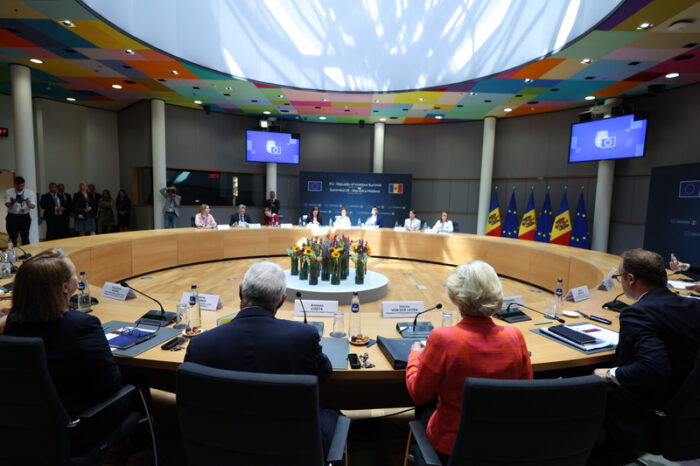
15/04/2026

Spain alone?

Among European heads of state and government, Spain’s Prime Minister Pedro Sánchez alone went out […]
26/03/2026

Denmark: Frederiksen stays on top in historic election marked by division

When Danish Prime Minister Mette Frederiksen called for a snap election at the end of […]
26/03/2026

Slovenians choose political instability at the polls

If in 2016 Americans woke up the day after the election, asking themselves, “how could […]
Find all related Magazine
Magazine
  • cover book

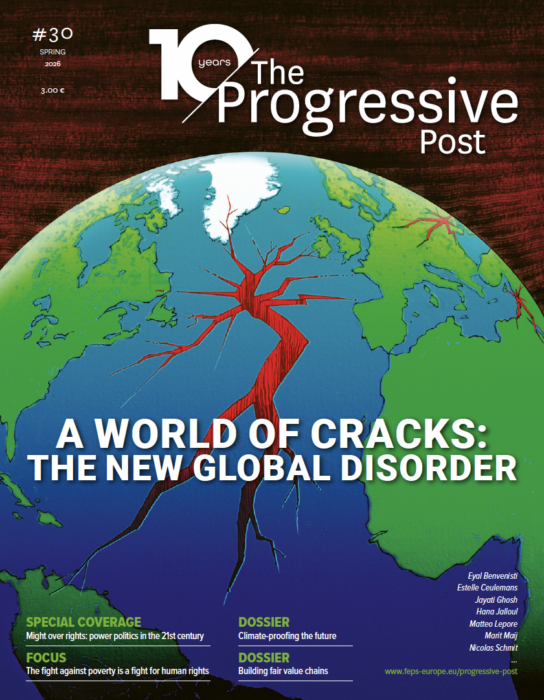
    Issue #30 Progressive Post

Issue #30

In geopolitics, 2026 is challenging our certainties: from the abduction of the Venezuelan president, over […]
  • cover book

    # Issue 29 Progressive Post

# Issue 29

From the war in Ukraine to the devastation of Gaza since 2023, the words ‘war’ […]
  • cover book

    # Issue 28 Progressive Post

# Issue 28

European Social Democracy at historical crossroads
Find all related publications
Publications
27/03/2026

Laboratories of counter-hegemony

Orbán, Trump and the transatlantic far-right ecosystem
25/03/2026

The European Green Deal tracker

How well is your member state implementing key policies of the Green Deal? The European […]
19/03/2026

There must be an alternative

Against mainstream defeatism and towards the rejuvenation of the democratic public space
19/03/2026

Countering the far right in the European Parliament

Exploring progressive strategies in the age of far-right normalisation
Find all related news
News
13/04/2026

Hungary’s civic revolution

FEPS' commentary on the outcomes of the Hungarian election
05/03/2026

FFPPVC commentary on the new EU Gender Equality Strategy 2026-2030

Commentary by the Feminist Foreign Policy Progressive Voices Collective (FFPPVC)
03/03/2026

Wag the dog?

FEPS commentary on the US-Israel attack on Iran
03/03/2026

Closing ceremony of the Progressive Ukraine programme

The graduation ceremony completed the programme which was part of the Open Progressive University (OPU).
Find all related in the media
In the media

What next for Olivér Várhelyi, Orbán’s last man standing in Brussels?

by EURACTIV 14/04/2026
FEPS Secretary General László Andor discusses the potential impact of the HUngarian election result on EU Commissioner, Olivér Várhely

EU relieved to see back of Orbán but Magyar’s Hungary may still present problems

by The Guardian 14/04/2026
FEPS Secretary General László Andor comments on Hungary's future following the outcome of the 2026 general election

Bilancio UE: fondi sociali in bilico, l’Europarlamento chiede più risorse e meno flessibilità

by Il Sole 24 Ore 13/04/2026
"EU budget: social funds at risk, the European Parliament calls for more resources and less flexibility" In this article by Il Sole 24 ore, FEPS Secretary General László Andor highlights the risks that the current MFF proposal - set to be voted on by the European Parliament - could pose to the EU budget and outlines the consequences of reducing social funding.

Világháború, vagy amit akartok

by Mérce 18/03/2026
"World War, or what you will". FEPS Secretary-General László Andor escalating conflict between the USA, Israel, and Iran and the lack of 'brakes' to prevent escalation from Donald Trump and Benjamin Netanyahu.