Rising inequality in the UK and the political economy of Brexit

Lessons for policy

Policy Brief

26/07/2016
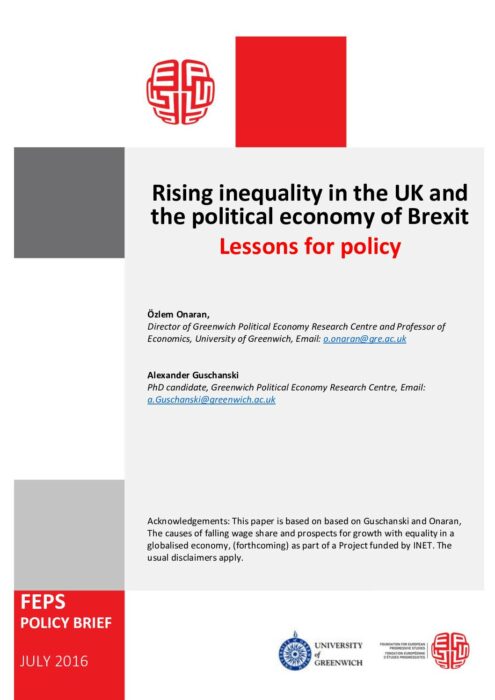
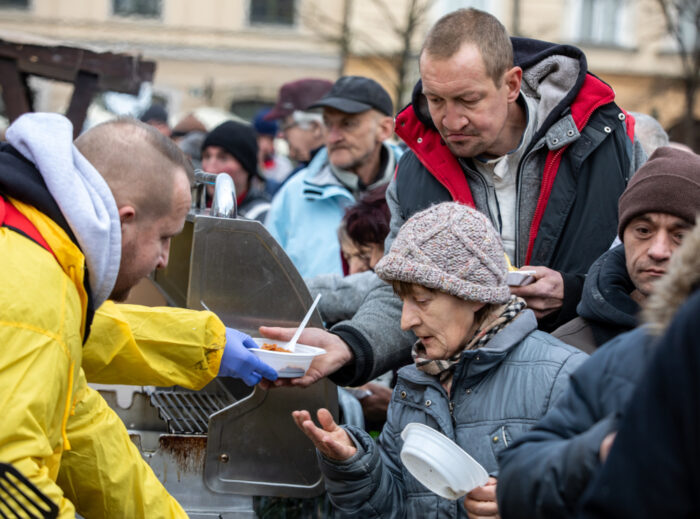
The EU Referendum in the UK on 23 June laid bare long existing divisions in the country. A very divisive campaign for leave deepened the scars in the society further. After decades of deindustrialization, rising inequality, deteriorating working conditions, loss of voice, followed by the Great Recession and austerity, the majority of the working people felt the only way to express their discontent about their living and working conditions is to vote to leave. Throughout the campaign, the leave side diverted their discontent to a scapegoat of immigration and fuelled xenophobia. Various Brexit campaigns created an illusion that conditions can only improve if Britain takes control of its borders, which they claimed to be impossible as a member of the European Union. According to survey evidence fears of immigration are more pronounced among voters in a more vulnerable position in the labour market, and in the post-industrial north-eastern towns, with also a clear divide between generations, with around two-thirds of the over 55s voting to leave and 70 per cent of the under 25s voting to stay (Hobolt, 2016; Ashcroft, 2016; Burn-Murdoch, 2016). The disenfranchised communities did not feel that they have anything more to lose due to the economic risks of Brexit or loss of workers’ rights under a conservative exit scenario, which sadly is likely to prove wrong.

Read policy brief

Find all related publications
Publications
03/03/2026

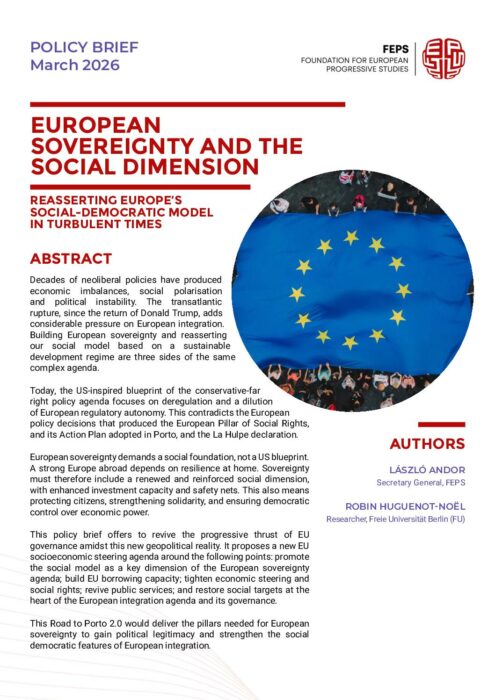
European sovereignty and the social dimension

Reasserting Europe’s social-democratic model in turbulent times
29/01/2026

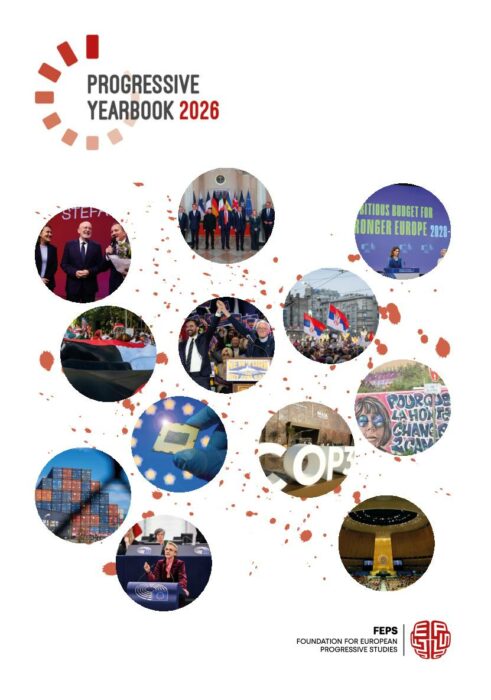
Progressive Yearbook 2026

In an eerie manner, 2025 resembled the ‘time of monsters’, which, according to the great […]
19/12/2025

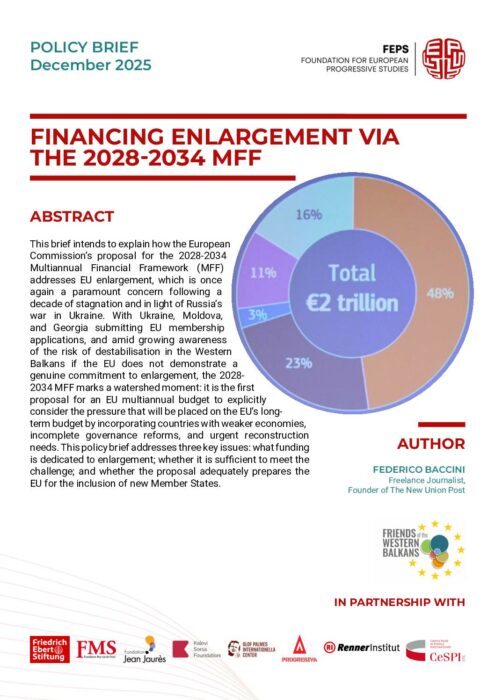
Financing enlargement via the 2028-2034 MFF

This brief intends to explain how the European Commission’s proposal for the 2028-2034 Multiannual Financial […]
19/12/2025

Moving beyond neoliberalism in EU trade policy

European Union trade policy finds itself at a crossroads. After three decades of neoliberal dominance in the […]
Find all related Progressive Post
Progressive Post
05/03/2026

Poverty is not a fatality

In 2024, more than 93 million Europeans, representing 21 per cent of the EU-population have […]
05/03/2026

Poverty is the result of political choices

On 12 February, the European Parliament voted on the report of the parliament’s committee on […]
Find all related events
Events
Upcoming
23/06/2026
Brussels, Belgium (Hybrid)

How Progressives should think about migration

7th Next Left Lecture
Past
25 - 26/02/2026
FEPS HQ (Expert meeting - Hybrid)

Progressive Migration Group – Brussels

People, pathways and partnership: Reframing of AU–EU migration cooperation
03 - 04/02/2026
FEPS HQ

Go Beyond: Zero deaths at work

Brussels visit
Load more...
Find all related Audiovisual
Audiovisual
26/02/2026

“Those who have A LOT, must PAY MORE” Nicolas Schmit | FEPS Talks Podcast

🎧 Listen to the latest episode of FEPS Talks with FEPS President Nicolas Schmit! 🇪🇺 […]
26/02/2026

“Those who have A LOT, must PAY MORE” Nicolas Schmit | FEPS Talks Podcast

🎧 Listen to the latest episode of FEPS Talks with FEPS President Nicolas Schmit! 🇪🇺 […]
02/02/2026

‘An EU social agenda for a geopolitical age’ Flickr album

Photo album of the ‘An EU social agenda for a geopolitical age‘ event in FEPS […]
29/01/2026

“SHAPING the market rather than FIXING its failures” M. Mazzucato | Progressive Person of the Year

In a year marked by political backsliding and a return to outdated economic thinking, FEPS […]
Find all related news
News
29/01/2026

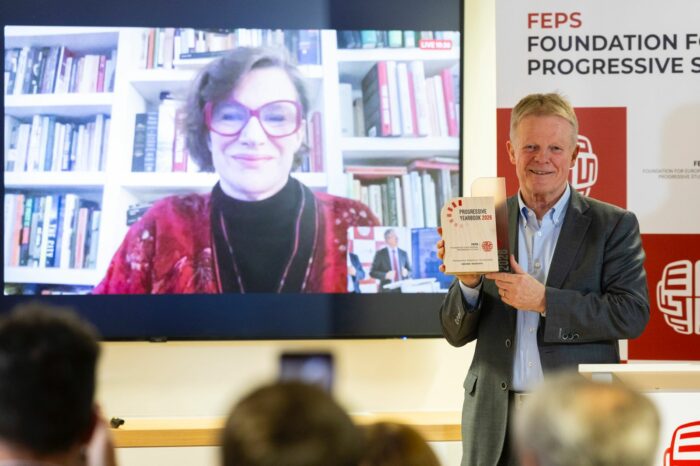
Marianna Mazzucato awarded FEPS ‘Progressive Person of the Year’

FEPS Progressive Person of the Year 2025-2026
16/12/2025

FEPS commentary on the EU Affordable Housing Plan

The announcement of the EU Affordable Housing Plan by Commissioner Dan Jørgensen is a historic milestone […]
04/12/2025

It is high time that the goal is set on “Quality”

FEPS commentary on the Quality Jobs Roadmap
21/10/2025

Maria João Rodrigues at PES Congress 2025

🇳🇱 🌹 FEPS attended the Party of European Socialists (PES) Congress in Amsterdam, which included […]
Find all related in the media
In the media

España los forma, Europa los contrata: así es el mapa de la nueva fuga de cerebros

by El Confidencial 10/02/2026
Spain trains them, Europe hires them: the map of the new brain drain: László Andor, FEPS Secretary-General, discusses the 'brain drain' as a result of the EU’s single market and highlights the need for a fairer mobility and retention strategy across the EU.

‘Regreso al futuro. El gran reseteo’ by Lina Gálvez

by Tinta Libre 02/02/2026
“Back to the Future: The Great Reset” Opinion article by FEPS Vice-President, Lina Gálvez reflecting on the current global crisis marked by rising authoritarianism, digital power and extreme inequality, and tracing its roots through a historical analysis of capitalism — from the post-1945 social and geopolitical settlement led by social democratic forces, through neoliberal financialisation, to what she describes as a new phase of fascist capitalism.

Liberal democracy’s social, societal fabric under threat – Live from the EPC Annual Conference 2025

by EPC 08/12/2025
In a podcast by the European Policy Centre (EPC), FEPS Secretary General, László Andor, discusses how liberal democracy in Europe is being challenged not only at the institutional level but also through the erosion of social rights and what Europe must do to defend its social foundations.

Migranti: Amato a FEPS — “Socialisti e populisti fomentano ossessione”

by Avanti! 29/09/2025
“Migrants: Amato to FEPS — ‘Socialists and populists fuel obsession’” News article in Avanti! where Hedwig Giusto, FEPS Head of International Affairs, critiques how both populist and some socialist political forces are stoking fear around migration. Giusto calls for balanced migration policies that respect human rights, reinforce solidarity among member states, and reject securitarian obsessions.