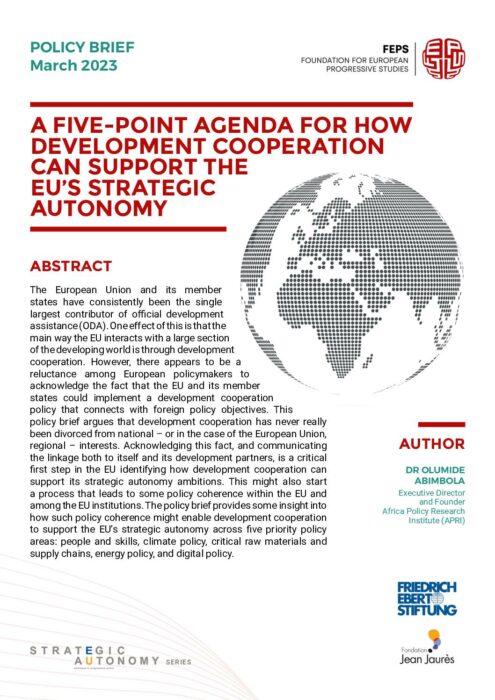
A five-point agenda for how development cooperation can support EU’s strategic autonomy

European Strategic Autonomy series - Economy & Trade

Policy Brief

15/03/2023
What are the links between development cooperation and EU’s strategic autonomy?

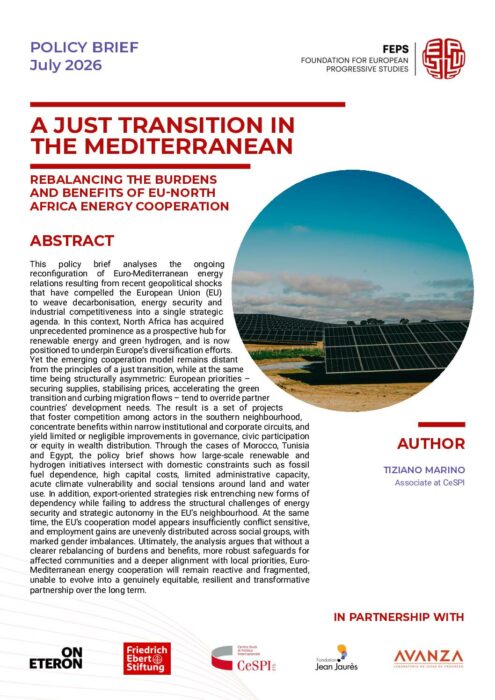
In this policy brief, Dr. Olumide Abimbola explores the role that development cooperation can play in supporting EU’s strategic autonomy ambitions, particularly with its neighbouring continent, Africa.

The EU and its member states have consistently been the single largest contributor to Official Development Assistance (ODA). One effect of this is that the main way the EU interacts with a large section of the developing world is through development cooperation. There appears, however, to be a reluctance among European policymakers to acknowledge the fact that the EU and its member states could implement a development cooperation policy that connects with foreign policy objectives.

This policy brief argues that development cooperation has never really been separated from national – or, in the case of the EU, regional – interests. Accepting this fact and communicating the linkage both to itself and its development partners is a critical first step for the EU to identify how development cooperation can support its strategic autonomy ambitions. This might also start a process that leads to some policy coherence within the EU and among EU institutions.

The policy brief also provides some insights into how such policy coherence might enable development cooperation to support the EU’s strategic autonomy across five policy priority areas:

  • people and skills
  • climate policy
  • critical raw materials and supply chains
  • energy policy
  • digital policy and sovereignty

In all these domains, Abimbola underlines that the EU must not over-instrumentalise its development policy for short-term political gains but instead act as a constructive and collaborative partner, listening to the needs and aspirations of African nations and adopting a framework that is mutually beneficial to Africa and Europe.

This Policy Brief is part of a Strategic Autonomy Series, you can find out more about this issue on the project webpage.
Network
Fondation Jean-Jaurès
Friedrich-Ebert-Stiftung
Related publications
28/02/2023

Progressive pathways to European strategic autonomy 

European Strategic Autonomy series
06/02/2023

Towards a sustainable and resilient future internet 

European Strategic Autonomy series - Digital & Technology
06/07/2022

Europe needs high-tech talent

European Strategic Autonomy series - Digital & Technology
06/07/2022

Countering economic coercion

European Strategic Autonomy series - Economy & Trade
06/07/2022

Leveraging trade policy for the EU’s strategic autonomy

European Strategic Autonomy series - Economy & Trade
04/07/2022

Partnerships and European strategic autonomy

European Strategic Autonomy series - Security & Defense
28/06/2022

Sustainable digital market design

A data-based approach to the circular economy
19/05/2022

European industrial policy

European Strategic Autonomy series - Economy & Trade
16/04/2022

Strategic Autonomy Tech Alliances: Political-industrial collaboration in strategic technologies

European Strategic Autonomy series - Digital & Tech
01/03/2022

Leveraging digital regulation for Strategic Autonomy

European Strategic Autonomy series - Digital & Tech
09/02/2022

Elevating the EU’s added value as a security provider

European Strategic Autonomy series - Security & Defence
13/01/2022

Strategic Autonomy: Not without integration

European Strategic Autonomy series - Security & Defence
25/11/2021

An architecture fit for strategic autonomy

European Strategic Autonomy series - Security & Defence
Related events
03/03/2023
Warsaw, Poland
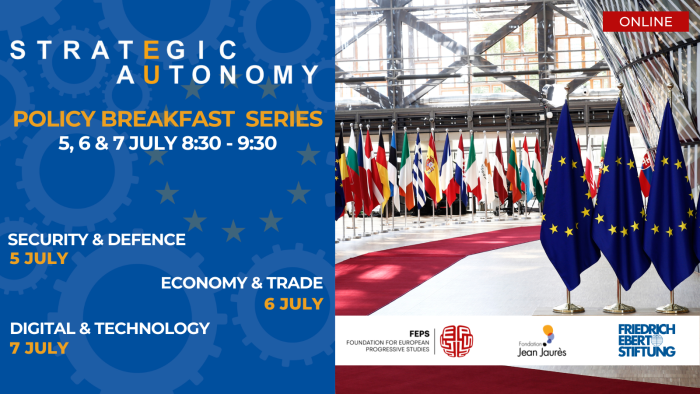
The future of EU Strategic Autonomy

Global Progressive Forum
07/07/2022
Online

Strategic Autonomy – Digital & Technology

Policy Breakfast Series
06/07/2022
Online

Strategic Autonomy – Economy & Trade

Policy Breakfast Series
05/07/2022
Online

Strategic Autonomy – Security & Defense

Policy Breakfast Series
01/10/2021

European Strategic Autonomy: Working Group on Security and Defence

This is a closed-door event.
Find all related publications
Publications
29/01/2026

Progressive Yearbook 2026

In an eerie manner, 2025 resembled the ‘time of monsters’, which, according to the great […]
15/01/2026

Financing enlargement via the 2028-2034 MFF

This brief intends to explain how the European Commission’s proposal for the 2028-2034 Multiannual Financial […]
19/12/2025

Moving beyond neoliberalism in EU trade policy

European Union trade policy finds itself at a crossroads. After three decades of neoliberal dominance in the […]
18/11/2025

Public investment in the proposed 2028-2034 EU budget

Needs, gaps and options
Find all related Progressive Post
Progressive Post
12/02/2026

Europe needs animal spirits again – and deregulation will not stimulate them

Europe’s competitiveness debate is accelerating under a growing sense of urgency. Slowing growth, geopolitical rivalry […]
11/02/2026

Ensuring tax justice in a fragile and unequal world economy

When a handful of economists met over a century ago in Geneva to deliver a […]
11/02/2026

The elephant in the European room

Critical raw materials and open strategic autonomy
Find all related events
Events
Upcoming
19/03/2026
FEPS HQ

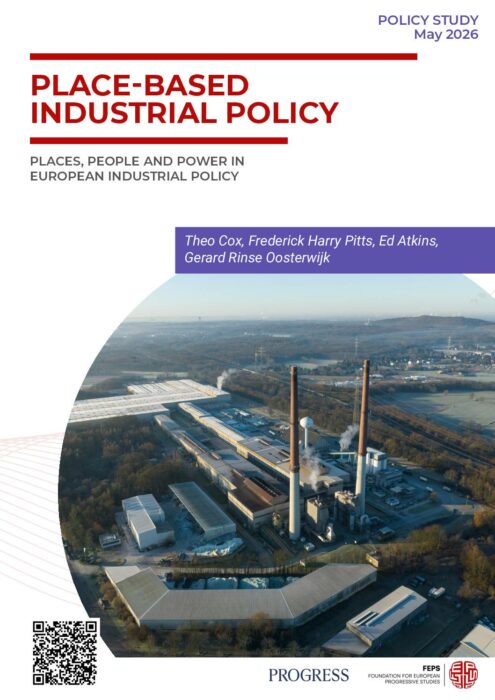
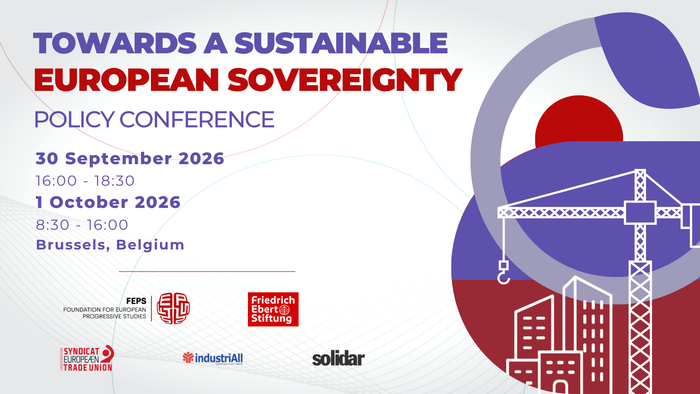
Place-based industrial policy in Europe

Any serious discussion of industrial policy must begin with the recognition that economic activity is […]
Past
29/01/2026
FEPS HQ

FEPS’ New Year Reception & Progressive Yearbook launch

7th edition
17/11/2025
FEPS HQ, Brussels (Expert meeting)

New own resources in the MFF proposal

EU Investment Capacity Group 2025
Load more...
Find all related Audiovisual
Audiovisual
29/01/2026

“SHAPING the market rather than FIXING its failures” M. Mazzucato | Progressive Person of the Year

In a year marked by political backsliding and a return to outdated economic thinking, FEPS […]
29/01/2026

“SHAPING the market rather than FIXING its failures” M. Mazzucato | Progressive Person of the Year

In a year marked by political backsliding and a return to outdated economic thinking, FEPS […]
29/01/2026

‘FEPS’ New Year Reception & Progressive Yearbook launch’ Flickr album

Photo album of the ‘FEPS’ New Year Reception & Progressive Yearbook launch‘ event in FEPS […]
17/11/2025

New own resources in the MFF proposal

Photo album of the ‘New own resources in the MFF proposal‘ event at FEPS HQ, […]
Find all related news
News
29/01/2026

Marianna Mazzucato awarded FEPS ‘Progressive Person of the Year’

FEPS Progressive Person of the Year 2025-2026
06/01/2026

Venezuela is not about drugs: Trump’s Regional Expansionism and Europe’s Test

FEPS Commentary on US military intervention in Venezuela
27/11/2025

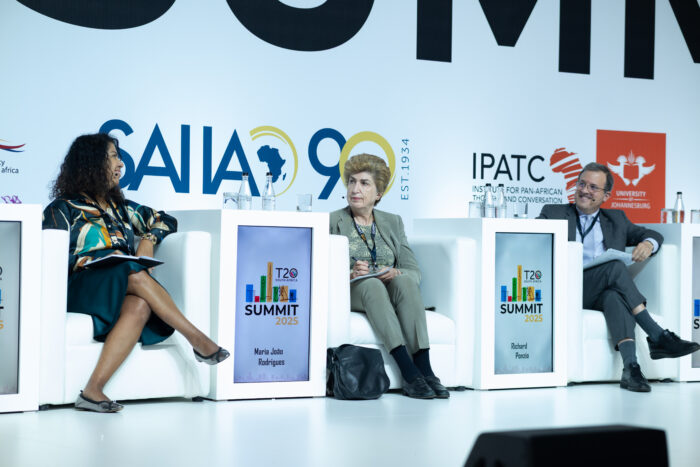
FEPS President Maria João Rodrigues at the T20 South Africa Summit in Johannesburg

Organised by the South African Institute of International Affairs (SAIIA), the Institute for Global Dialogue […]
10/09/2025

Von der Leyen – walking the walk at last?

FEPS reaction to The State of the European Union 2025
Find all related in the media
In the media

España los forma, Europa los contrata: así es el mapa de la nueva fuga de cerebros

by El Confidencial 10/02/2026
Spain trains them, Europe hires them: the map of the new brain drain: László Andor, FEPS Secretary-General, discusses the 'brain drain' as a result of the EU’s single market and highlights the need for a fairer mobility and retention strategy across the EU.

‘Regreso al futuro. El gran reseteo’ by Lina Gálvez

by Tinta Libre 02/02/2026
“Back to the Future: The Great Reset” Opinion article by FEPS Vice-President, Lina Gálvez reflecting on the current global crisis marked by rising authoritarianism, digital power and extreme inequality, and tracing its roots through a historical analysis of capitalism — from the post-1945 social and geopolitical settlement led by social democratic forces, through neoliberal financialisation, to what she describes as a new phase of fascist capitalism.

László Andor: Miből fejleszt az EU ezután?

by Portfolio 28/08/2025
“What will the EU develop from now on?” Analysis by FEPS Secretary General László Andor in Portfolio (HU), highlighting the new MFF’s shift toward increasing EU own-resources, boosting funding for strategic domains like defense, stabilisation and competitiveness, and calling for a flexible crisis-response mechanism such as the proposed Emergency Crisis Response Mechanism

Започва нов ЕС-бюджетен цикъл

by Novi Vremena 26/08/2025
“A new EU budget cycle begins” Article by FEPS Secretary General László Andor in Novi Vremena (BG), highlighting that while Europe must strengthen fiscal capacity to support balanced growth and strategic autonomy, priorities such as cohesion, defense, and social investment must be built into the next multiannual financial framework.