FEPS Newsletter 5 Nov 2026 – 🤖 AI at school, work and even in public sectors

AI and algorithms’ effect on people’s lives – If you have problems displaying this email, […]

06/11/2026
AI and algorithms’ effect on people’s lives –

If you have problems displaying this email, follow this link

With the Quality Jobs Act legislative proposal being only weeks away, algorithmic management and AI at work are about to shoot to the top of the agenda again. FEPS has you covered with preparation materials to be able to properly assess the proposal with our publications on AI in the public sector, the impact of AI on productivity and a guide for shop stewards on workers’ data rights. 

Curious to know more? Join us for the webinar “Who decides at work?” on Monday 23 November.

Algorithms & AI
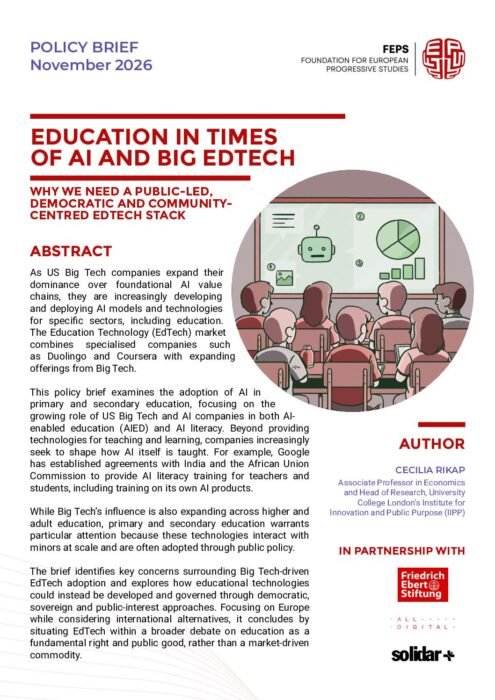
Education in times of AI and Big EdTech

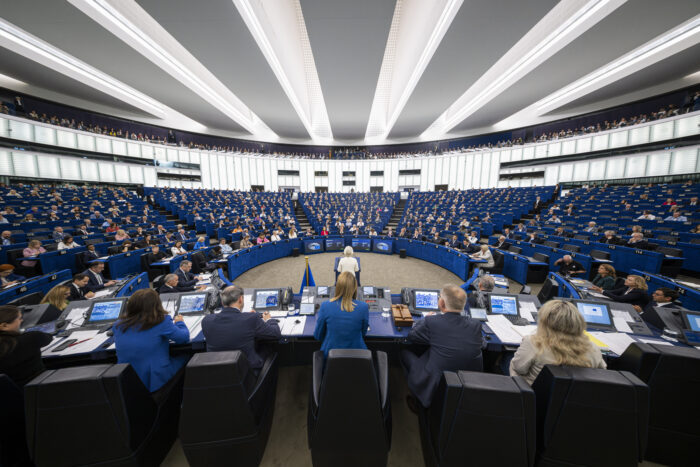
4 NOV – EUROPEAN PARLIAMENT

Education in times of AI and Big EdTech


At the European Parliament, the new policy brief “Education in times of AI and Big EdTech” was launched with author Cecilia Rikap and members of the S&D Digital Working Group, discussing how US Big Tech is influencing educational tools for children just weeks after the European Commission launched the KIDS Act. 

This policy brief examines the adoption of AI in primary and secondary education, focusing on the growing role of US Big Tech and AI companies in both AI-enabled education (AIED) and AI literacy. 


Beyond providing technologies for teaching and learning, companies increasingly seek to shape how AI itself is taught. This is why we need a public-led, democratic and community-centred EdTech stack.


By FEPS, in collaboration with FES EU Office, Solidar+ and All Digital.

Education in times of AI and Big EdTech
How AI affects jobs, public services, and workers’ rights in the Nordics and the EU

23 OCT – STOCKHOLM, SWEDEN

How AI affects jobs, public services, and workers’ rights


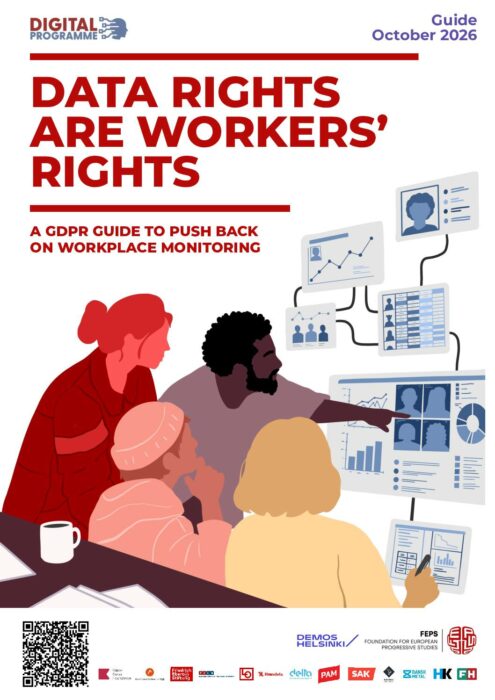
Algorithms and AI systems continue to reshape decision-making at workplaces and shift the balance of power between employers, employees and citizens. The closing event of the 2025-2026 edition of the FEPS-Nordic Digital Programme launched the new guide “Data rights are worker rights”.

The guide was created specifically for union representatives and workers to help them negotiate and challenge the use of algorithmic management in their workplace. If not followed closely and steered by union representatives, the deployment of algorithmic management systems can pose serious risks to workers’ autonomy, privacy, health and wellbeing.


By FEPS, in collaboration with the partners of the FEPS-Nordic Digital Programme.

Data rights are workers’ rights
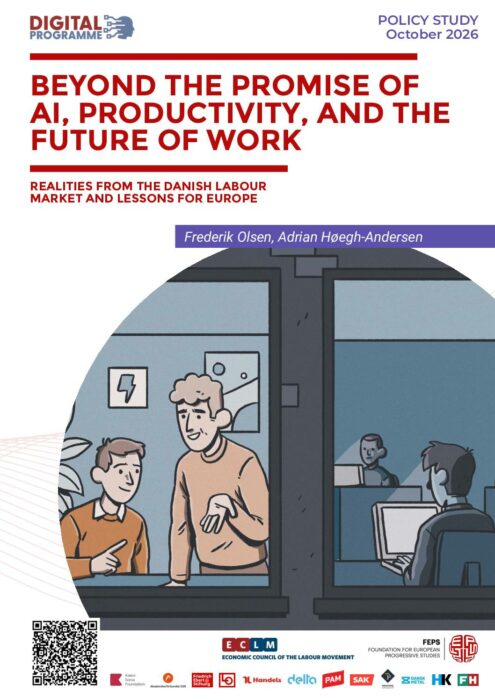
Beyond the promise of AI, productivity and the future of work

POLICY STUDY

Beyond the promise of AI, productivity and the future of work

Realities from the Danish Labour Market and lessons for Europe 


This policy study examines the impact of AI on the Danish labour market, where workplace AI adoption is the highest in the EU. The study finds that AI has clear potential to raise productivity, particularly in knowledge-intensive tasks, but that these gains are likely to materialise gradually. 

However, there is no robust evidence of significant effects on wages, employment or working hours. At the same time, AI adoption is unevenly distributed, raising concerns about widening existing inequalities. 


By Frederik Olsen and Adrian Høegh-Andersen – By FEPS, in collaboration with ECLM and the partners of the FEPS-Nordic Digital Programme.

POLICY STUDY

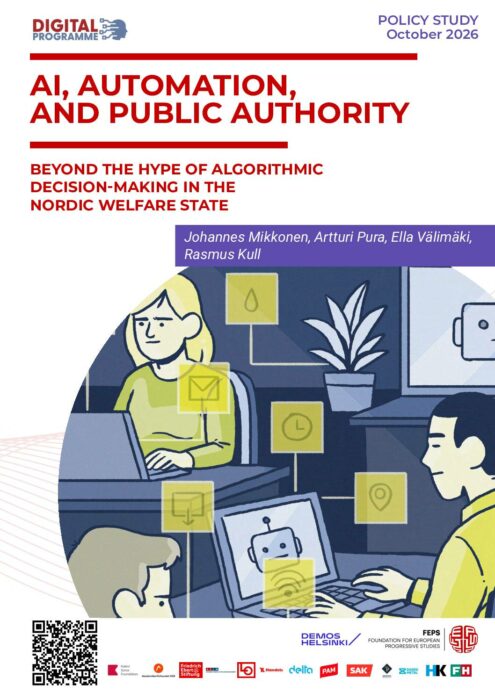
AI, automation and public authority

Beyond the hype of algorithmic decision-making in the Nordic Welfare State 


AI and automated decision-making (ADM) are increasingly shaping how public authority is exercised and how civil servants carry out their work. But is it making their work more efficient? 


This policy study looks at cases from the Finnish, Norwegian and Swedish public sectors to analyse how AI and ADM work in practice. 

AI, automation, and public authority

By Johannes Mikkonen, Artturi Pura, Ella Välimäki and Rasmus Kull – By FEPS, in collaboration with Demos Helsinki and the partners of the FEPS-Nordic Digital Programme.

Want to dive deeper into the publications? Join us online on 23 November for a presentation and discussion with the authors. 

Events
Afrikadag 2026
 

📅  21 NOVEMBER

📍 AMSTERDAM, NETHERLANDS

Afrikadag 2026:  The future is here!
FEPS fringe event


EU partnership language with Africa often gets stuck in short-term choices, such as shrinking development cooperation budgets. The question for Europe is not whether it grants Africa a seat at the table, but whether it positions itself in time for a world that is no longer waiting. Join this new edition of Afrikadag!

Multilevel governance for European industrial policy
 

📅  1 DECEMBER

📍 GENOA, ITALY

Multilevel governance for European industrial policy


Industrial policy has returned to the centre of the European agenda, but how can it be governed across multiple levels, institutions and instruments?


This event will present a multilevel architecture built around an Industrial Strategy Board linking the Commission, Member States and regions. It will pay special attention to the regional dimension of industrial policy. Register here.

Silver Rose Awards 2026
 

📅  2 DECEMBER

📍 BRUSSELS, BELGIUM

Silver Rose Awards 2026


The registration for the Silver Rose Awards 2026, an evening to celebrate those who are fighting for social justice and climate action, is now open! 


This year, we will celebrate Jan Eliasson, former Deputy Secretary-General of the United Nations, for a lifetime of work on peace, diplomacy and human rights and the Philippine Movement for Climate Justice, a coalition of more than 150 organisations that helped stop 18 coal-fired power plants and 8 LNG plants. Register now!

News

FEPS REACTS

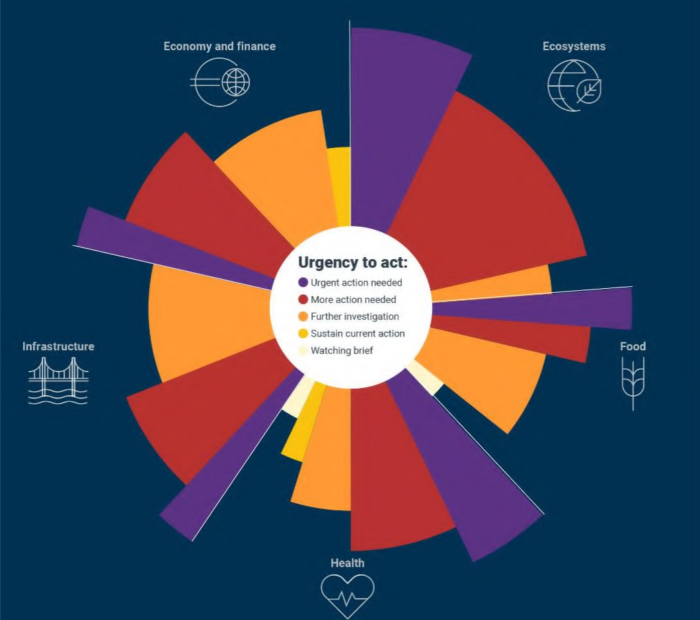
The new EU Framework for Climate Resilience

Necessary foundations but little action


The Communication on the EU Framework for Climate Resilience, published on 27 October, proposes a European Climate Resilience Law and a series of “enabling measures” to support adaptation and resilience. Is it enough? Read the full analysis by FEPS Climate Policy Analyst Chloé Deffet. 

FEPS Reacts: The new EU Framework for Climate Resilience

Photo credits: © EEA, 2024. European Climate Risk Assessment.

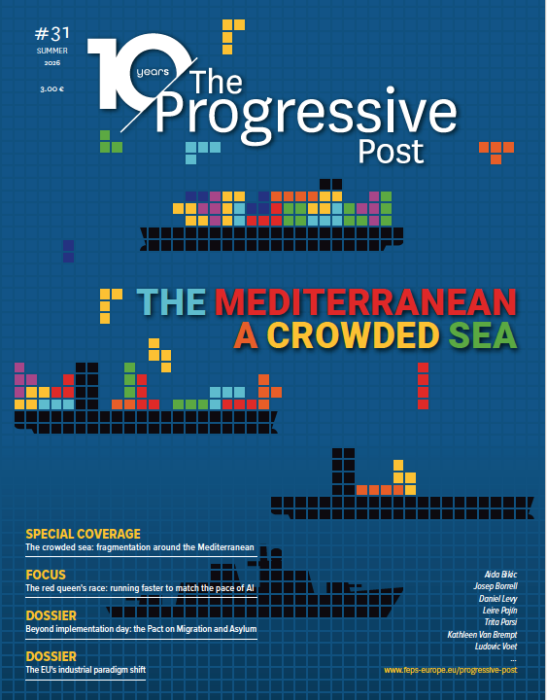
Progressive Post
Home is where the house is

DOSSIER

Home is where the house is


In Europe, housing costs are rising faster than incomes, making housing a political issue around which elections are often decided

PROGRESSIVE PAGE

No peace in Lebanon without strong allies

By Marcus Schneider, Director, Competence Centre for Peace and Security in the Middle East/North Africa Region

No peace in Lebanon without strong allies

During Trump’s second presidency, rhetoric has very often been matched by policy. By reshaping the normative landscape, Trump has made the previously unthinkable available for serious consideration, lowering the threshold of what institutions and citizens alike are willing to tolerate. Read more.

Photo credits:  Shutterstock / mahdi313


Was this email forwarded to you?

Copyright © 2026 FEPS Europe, All rights reserved.

You are receiving this email because you participated in one of FEPS’ events and/or have registered for FEPS’ newsletter.

If you wish not to receive FEPS’ communications anymore, please click here: unsubscribe now. We use tracking pixels in our newsletters to measure engagement. Manage your preferences or unsubscribe at any time.


Foundation for European Progressive Studies
Avenue des Arts, 46 – 1000 Bruxelles

+32 223 46 900 – info@feps-europe.eu

Find all related Progressive Post
Progressive Post
05/11/2026

If you want peace, prepare for equality

I have always been struck by how little attention we pay to patriarchal culture when […]
05/11/2026

The Women, Peace and Security agenda amid shifting geopolitics

While the current conflictual and geopolitical environment makes the Women, Peace and Security agenda ever […]
05/11/2026

The EU’s next WPS plan must act on tech, not just mention it

The EU is drafting its next action plan on Women, Peace and Security, and technology […]
Find all related Magazine
Magazine
  • cover book

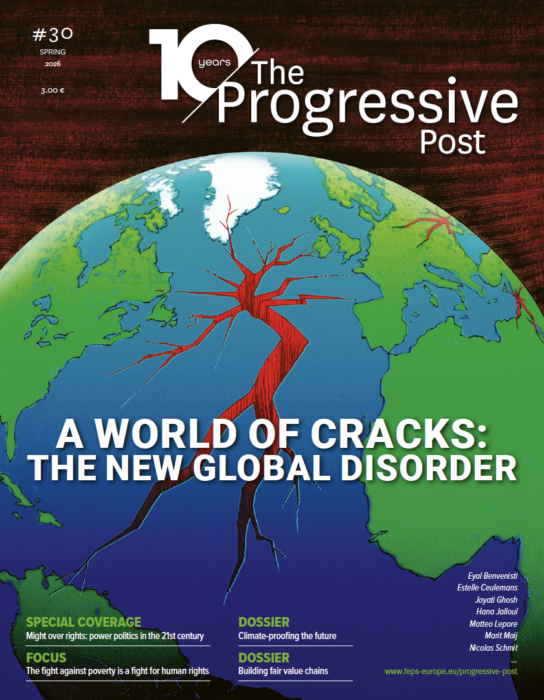
    Issue #30 Progressive Post

Issue #30

A world of cracks: the new global disorder
  • cover book

    Issue #29 Progressive Post

Issue #29

Does peace still have a chance?
Find all related publications
Publications
04/11/2026

Education in times of AI and Big EdTech

Why we need a public-led, democratic and community-centred EdTech stack
04/11/2026

AI, automation, and public authority

Beyond the hype of algorithmic decision-making in the Nordic Welfare State
23/10/2026

Data rights are workers’ rights

A GDPR guide to push back on workplace monitoring
23/10/2026

Beyond the promise of AI, productivity and the future of work

Realities from the Danish Labour Market and lessons for Europe
Find all related news
News
30/10/2026

FEPS Reacts: The new EU Framework for Climate Resilience

Necessary foundations but little action
23/10/2026

Notice of vacancy – Policy Analyst on Gender Equality

Apply before 23 November 2026
16/09/2026

FEPS Reacts: State of the European Union 2026

The 2026 State of the Union felt more like ‘von der Leyen I’ than ‘von […]
23/07/2026

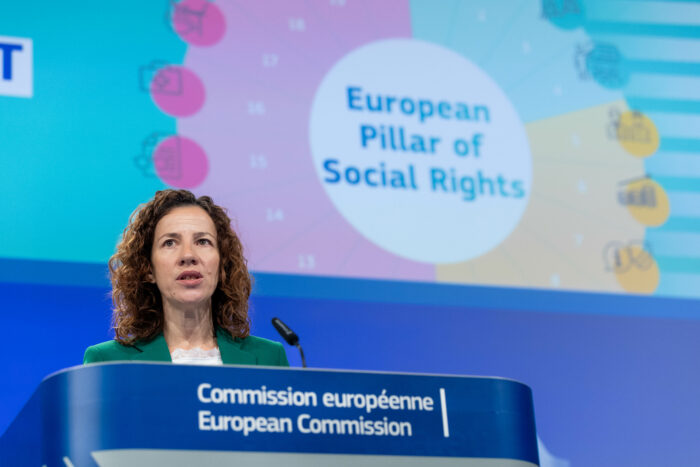
FEPS Reacts: European Commission communication on the Action Plan on the European Pillar of Social Rights

By Laszlo Andor, FEPS Secretary-General & François Balate, Policy Analyst on Social The communication on the […]
Find all related in the media
In the media

Frågan om jämställdhet splittrar unga svenskar

by dagens arena 29/10/2026
"The issue of gender equality divides young Swedes" - FEPS Policy Analyst on Democracy Matteo Dressler discusses the findings of the EqualiZe policy study in the Swedish context.

Brazil’s Lula survives Bolsonaro scare, safeguarding EU democratic ally on climate and trade

by EUobserver 26/10/2026
Read EUobserver's analysis of what comes next after Brazil's elections, which includes comments from Thainá Leite, Project Coordinator at FEPS

Франција е Франција – но Франција е и Европа

by Racin.mk 21/10/2026
“France is France – but France is also Europe.” In an opinion piece for Racin.mk, László Andor, Secretary General of FEPS, argues that France’s youth protests, set against a latent budget crisis and growing precarity (schools, housing), risk benefiting Marine Le Pen, and that France, despite bending the EU’s fiscal rules, has also propped up European growth.

La Regina, il problema dei divari territoriali è una questione europea

by Regione Basilicata 22/09/2026
“La Regina: territorial disparities are a European issue” News article published by ANSA (IT), featuring Raffaele La Regina, participant in the FEPS Young Academics Network, discussing territorial and social inequalities across Europe, the need to reconcile competitiveness and cohesion, and the role of European cohesion policy, industrial policy and investment in ensuring that no region is left behind.