About

The Foundation for European Progressive Studies (FEPS) is the think tank of the progressive political family at EU level. Our mission is to develop innovative research, policy advice, training and debates to inspire and inform socialist and social democratic politics and policies across Europe.

FEPS works in close partnership with a solid network of 76 member organisations, boosting coherence among stakeholders from the world of politics, academia and civil society at local, regional, national, European and global levels. More

Our topics

Economy

Digital & Industrial Policy

Environment

World

Gender Equality

Social

Migration

Political Europe

Democracy

Social Democracy

Find all publications
Publications
Find all related publications
Publications
28/04/2025

Housing as investment in Greece and Southern Europe

Private profit vs social value
13/02/2025

Transforming housing policy in war-affected Ukraine

Progressive Ukraine series
26/01/2021

Concrete actions for social and affordable housing in the EU

As of today, the lack of broad societal access to affordable housing is one of […]
Find all related Progressive Post
Progressive Post
14/05/2025

The housing crisis: cities at the frontline

The European Union is at a crossroads. We are living in a crucial moment, with […]
16/05/2024

We need a ‘Marshall Plan’ for housing

Only a few weeks before the European Parliament elections, shortages of affordable housing have sparked […]
16/05/2024

Addressing Europe’s housing crisis

By increasing supply, sound housing policies and thinking beyond housing
Find all related events
Events
Past
13 - 15/11/2025
Vienna, Austria (Expert Meeting)

FEPS Young Academics Seminar

4th seminar of the 9th cycle
09/12/2025
European Parliament, Brussels (Expert meeting)

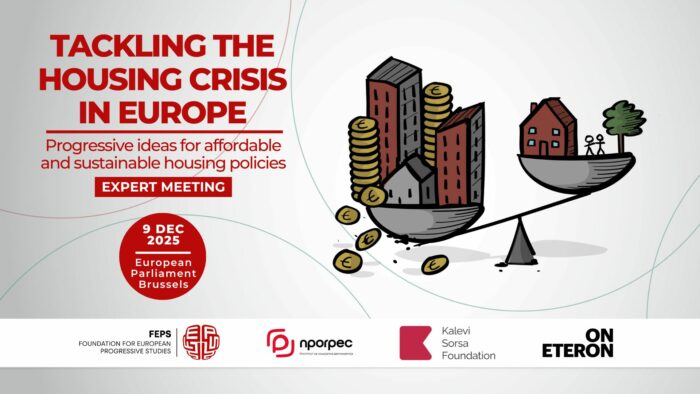
Tackling the housing crisis in Europe

Progressive ideas for affordable and sustainable housing policies
17/10/2025
Amsterdam, Netherlands

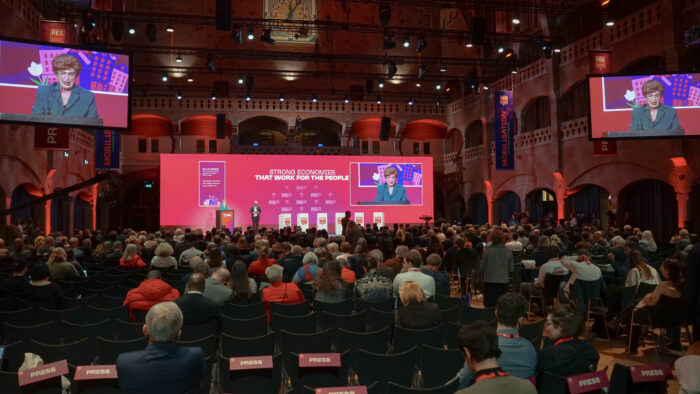
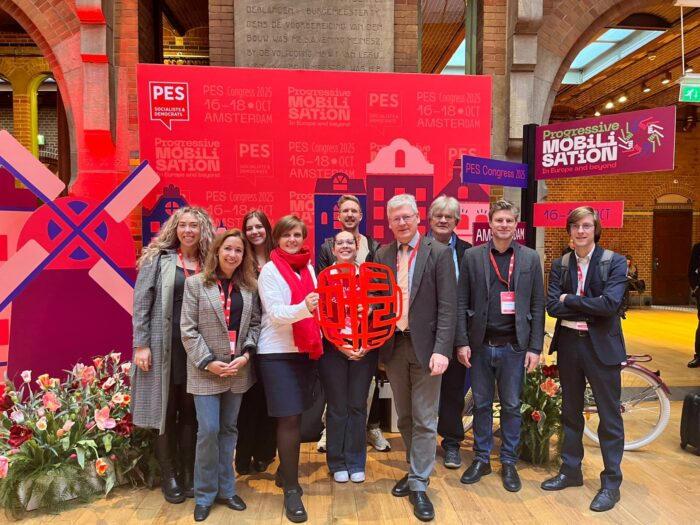
FEPS at PES Congress 2025

The PES Congress 2025 was a crucial gathering for progressives and civil society to tackle […]
Load more...
Find all related Audiovisual
Audiovisual
10/12/2025

‘Tackling the housing crisis in Europe’ Flickr album

Photo album of the ‘Tackling the housing crisis in Europe‘ event at the European Parliament […]
15/05/2025

Addressing the housing crisis in Europe with the Mayor of Athens Haris Doukas

Available on Youtube, Spotify and Apple Podcast! “We are discussing rearming, but Europe is a […]
14/05/2025

Addressing the housing crisis in Europe with the Mayor of Athens Haris Doukas

Available on Youtube, Spotify and Apple Podcast! “We are discussing rearming, but Europe is a […]
08/01/2025

Civil society wants a new EU social agenda with Anne Van Lancker

🔊📺 Available on Spotify, YouTube, and Apple Podcasts In this episode of FEPS Talks, Anne […]
Find all related news
News
21/10/2025

Maria João Rodrigues at PES Congress 2025

🇳🇱 🌹 FEPS attended the Party of European Socialists (PES) Congress in Amsterdam, which included […]
18/10/2025

FEPS at PES Congress 2025

🇳🇱 🌹Within PES Congress, there were full rooms on insightful discussion on a range of […]
05/04/2024

FEPS supports the declaration of Portimão calling for affordable housing in the EU

Affordable housing needs Europe, Europe needs affordable housing
Find all related in the media
In the media

Von der Leyen promised an EU commissioner to tackle the housing crisis – what would be their remit?

by Euronews 13/08/2024
Read this Euronews article featuring an interview with David Rinaldi, FEPS Director of Studies and Policy, in which he stresses that it’s now time for the EU to devise a housing initiative for the middle class too.
Find all related publications
Publications
28/11/2025

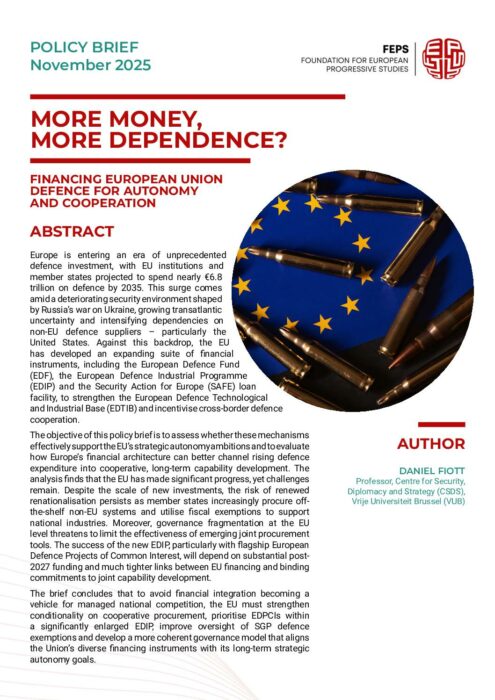
More money, more dependence?

Financing European Union defence for autonomy and cooperation
28/11/2025

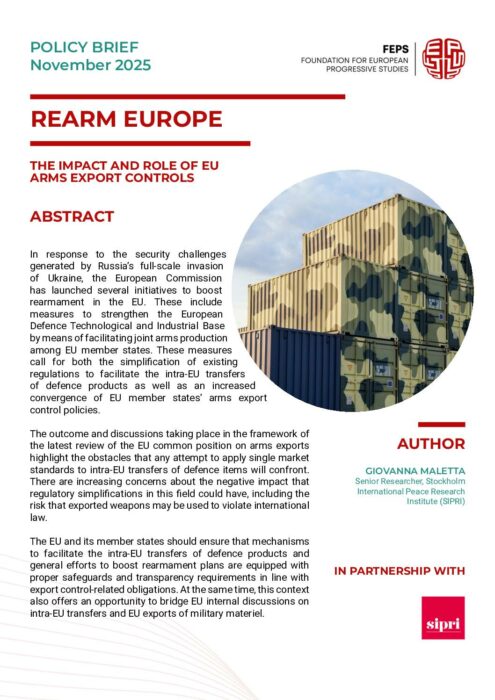
ReArm Europe

The impact and role of EU arms export controls
22/04/2025

Trade, trust, and transition: Shaping the next transatlantic chapter

Essays series by FEPS and Center for American Progress (CAP)
06/03/2025

European defence for security and peace

Ensuring the security and well-being of its citizens is at the core of the European […]
Find all related Progressive Post
Progressive Post
21/11/2025

Palestine: in pursuit of a just and inclusive peace

The twenty-point plan, initially proposed by the Trump administration in September and subsequently endorsed at […]
02/10/2025

Past and future peace

Theories and concepts of peace have long been scientifically and empirically developed and proven. They […]
02/10/2025

Peace for sale?

How transactional deals disregard the law and corrode peace-making
Find all related events
Events
Past
29/11/2025
Copenhagen, Denmark

Call to Europe Denmark 2025

Well-being for all
23/04/2025
FEPS HQ, Brussels (Expert meeting)

Funding for conflict prevention

The EU’s role as a peace actor amid shifting priorities
No more element
Find all related Audiovisual
Audiovisual
05/06/2025

🇵🇸 What FUTURE are we giving GAZA’s children? With Palestinian academic Omar Shaban

📺🔊 Available on YouTube, Spotify & Apple Podcast 🇵🇸 “What about the 6th of October? […]
05/06/2025

🇵🇸 What FUTURE are we giving GAZA’s children? With Palestinian academic Omar Shaban

📺🔊 Available on YouTube, Spotify & Apple Podcast 🇵🇸 “What about the 6th of October? […]
07/05/2025

Rethinking Security through Nuclear Disarmament with Florian Eblenkamp

📺🔊 Available on YouTube, Spotify and Apple Podcast In this climate of militarisation and declining […]
07/05/2025

Rethinking security through nuclear disarmament with Florian Eblenkamp

📺🔊 Available on YouTube, Spotify and Apple Podcast In this climate of militarisation and declining […]
Find all related news
News
21/10/2025

Maria João Rodrigues at PES Congress 2025

🇳🇱 🌹 FEPS attended the Party of European Socialists (PES) Congress in Amsterdam, which included […]
18/10/2025

FEPS at PES Congress 2025

🇳🇱 🌹Within PES Congress, there were full rooms on insightful discussion on a range of […]
13/03/2025

Europe’s defence strategy must be peace-oriented

FEPS Position Paper on European defence
Find all related in the media
In the media

‘Bruselas, ¿te Quiero?’ Tras un verano cruel, Von der Leyen pide a Europa que “luche”

by Euronews 16/09/2025
After a harsh summer, Von der Leyen calls on Europe to ‘fight’” Episode of Euronews’ Brussels, my Love? featuring Beatriz Abellán, FEPS Policy Analyst on International Relations, discussing Von der Leyen’s State of the Union speech, the EU’s trade deal with the United States, and the future of multilateralism. She also stresses that the EU’s credibility is at stake due to its delayed response to the genocide in Palestine.

Andor László: Fenntarthatóság vagy hadigazdaság Európában?

by Népszava 22/04/2025
“László Andor: Sustainability or war economy in Europe” Opinion article by FEPS Secretary General László Andor, published in Népszava (HU), discussing the EU’s need to balance its security response with addressing pressing social issues such as the housing crisis affecting most member states.

СТРАТЕГИЯТА ЗА ОТБРАНА НА ЕВРОПА ТРЯБВА ДА БЪДЕ ОРИЕНТИРАНА КЪМ МИРА

by Novi Vremena 27/03/2025
In the article "Europe’s defence strategy must be peace-oriented", the Bulgarian media Novi Vremena highlights FEPS position on European defence strategy presented by László Andor, David Rinaldi and Beatriz Abellán.
Find all related publications
Publications
28/11/2025

Smarter spending today, safer societies tomorrow

Digitally-enabled capabilities for European defence
28/11/2025

ReArm Europe

The impact and role of EU arms export controls
22/04/2025

Trade, trust, and transition: Shaping the next transatlantic chapter

Essays series by FEPS and Center for American Progress (CAP)
06/03/2025

European defence for security and peace

Ensuring the security and well-being of its citizens is at the core of the European […]
Find all related Progressive Post
Progressive Post
21/11/2025

Palestine: in pursuit of a just and inclusive peace

The twenty-point plan, initially proposed by the Trump administration in September and subsequently endorsed at […]
02/10/2025

Past and future peace

Theories and concepts of peace have long been scientifically and empirically developed and proven. They […]
02/10/2025

Peace for sale?

How transactional deals disregard the law and corrode peace-making
Find all related events
Events
Past
29/11/2025
Copenhagen, Denmark

Call to Europe Denmark 2025

Well-being for all
23/04/2025
FEPS HQ, Brussels (Expert meeting)

Funding for conflict prevention

The EU’s role as a peace actor amid shifting priorities
No more element
Find all related Audiovisual
Audiovisual
05/06/2025

🇵🇸 What FUTURE are we giving GAZA’s children? With Palestinian academic Omar Shaban

📺🔊 Available on YouTube, Spotify & Apple Podcast 🇵🇸 “What about the 6th of October? […]
05/06/2025

🇵🇸 What FUTURE are we giving GAZA’s children? With Palestinian academic Omar Shaban

📺🔊 Available on YouTube, Spotify & Apple Podcast 🇵🇸 “What about the 6th of October? […]
07/05/2025

Rethinking Security through Nuclear Disarmament with Florian Eblenkamp

📺🔊 Available on YouTube, Spotify and Apple Podcast In this climate of militarisation and declining […]
07/05/2025

Rethinking security through nuclear disarmament with Florian Eblenkamp

📺🔊 Available on YouTube, Spotify and Apple Podcast In this climate of militarisation and declining […]
Find all related news
News
21/10/2025

Maria João Rodrigues at PES Congress 2025

🇳🇱 🌹 FEPS attended the Party of European Socialists (PES) Congress in Amsterdam, which included […]
18/10/2025

FEPS at PES Congress 2025

🇳🇱 🌹Within PES Congress, there were full rooms on insightful discussion on a range of […]
13/03/2025

Europe’s defence strategy must be peace-oriented

FEPS Position Paper on European defence
Find all related in the media
In the media

‘Bruselas, ¿te Quiero?’ Tras un verano cruel, Von der Leyen pide a Europa que “luche”

by Euronews 16/09/2025
After a harsh summer, Von der Leyen calls on Europe to ‘fight’” Episode of Euronews’ Brussels, my Love? featuring Beatriz Abellán, FEPS Policy Analyst on International Relations, discussing Von der Leyen’s State of the Union speech, the EU’s trade deal with the United States, and the future of multilateralism. She also stresses that the EU’s credibility is at stake due to its delayed response to the genocide in Palestine.

Andor László: Fenntarthatóság vagy hadigazdaság Európában?

by Népszava 22/04/2025
“László Andor: Sustainability or war economy in Europe” Opinion article by FEPS Secretary General László Andor, published in Népszava (HU), discussing the EU’s need to balance its security response with addressing pressing social issues such as the housing crisis affecting most member states.

СТРАТЕГИЯТА ЗА ОТБРАНА НА ЕВРОПА ТРЯБВА ДА БЪДЕ ОРИЕНТИРАНА КЪМ МИРА

by Novi Vremena 27/03/2025
In the article "Europe’s defence strategy must be peace-oriented", the Bulgarian media Novi Vremena highlights FEPS position on European defence strategy presented by László Andor, David Rinaldi and Beatriz Abellán.
Find all related publications
Publications
28/11/2025

Smarter spending today, safer societies tomorrow

Digitally-enabled capabilities for European defence
28/11/2025

More money, more dependence?

Financing European Union defence for autonomy and cooperation
22/04/2025

Trade, trust, and transition: Shaping the next transatlantic chapter

Essays series by FEPS and Center for American Progress (CAP)
06/03/2025

European defence for security and peace

Ensuring the security and well-being of its citizens is at the core of the European […]
Find all related Progressive Post
Progressive Post
21/11/2025

Palestine: in pursuit of a just and inclusive peace

The twenty-point plan, initially proposed by the Trump administration in September and subsequently endorsed at […]
02/10/2025

Past and future peace

Theories and concepts of peace have long been scientifically and empirically developed and proven. They […]
02/10/2025

Peace for sale?

How transactional deals disregard the law and corrode peace-making
Find all related events
Events
Past
29/11/2025
Copenhagen, Denmark

Call to Europe Denmark 2025

Well-being for all
23/04/2025
FEPS HQ, Brussels (Expert meeting)

Funding for conflict prevention

The EU’s role as a peace actor amid shifting priorities
No more element
Find all related Audiovisual
Audiovisual
05/06/2025

🇵🇸 What FUTURE are we giving GAZA’s children? With Palestinian academic Omar Shaban

📺🔊 Available on YouTube, Spotify & Apple Podcast 🇵🇸 “What about the 6th of October? […]
05/06/2025

🇵🇸 What FUTURE are we giving GAZA’s children? With Palestinian academic Omar Shaban

📺🔊 Available on YouTube, Spotify & Apple Podcast 🇵🇸 “What about the 6th of October? […]
07/05/2025

Rethinking Security through Nuclear Disarmament with Florian Eblenkamp

📺🔊 Available on YouTube, Spotify and Apple Podcast In this climate of militarisation and declining […]
07/05/2025

Rethinking security through nuclear disarmament with Florian Eblenkamp

📺🔊 Available on YouTube, Spotify and Apple Podcast In this climate of militarisation and declining […]
Find all related news
News
21/10/2025

Maria João Rodrigues at PES Congress 2025

🇳🇱 🌹 FEPS attended the Party of European Socialists (PES) Congress in Amsterdam, which included […]
18/10/2025

FEPS at PES Congress 2025

🇳🇱 🌹Within PES Congress, there were full rooms on insightful discussion on a range of […]
13/03/2025

Europe’s defence strategy must be peace-oriented

FEPS Position Paper on European defence
Find all related in the media
In the media

‘Bruselas, ¿te Quiero?’ Tras un verano cruel, Von der Leyen pide a Europa que “luche”

by Euronews 16/09/2025
After a harsh summer, Von der Leyen calls on Europe to ‘fight’” Episode of Euronews’ Brussels, my Love? featuring Beatriz Abellán, FEPS Policy Analyst on International Relations, discussing Von der Leyen’s State of the Union speech, the EU’s trade deal with the United States, and the future of multilateralism. She also stresses that the EU’s credibility is at stake due to its delayed response to the genocide in Palestine.

Andor László: Fenntarthatóság vagy hadigazdaság Európában?

by Népszava 22/04/2025
“László Andor: Sustainability or war economy in Europe” Opinion article by FEPS Secretary General László Andor, published in Népszava (HU), discussing the EU’s need to balance its security response with addressing pressing social issues such as the housing crisis affecting most member states.

СТРАТЕГИЯТА ЗА ОТБРАНА НА ЕВРОПА ТРЯБВА ДА БЪДЕ ОРИЕНТИРАНА КЪМ МИРА

by Novi Vremena 27/03/2025
In the article "Europe’s defence strategy must be peace-oriented", the Bulgarian media Novi Vremena highlights FEPS position on European defence strategy presented by László Andor, David Rinaldi and Beatriz Abellán.
Find all events
Events
Upcoming
14 - 16/12/2025
Oxford, United Kingdom (Expert Meeting)

11th Oxford Symposium

FEPS, Progressive Britain, and the Karl-Renner-Institut are proud to co-organise yet another edition (11th) of […]
28/01/2026
FEPS HQ

FEPS’ New Year Reception & Progressive Yearbook launch

7th edition
Past
01 - 03/12/2025
FEPS HQ, Brussels

FEPS Annual Autumn Academy 2025

For a Europe of peace, prosperity and progress
Find all Progressive Post
Progressive Post
The Progressive Post

For a progressive alternative to the far right in the 21st century

We are living in a strange world. Humankind lacks the global governance capacity to cope […]
18/06/2024

We are living in a strange world. Humankind lacks the global governance capacity to cope with current global challenges — notably climate change, military conflicts, hunger, poverty, health risks and digital transformation. And a rampant political movement claims that global governance or international cooperation are not needed any longer. This movement advocates disengagement from the multilateral system and other cooperation forums, such as the G20 and even the G7. Key components of the United Nations system, such as its basic functioning budget or development aid, are being depleted, and recent developments, such as the UN Pact for the Future to update the UN system, are just being ignored. Consensual agendas, like that for the sustainable development goals, are simply just despised.

This new political movement, ‘to make nations great again’ and to neglect international cooperation, has steadily been spreading across the world and reached a qualitative leap when it started leading the United States. The US has been able to keep its global role due to its unparalleled military and financial power in spite of the visible difficulties regarding its competitiveness in traditional manufacturing sectors – as witnessed by the current trade war. Let us be clear, however, that the current American leadership in digital transformation and AI can enable the US to prolong its dominant role in reorganising the global order, not only in its technological and economic dimensions, but also in its cultural and political ones. 

This new political movement is also bringing a big shift on the domestic front through a plutocracy-undermined democracy. Beyond a populist recipe to protect traditional working-class jobs with higher tariffs and harsh migration controls, what is really happening is the liberalisation of the labour market with regard to collective bargaining and free AI algorithmic labour management. Furthermore, universal access to healthcare and to social protection is being reduced, and corporate social responsibility – meaning environmental, social and governance (ESG) standards, and diversity, equality and inclusion (DEI) standards – is being actively undermined.

This new radical conservatism, as the movement is called, also reveals worrying ideological foundations. Its leading voices openly attack the cultural and political tradition of the Enlightenment, which is still well rooted in modern societies, not only in Europe but across different civilisations. These leading voices put Social Democrats, traditional conservatives, liberals and neoliberals all into the same bag, which the radical conservatives call the ‘party of destruction’. By contrast, the new radical conservatives announce themselves as the ‘party of creation’ that will radically transform our societies on the basis of certain fundamental principles: god, nation, family and unrestricted ownership. All these principles are used with a very conservative, in fact reactionary, interpretation. Among the movement’s main objectives are the goals to recreate white male supremacy under the inspiration of a god who is very far away from the original christian message, and to carry out a full-fledged attack on European civilisation and the best of its outcomes, including the European integration projects.

How can this be happening in the 21st century? If we look back at the long-term historical trends, it is helpful to recall the ‘great transformation’ – well-analysed by Karl Polanyi – when the violence of primitive capital accumulation destroyed the social bonds provided by the feudal society. This generated three main and contrasting historical developments: firstly, the communist-soviet kind of revolution; secondly, the deepening of a free market agenda, which led to a financial and social collapse followed by the rise of fascism and the second world war; and thirdly, Roosevelt’s New Deal as well as the Social Democratic agenda, which was invented in the European Nordic countries and which then expanded to Western Europe after the second world war.

We should draw a historical parallel with another great transformation – the transformation generated by the recent phase of globalisation, spanning the turn of the 20th century towards the 21st, when a systemic neoliberal agenda imposed financial deregulation, free trade without standards, harsh fiscal consolidation, social cuts and political regime change whenever there was democratic resistance. This is the root of the current far-right movements, and we are again at a crossroads where the real alternative can and should be provided by progressives and Social Democrats. They have a highly challenging task on their hands.

Their first task is to update the way of regulating labour markets, product and service markets and financial markets, while also supporting the right kind of innovations for sustainable development. The second task is to build up a welfare system 2.0 that can respond to the new needs of populations in deep re-composition: young people with new aspirations, women’s emancipation, trends of accelerating population ageing, and migration flows. The third task is to revamp public budgets – the big investment which is necessary for a fair green and digital transformation requires a reshuffling of the taxation system to slash the current blatant inequity. The fourth task is to reset democracy as a political system where political decisions must be based on sound debate and regular discussion between citizens and their elected representatives. And the fifth task for progressives and Social Democrats is to reform global governance so that it fosters international cooperation and strives for a New Global Deal.

But progressives and Social Democrats can only pursue these tasks successfully if they develop new political competences – otherwise, they will remain stuck in the past, and they will decline in their influence.

One of these new political competencies is to master the ongoing digital and AI transformation. This is without a doubt the most significant transformation of our lives, and we are still only at the beginning. Its implications are across the board, affecting everyday life, living conditions, working conditions, job trends, access to public services, business operating models, value chains and platforms in all sectors, the functioning of our institutions and, most important of all, the shaping of our mindsets via media, science, culture and education.

Another crucial political competence is to develop multilevel policy solutions. Let us not be under any illusion: just as local political action is more effective if it is combined with more decisive political action at the national level, so it is also more effective if it can be combined with more decisive political action at the European and international levels. This is particularly apparent when dealing with issues such as climate change or pandemics. The need for multilevel policy solutions became especially evident after the painful financial and eurozone crisis. It should also be evident for areas such as the cost of living, the housing crisis, managing migration, and countering digital social dumping.

When it comes to the European project, we have reached a pivotal moment. Without stronger European sovereignty, national democratic sovereignty will erode. Furthermore, this also means that the progressive agenda is only feasible at the national level with much stronger European democratic sovereignty. Over recent years, European progressives have been decisive in reshaping the European project with the European Pillar of Social Rights, the European Green Deal, and a reformed Economic and Monetary Union. Yet these are tasks that must be completed alongside the launch of much needed new ones: a European Digital Union, a stronger European voice in the world, and a real political union with the competence to decide and to invest in the future. The citizens’ aspirations that were expressed during the Conference on the Future of Europe should not be forgotten. 

Finally, there is also a third political competence that should be highlighted: a new approach to doing politics, with stronger means to listen to citizens, explore new ideas, promote open internal debate, and develop multimedia communication which can then be focused on the delivery of real solutions. People’s mindsets and opinions are changing rapidly, and we are at a crossroads between either a deeper form of alienation and nihilism or a new form of enlightenment. Progressives and Social Democrats need to strive for the second road, if they want to build and lead a large coalition of forces to counter the influence of the current far right. This should be the basis of a new democratic revolution, empowering citizens by providing access to the truth and an honest debate, rather than fake news and manipulation.

Just as this new far-right movement is organising itself at the international level with strong financial, political and media instruments, so our progressive forces need to be promoting the same qualitative leap. Our motivation should be made very clear: we have a beautiful planet, and our world should not be led by autocrats, but by democracies that take care of our people and planet.

On a personal note, I was born during a democratic revolution in my own country, Portugal, and I saw firsthand how powerful such a revolution can be. I would like this same opportunity to be given to many other citizens, men and women, across Europe and the world. This is indeed a beautiful task for progressives over the coming years.

As this is my last contribution for the Progressive Post as FEPS President, I would like to express my gratitude for this remarkable publication that is produced by European progressives for progressives worldwide.

Photo credits: Shutterstock.com/Artistdesign.13

Find all related Progressive Post
Progressive Post
31/10/2025

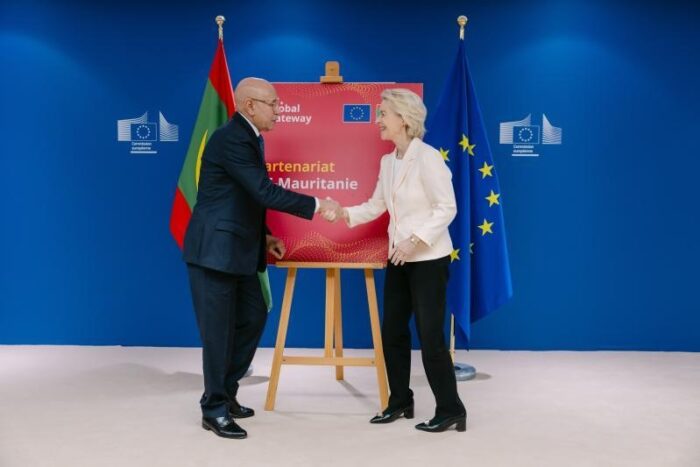
The Global Gateway in context

Europe's dual ambitions to align geostrategy and development
31/10/2025

The importance of shaking hands

Tracking the AU-EU partnership between talk and action
31/10/2025

Beyond mercantilism: rethinking the EU-Latin America relations

Despite decades of partnership, the EU-Latin America ties remain largely transactional. Trade dominates, asymmetries persist […]
The Progressive Post

Unpacking competitiveness

Since Mario Draghi published his report on The future of European competitiveness, its recommendations have […]
18/06/2024

Since Mario Draghi published his report on The future of European competitiveness, its recommendations have been incorporated into the agenda of the European Commission and of member states across Europe. The fresh proposal on the long-term EU budget – the multiannual financial framework (MFF) – has a substantial part dedicated to the ‘competitiveness fund’. Despite such prominence in European policies, the concept of competitiveness, however, remains rather blurred. This is worrying because without clarity of purpose, it is not clear where we will end up. 

To begin with, it looks like the choice of the word ‘competitiveness’ had a political reason. From the economic point of view, the usefulness of the word competitiveness to  describe a country was discussed and successfully discarded in the 1990s. In his famous article from 1994, ‘Competitiveness: a dangerous obsession‘, Paul Krugman explains that the concept of national competitiveness is elusive. Krugman argued that the ‘competitiveness’ of countries did not depend so much on international factors but rather on domestic ones, mainly productivity growth. In the current debate on competitiveness, economists seem to agree, including the IMF (Fletcher 2025, Kaczmarczyk 2025). It is notable that Draghi himself says from the outset of the report that by competitiveness, he means productivity improvements. 

This clarification of definitions is important because, by appealing to a concept that is not clearly defined, politicians can justify any policy. Krugman shrewdly remarked this in his 1994 article as well, saying that politicians use the word ‘competitiveness’ to justify hard choices or to avoid them. The current competitiveness frenzy seems to confirm this diagnosis: there is a pressure to dilute green and labour standards and to consolidate several industries (such as telecoms and banking) – all in the name of competitiveness. It is therefore crucial to put the definitions straight and to call things by their name. Moreover, this vagueness of goals can be very counter-productive, as being embroiled in distractions in the name of competitiveness, the EU may miss what actually matters for its success and well-being. 

As there is a general consensus that competitiveness actually means productivity, let’s take a closer look at it. It is generally accepted that a rise in productivity leads to an improvement in standards of living, and therefore, this is considered the path to prosperity. While generally true, this path to prosperity encompasses only one aspect: material well-being. There are many other important aspects of a good life, like good physical and mental health, healthy relationships etc. If we look only at productivity as it is usually measured (output per worker or per hour), we miss entirely all other aspects of wellbeing. Why is this important? Because there is a common habit in economists’ analysis, including that of Draghi, to show how Europe is behind the US on productivity, while completely omitting the quality-of-life indicators. On those indicators, the US is in a really bad shape, with high inequality, depression and shorter expected life. Before making prescriptions for the EU to emulate the US, one needs to ask whether this is indeed the ‘north star’ we want to pursue. ForumDD (2024) elaborates on this further and argues that recommendations of the Draghi report, in some cases, go against the goals and aspirations of European citizens. 

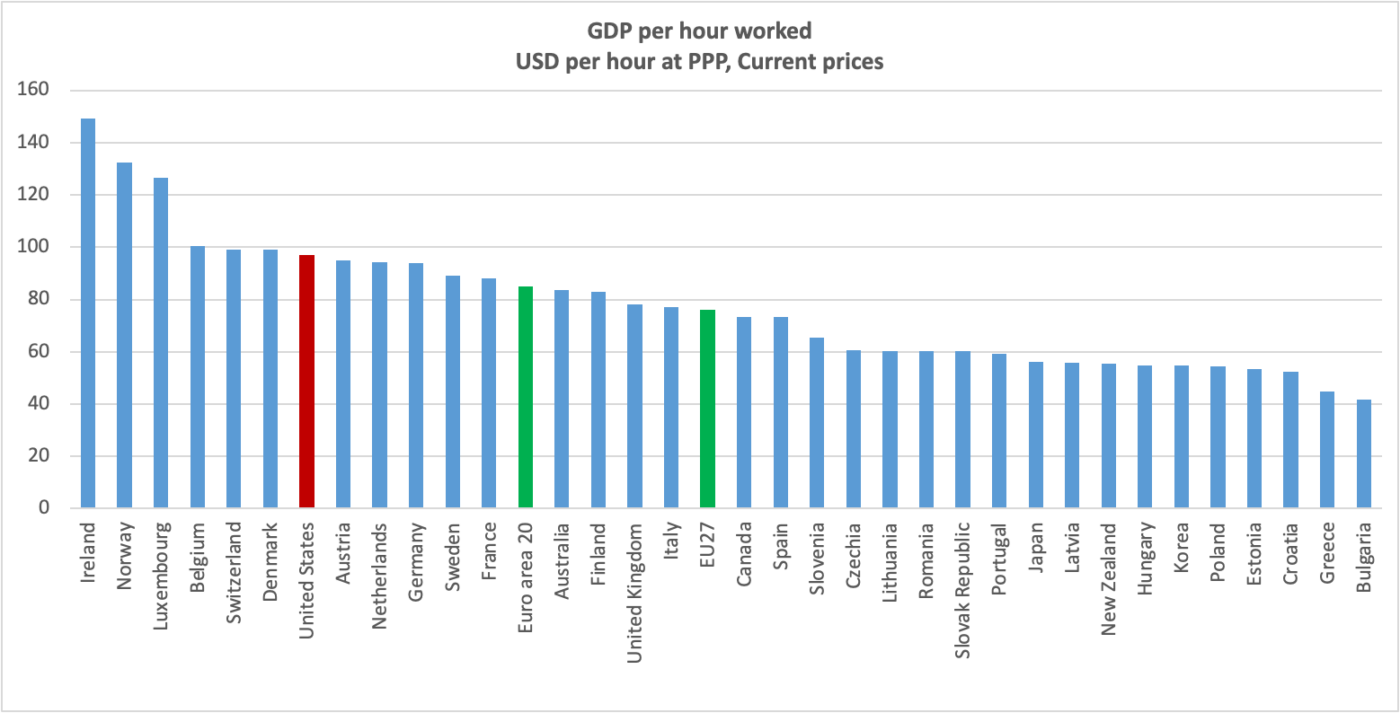
Instead of benchmarking against the US, why not look at other countries that are equally or even more productive but also have good quality-of-life indicators? If we look within the EU itself, it appears that several countries have higher productivity per hour than the US, and some others are very close (see the chart). Why not take Belgium, Denmark, Austria or the Netherlands as a benchmark? Germany’s productivity is very close to that of US as well.

The chart makes it clear that making policy conclusions based on EU averages is quite misleading, as productivity is very much determined by internal factors, and those are different among EU member states. 

This chart also highlights the problem with the productivity measure itself: the high output per worker (or per hour) may be a result of many factors that have nothing to do with productivity in the way we intuitively understand. Ireland, for example, has the highest productivity in Europe, largely due to its relatively lax tax regime, which international corporations utilise for profit shifting, resulting in high revenue per hour. Lax tax regimes and high concentration of financial services are ‘helping’ the productivity of Luxembourg and Switzerland.

The choice of productivity measure also matters. If we examine productivity per hour, i.e., output per hour worked, there appears to be no gap in productivity growth compared to the US. Darvas (2023) shows that in terms of output growth, the EU has not fallen significantly behind the US. In fact, it has converged to the US in terms of per-capita output, per-worker output and, especially, output per hour worked. 

Additionally, exchange rate fluctuations have a significant impact on cross-country comparisons. Krugman (2025) shows that the increase in the nominal GDP gap between the US and the EU between 2007 and 2024 is a statistical illusion, as it is fully explained by the weakening of the Euro after its abnormal strength just before the financial crisis in 2008. This currency movement obviously affects the productivity measures as well. 

This unpacking of ‘competitiveness’ brings us to a conclusion that there is no pervasive productivity gap in Europe vis-a-vis the US, it is more an issue of one particular sector – the digital. This is also what Draghi shows in his report, and it is supported by detailed sectoral calculations by Nikolov et al. (2024). IT services and manufacturing of computers and electronics have been the main contributors to US productivity over the last two decades, while productivity in the rest of the industry stagnated. By contrast, the EU has superior productivity in many industrial sectors. 

It is clear that the EU needs to develop its digital sector. The question is how. The high productivity of the US tech sector is derived to a significant extent from the high monopoly rents that platforms and big tech companies are extracting from users. Is this a sign of productivity? Obviously not. The European Union has made its choice on this issue and adopted a whole range of digital sector regulations. In its pursuit of ‘competitiveness’, the EU should not lose sight of its own guiding principles. The way to go is not to emulate the US model, but to build its own digital infrastructure, based on public interest and robust competition. In the meantime, a quick way to improve competitiveness vis-à-vis the US would be to restrict the amount of rent that US digital companies extract from European users – their revenues will fall, and by implication, their ‘productivity’ and ‘competitiveness’.

Another reason not to get too excited about the US digital model is that its innovations are primarily focused on consumer markets rather than industrial sectors. Rotman (2024) argues that for AI and other cutting-edge innovations to translate into broad productivity growth, they must penetrate the entire economy. Currently, this appears to be a challenge in the US, as digital innovators are often disconnected from the industry there. This connection, by contrast, is prevalent in Europe, where the most significant R&D investments are being made in the industry. It may well be that the ‘mid-tech trap’ with predominance of industry-based R&D might turn out to be a boon for Europe, as it enables innovation to benefit the industry.

With this conclusion about the root of ‘competitiveness’ gap in mind, it is worrying to see how different players are driving diverse policy agendas in the name of competitiveness. In particular, this means that the calls for economy-wide simplification/deregulation in the name of competitiveness are not justified. While it is undeniable that the complexity of EU regulations should be reduced, it is not a justification for de facto deregulation. Simplification is a worthy goal, but what the Commission is currently doing is not simplification; it is deregulation. Arnal (2025) notes that the definition of regulatory simplification is lacking in the Commission’s initiatives, leading to confusion between simplification and deregulation. This opacity creates an opportunity for various actors to lobby for deregulation. Arnal (2025) and Pircher (2025) propose a range of ideas on what effective simplification entails. 

Technology can also come in handy in reducing the regulatory burden. Why not employ the powerful AI models and other high-tech tools to compile the reports required by regulators? With the use of Web3 Data Space, a new generation internet, this can even be done by government agencies themselves and not by businesses (but for that, businesses would need to give access to their company data). Modern technologies are also capable of collecting data along the value chains, which businesses and policymakers need not just for sustainability reporting but also to monitor the security of supply. 

What should the EU aspire to in its economic policies, then? At a high level, the answer can be found in the Treaty of the European Union, which prioritises the well-being of its citizens and environmental sustainability. The European Commission, in its first Von der Leyen mandate, developed a convincing framework called ‘competitive sustainability’. In its Annual Sustainable Growth Strategy 2020 the European Commission stated: “competitive sustainability has always been at the heart of Europe’s social market economy and should remain its guiding principle for the future”. A discussion paper for the Competitiveness Council in December 2020 says “a successful transformation of industry towards a green and digital future will lay the foundation for Europe’s long-term competitiveness”. There is also a vast academic and policy literature underpinning this concept; the most well-known is probably the Competitive Sustainability Index developed by Cambridge Institute for Sustainability Leadership (CISL). 

Fast forward to 2024, and the Von der Leyen Commission seems to have forgotten what it said in its first mandate. The Competitiveness Compass that EC presented in January 2025 talks of competitiveness without defining it. In one place, it says that the goal is to preserve production in Europe, in another place, it says that the EU wants to beat international rivals. As already noted, pursuing external competitiveness, which the Compass seems to suggest, is a long-discarded exercise. Moreover, the notion of competition on the global stage and the need to somehow overtake others is depriving the EU of agency. In this kind of framing, the EU is playing a catch-up game where others determine the goals and the rules. 

The way out of the shifting and confusing goals is to adopt a long-term and systemic approach to policy-making. Renda (2024) proposes a framework where a stable, long-term goal – a north star – is accompanied by a complex of secondary goals and diverse policy instruments. In this framework, human well-being and planetary sustainability serve as the guiding principles, while competitiveness and productivity are secondary goals, alongside other intermediate objectives. 

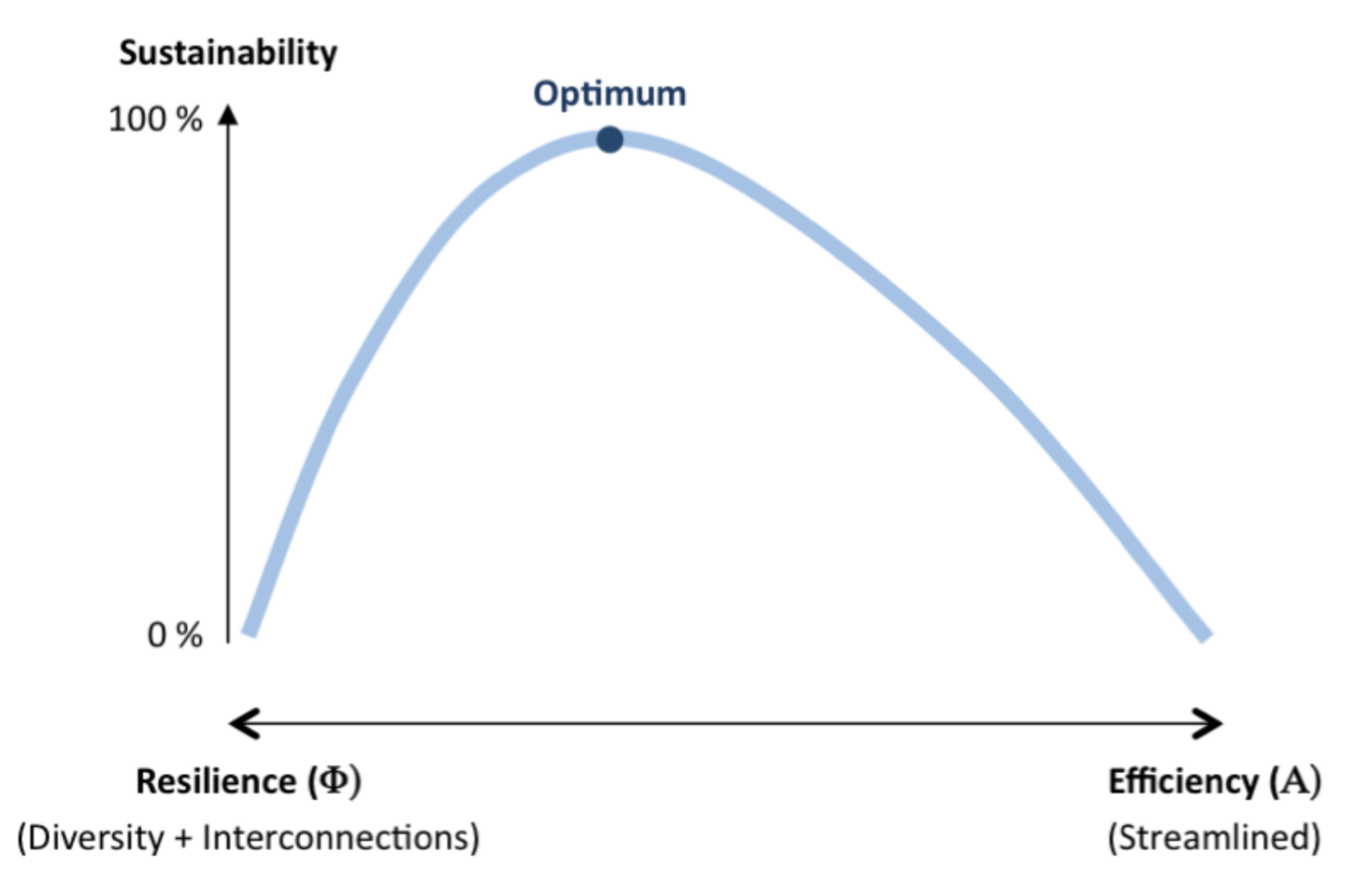
Another important element of the systemic approach to policy-making is the explicit incorporation of risk and uncertainty. This would allow changing the pathway, but not the strategic goal itself. Moreover, striking a balance between risk and efficiency would help maintain a sustainable and balanced economy. In the natural sciences, it is understood that a system is sustainable if it maintains a balance between two opposing qualities: efficiency and resilience (see chart). 

Resilience measures a system’s ability to recover from a disturbance or a change in its environment. A system’s resilience is enhanced by higher diversity and by more connections. In general, increasingly efficient systems tend to become more directed, less diverse and, consequently, more fragile. 

The excessive focus on efficiency in Western economies in the last several decades led to the emergence of high vulnerabilities, notably in supply chains, that became apparent in the Covid-19 crisis. The necessary rebalancing that we are undergoing now does not mean, however, that the main goal of economic policy should change. What is needed is an explicit incorporation of resilience in policy frameworks. This means moving away from linear policy-making and instead using risk modelling, multiple scenarios, feedback loops and regular policy correction (Renda 2024)

To conclude, the pervasive narrative of competitiveness can be misleading, as it diverts the EU from pursuing its real strategic goals. Notably, the main conclusion of the Draghi report was that Europe lacks investments in marketable innovation. The European Commission made a very selective reading of his report and out of all proposals picked up simplification, which it turned into deregulation. At the same time, other important Draghi proposals, such as a call for common EU debt to enhance European investments, have been ignored.

The unpacking of competitiveness shows that there is no pervasive productivity gap of the EU vis-à-vis the US. The problem lies in the monopoly power of big tech and their rent-seeking business models, which enable them to earn abnormal returns, as reflected in statistics as high ‘productivity’. Europe’s prime task is to disentangle itself from its grip (not only for economic, but also for security reasons) and develop its own high-tech ecosystems and to make sure that innovation permeates the whole economy. All this should happen under a broader policy framework that aims at human wellbeing and environmental sustainability as the main strategic policy goals. 

Photo credits: Shutterstock.com/AI generated

Find all related Progressive Post
Progressive Post
06/05/2021

Changing the debt rule would miss the point

Already before the pandemic, it was clear that the economic governance framework of the European […]
06/05/2021

European fiscal rules: reform urgently needed

The EU’s fiscal rules are currently deactivated due to the Covid-19 crisis. However, returning to […]
The Progressive Post

COP30 shows that it is hard to lead when isolated

Set against the Amazon, guided by the idea of mutirão, and backed by a broad […]
18/06/2024

Set against the Amazon, guided by the idea of mutirão, and backed by a broad coalition seeking real progress, the climate conference in Brazil raised high expectations. Yet, despite incremental steps, the conference fell short of delivering the clarity and ambition on what is needed to combat the climate crisis: the global phase-out of fossil fuels. 

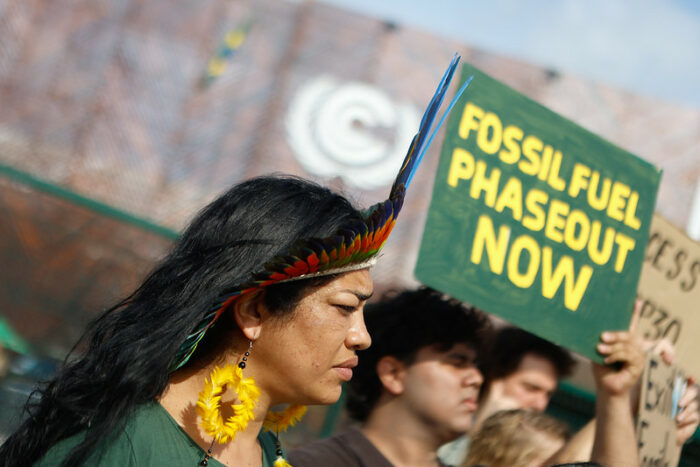
The stage in Brazil was promising. Close to the rainforest, with a strong presence of indigenous communities, in a democratic country under the progressive leadership of President Luiz Inácio Lula da Silva, it seemed to have all the right ingredients. With the concept of mutirão (joint effort), the Brazilian presidency hoped to secure a breakthrough. Unfortunately, not everyone was in for the joint effort. 

Could you imagine a global lung cancer prevention conference that never mentions tobacco? Most likely not. Yet, this year’s conference did the climate equivalent. It managed to avoid naming fossil fuels in any part of its conclusion, in spite of the fact that they are the primary culprit of the climate crisis. Not even a single time! The only indirect mention is to the ‘UAE consensus’, the agreement made on fossil fuels during COP28.

For the European Union, the outcome is particularly painful. The EU arrived in Belém determined to lead a coalition of high-ambition countries, building on its 2040 climate goal and a revived focus on international climate responsibility. Leaders such as President Lula had raised expectations. Civil society had mobilised across continents. A new coalition advocating a concrete plan to transition away from fossil fuels – supported by more than eighty countries – offered genuine momentum.

But when it mattered, the EU found itself rowing against the tide. Attempts to preserve ambition on fossil fuel phase-down and on more robust emissions reductions were almost watered down or blocked entirely. In exchange, countries agreed to increase contributions to climate adaptation finance – vital and justified, yes, but politically unbalanced if not paired with mitigation ambition.

The adaptation wins 

One of the few achievements of COP30 is the agreement to triple global adaptation finance. This matters. For frontline countries, from small island states to climate-vulnerable nations, African and Asian nations, adaptation is not a distant concern but a daily reality. The consequences of the climate crisis are already grim. Floods and heatwaves already cause food insecurity and displacement.  

But even this achievement is bittersweet. Tripling funding sounds transformative, yet the gap between needs and actual resources remains enormous. Worse still, without strong commitments to cut emissions, the scale of future adaptation needs is only set to increase. By only addressing the symptoms, we risk overlooking the cure.

More ambition is necessary 
Before the COP in Brazil, ten years after the climate conference in Paris, most countries submitted their Nationally Determined Contributions (NDCs). These contain the national pledges that countries make to fulfil the Paris promise of limiting global warming to a maximum of 2 degrees, with the ambition not to exceed 1.5 degrees. 

However, when all national pledges are put together, global emissions are projected to fall by only 12 per cent by 2035, while meeting the 1.5 degree goal requires cuts of at least 55 per cent. The gap between ambition – or lack thereof – and reality is considerable.
Valuable lesson


The EU has not felt this isolated at a climate conference in years. It now faces a clear strategic imperative: to form new alliances and do so quickly. The EU cannot enter future COPs isolated and on the defensive. It must forge durable coalitions with climate-vulnerable countries, African partners, progressive Latin American states, Oceania and climate-ambitious Asian economies. These alliances must be based on finance, technology, and, above all, a credible political partnership.

Second, the EU must insist, relentlessly, on a global framework for phasing out fossil fuels. Ahead of future climate conferences, we therefore must engage and close deals with economies of the future, countries like China and India, that can massively reduce emissions. Waiting for a yearly two-week-long negotiation, where these countries can hide behind the voices of oil states, should not be the only platform for climate action. Those conversations should start the day after COP, because we cannot wait another year. 

An example is the announced summit on phasing out fossil fuels, which will be co-hosted by Colombia and the Netherlands next April in the Latin American country. I hope this will deliver on its promise and prove to be a catalyst for other and new forms of international climate cooperation outside the yearly climate conferences.  It is an example of how we can forge these new alliances and hopefully reap the fruits of cooperation before the next climate conference. 

Finally, the EU must get its own house in order. Ambition at home strengthens credibility abroad. Ambiguity does the opposite. By stripping ourselves of ambition – whether it is on due diligence, deforestation, and others – we undermine our global efforts. It emboldens fossil fuel states and weakens EU diplomatic leverage. 

Initiating a race to the bottom will ensure that we will never see the top. Countries at the conference rightly held a mirror to our face when we discussed about reforestation, human rights and climate efforts. We must walk the talk, as it is all about consistency. 

Conclusion


The promise of COP30 has not been fulfilled. Reforestation has not gotten nearly as much attention as hoped, the concluding text remained too ambiguous, and the discrepancy between national pledges and necessary reductions remains too large. 


Yet, this climate conference also showed that there is a strong undercurrent. One of the countries that are willing to move forward, to make a change and to take responsibility. These should not be slowed down or discouraged by notorious laggards. It is time to support the coalition of the willing and to expand it. That is one of the major wins that Europe must secure before COP31 in Turkey.

Photo credits: Shutterstock.com/Antonio Scorza

Find all related Progressive Post
Progressive Post
27/11/2025

COP30: towards a coalition of the willing for a just transition?

Ten years after the Paris Agreement, over 80 countries are finally ready to discuss a […]
27/11/2025

Ocean action is climate action

Homework for Europe after COP30
10/09/2025

Green ambition or green illusion?

Decoding climate and nature spending in the Commission's proposal for the 2028-2034 EU budget
See more ...
Find all news
News
12/12/2025

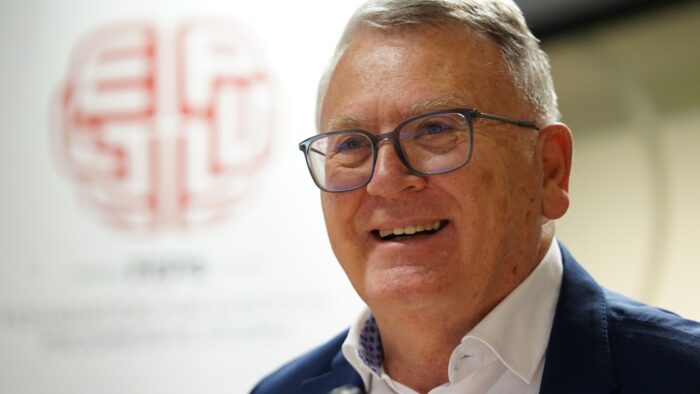
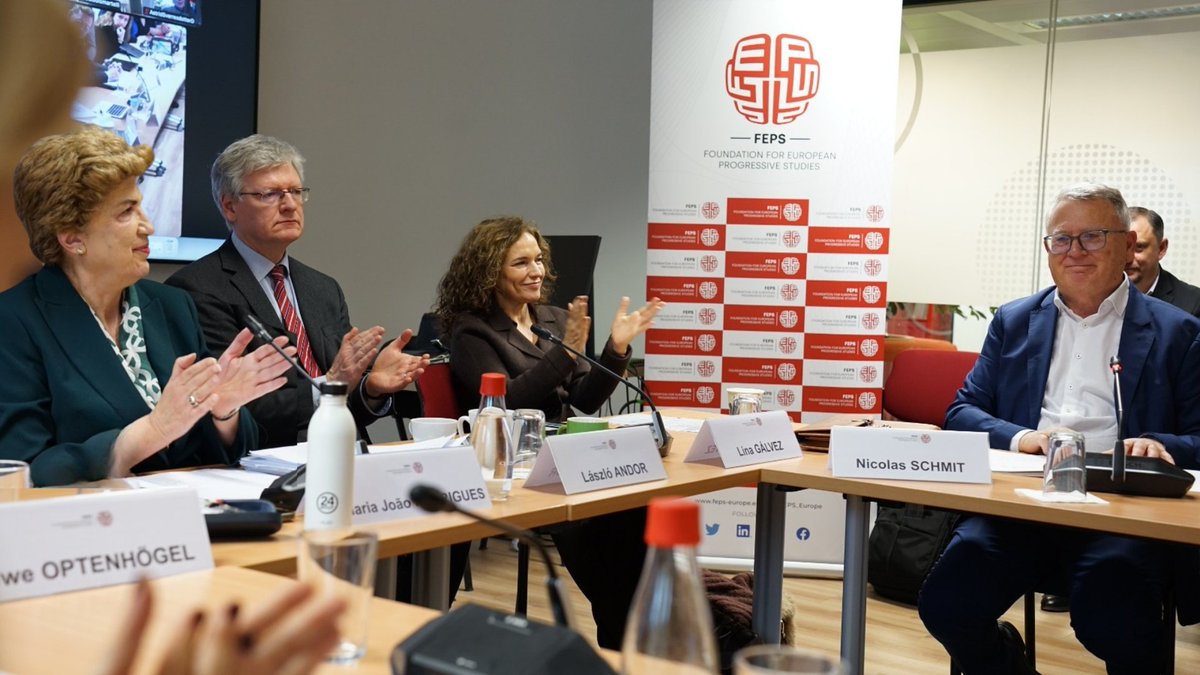
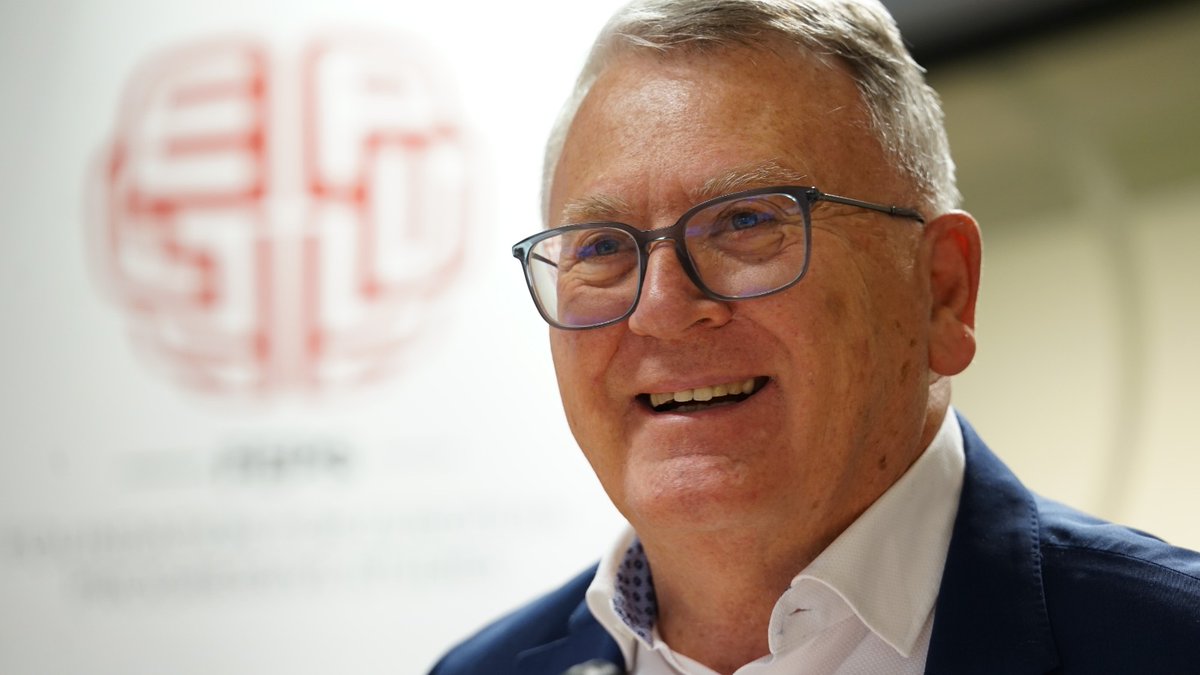
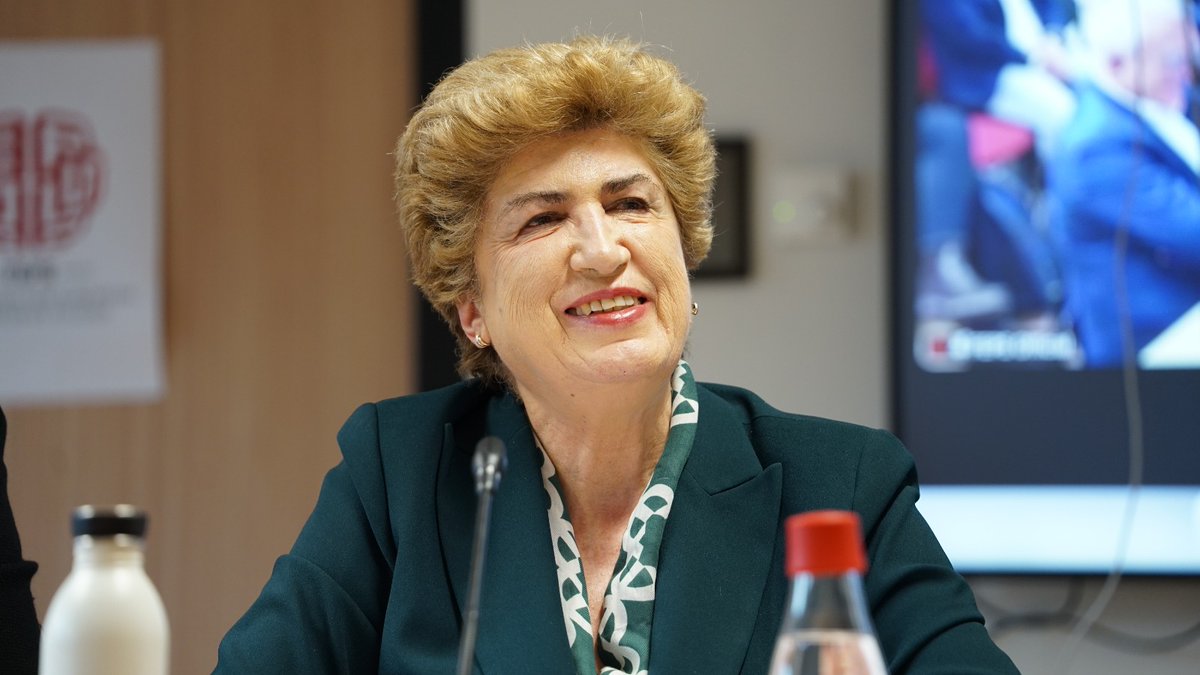
FEPS elects Nicolas Schmit as new President

After eight years in the role, outgoing President Maria João Rodrigues requested to be replaced, considering her mission accomplished. 
08/12/2025

Friends of the Western Balkans’ joint statement

Belgrade, 21 November 2025 We, the Friends of the Western Balkans (FoWB) – representatives of […]
04/12/2025

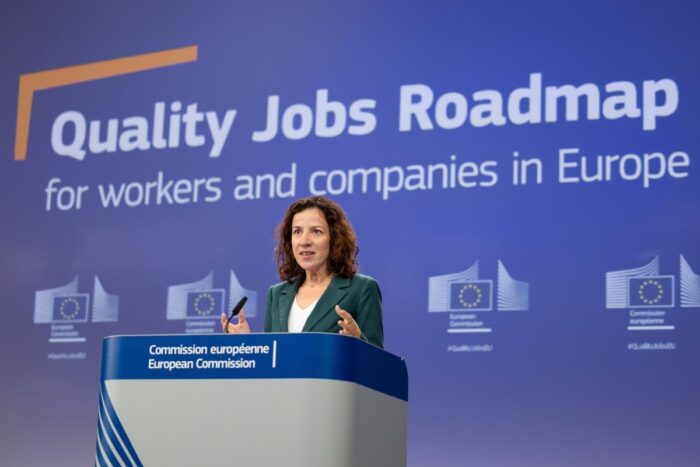
It is high time that the goal is set on “Quality”

FEPS commentary on the Quality Jobs Roadmap
27/11/2025

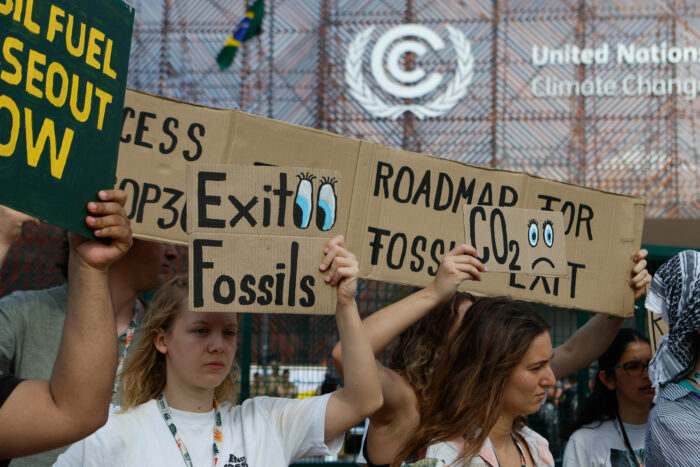
Is a bad COP outcome better than no outcome at all?

FEPS Commentary on COP30