FEPS Newsletter 8 June 2026 – 🤖 Uncontrolled AI is a danger

Protecting democracy from AI dictatorship – If you have problems displaying this email, follow this […]

08/06/2026
Protecting democracy from AI dictatorship –

If you have problems displaying this email, follow this link

Algorithms & AI

The promise of AI is real, but so are its consequences, such as bias, opacity, and concentration of power to a handful of tech elites. From the classroom to the public sector, algorithms are reshaping childhoods and restructuring economies, and thereby quietly eroding the rules of democratic governance. Progressives must stop treating regulation as a burden and start using it as a tool: because only strong democratic oversight can ensure that AI serves people, not profit.

The open future and its enemies

BOOK

The open future and its enemies

How we can protect free society from AI dictatorship


A robust democracy must not leave the future in the hands of the alliance between Big Tech and the far right. AI must be politically reined in and democratically shaped so that humanity retains its sovereignty.


Launched at the Global Progressive Mobilisation in Barcelona, the book argues that uncontrolled AI will erode our freedom, self-determination and democracy.

DOSSIER

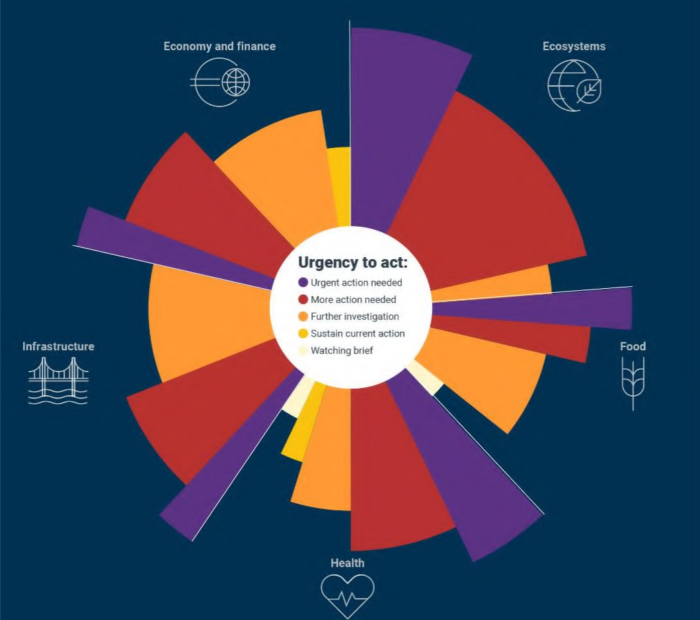
The red queen’s race

Without checks and regulations, AI risks undermining everything we care for


AI advances faster than our ability to understand it. Left unchecked, it can undermine human development and democracy.

The red queen's race

Photo credits: Shutterstock / Summit Art Creations

Digital minimum age: The ban and beyond

17 APRIL – BARCELONA, SPAIN

Digital minimum age: The ban and beyond

Panel at the Global Progressive Mobilisation


How can we ensure that digital minimum age goes beyond merely a ban?


Considering initiatives announced in Australia, Denmark, Spain, Germany and France to introduce a minimum digital age for social media, the discussion should move beyond the binary question of “ban or not to ban”. 

It should instead explore which supporting measures are needed, while anticipating the unintended consequences of minimum age laws, such as exclusion, privacy risks, regulatory fragmentation, and, most crucially, democratic engagement. 

29 APRIL – BERLIN, GERMANY

AI in the public sector – Lessons from the Nordic countries

By FEPS, in collaboration with FES Nordic countries, and Nordic think tanks and trade unions 


What are the potential biases, discriminatory effects, and other harmful outcomes of the use of AI? Drawing on real-world examples, this roundtable identified strategies to mitigate risks and find ways to implement AI responsibly – in the Nordics, Germany, the EU and beyond.  

Photo credits: FES Nordics

AI in the public sector – Lessons from the Nordic countries
Events

Upcoming events

See full schedule

Social Europe is our target
 

📅  19 JUNE

📍 PORTO, PORTUGAL

UPCOMING EVENT

Social Europe is our target


Join us in Porto or online at the event “Social Europe is our target” to put social rights back at the heart of the EU!


This high-level conference will feature contributions from European Commission Executive Vice-President Roxana Minzatu, FEPS President Nicolas Schmit, PS Secretary General José Luís Carneiro, MEPs Estelle Ceulemans and Gabriele Bischoff, former EU Commissioner Elisa Ferreira and former Eurogroup President Mário Centeno, as well as other policymakers and experts, to mark the 5th anniversary of the Porto Social Summit – Register now!

Past events

See all past events

29-30 MAY – NICOSIA, CYPRUS

A progressive strategy for peace and cooperation in the Mediterranean

Call to Europe – Cyprus


Taking place in the context of the Cypriot Presidency of the Council of the European Union, the latest edition of FEPS’ flagship event Call to Europe addressed:

 
  • Implications of the geopolitical crisis in the Middle East for the Mediterranean region
  • European and SWANA countries in the Palestinian-Israeli Conflict
A progressive strategy for peace and cooperation in the Mediterranean
  • The Pact for The Mediterranean
  • Energy justice and the green transition
  • Externalisation and securisation in EU migration policy and implications for the Mediterranean countries
  • Democratic resilience in North Africa
 

By FEPS, organised in cooperation with the S&D Group, Friedrich-Ebert-Stiftung Cyprus, Eteron, Fundación Avanza, Centro Studi di Politica Internazionale, Fondation Jean Jaurès and EDEK.

Progressive Migration Group – Addis Ababa

21-22 MAY – ADDIS ABABA, ETHIOPIA

Progressive Migration Group – Addis Ababa

By FEPS, in collaboration with Friedrich-Ebert-Stiftung (FES) and FES African Migration Policy Centre


Labour migration cooperation needs a progressive approach.


During this meeting, the Progressive Migration Group:

  • analysed the potential impact of the Multiannual Financial Framework on migration management and African countries
  • reflected on the outcomes of the recent International Migration Review Forum (IMRF)
  • Reviewed existing bilateral labour migration agreements between European and African countries and explored what they mean for expanding legal pathways
  • Examined the tensions between Europe’s migration priorities and Africa’s ambitions for continental integration and free movement

20 MAY – ESCH-SUR-ALZETTE, LUXEMBOURG

Housing in practice – Luxembourg

Developing sustainable housing and land-use strategies

By FEPS, in collaboration with Robert Krieps Foundation


Across the EU, housing affordability has risen to the top of the political agenda. However, the successful delivery of the EU affordable housing Plan will largely rely on innovative ideas to expand housing supply, mobilise investment, balance immediate needs with structural reforms, and support the most vulnerable. 

Housing in practice – Luxembourg

For all this, understanding the territorial realities and working with local and regional actors will be key. This first event of FEPS’ “Housing in practice” series focused more particularly on the situation in Luxembourg. 

Progressive Post
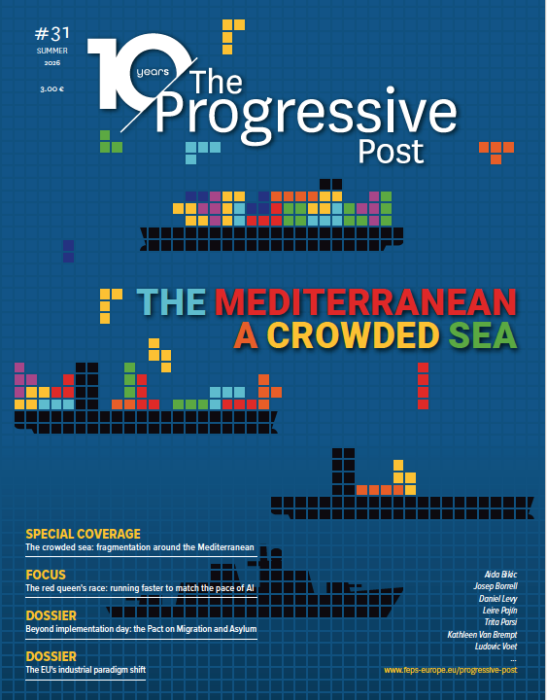
Fragmentation around the Mediterranean

Photo credits: Shutterstock / Hairem

DOSSIER

The crowded sea

Fragmentation around the Mediterranean


In a new geopolitical sea, is the EU truly willing to deploy the necessary resources to become a meaningful actor in the Mediterranean?

PROGRESSIVE PAGE

All far from quiet on the Eastern front

By Ania Skrzypek, Director for Research and Training

All far from quiet on the Eastern front

The sense of Eastern discomfort the progressive family noted after the last EU elections is slowly transforming into the realisation of a disaster… But is the situation really that bad? Read more.

Photo credits:  Shutterstock / Belish


Was this email forwarded to you?

Copyright © 2026 FEPS Europe, All rights reserved.

You are receiving this email because you participated in one of FEPS’ events and/or have registered for FEPS’ newsletter.

If you wish not to receive FEPS’ communications anymore, please click here: unsubscribe now


Foundation for European Progressive Studies
Avenue des Arts, 46 – 1000 Bruxelles

+32 223 46 900 – info@feps-europe.eu

Find all related Progressive Post
Progressive Post
05/11/2026

If you want peace, prepare for equality

I have always been struck by how little attention we pay to patriarchal culture when […]
05/11/2026

The Women, Peace and Security agenda amid shifting geopolitics

While the current conflictual and geopolitical environment makes the Women, Peace and Security agenda ever […]
05/11/2026

The EU’s next WPS plan must act on tech, not just mention it

The EU is drafting its next action plan on Women, Peace and Security, and technology […]
Find all related Magazine
Magazine
  • cover book

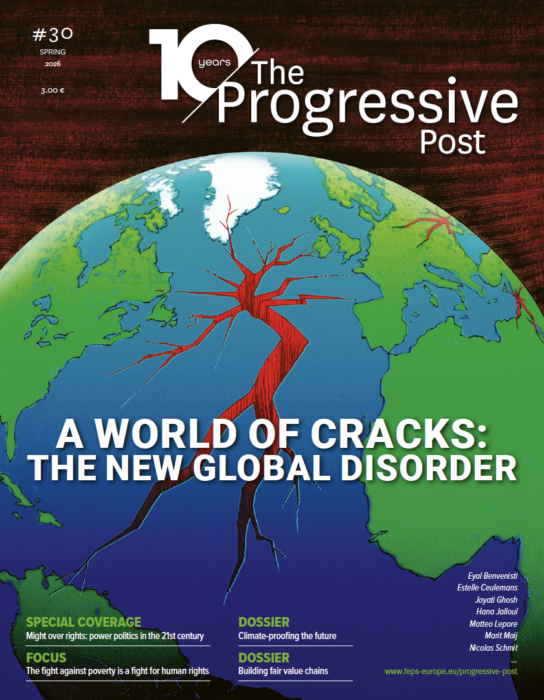
    Issue #30 Progressive Post

Issue #30

A world of cracks: the new global disorder
  • cover book

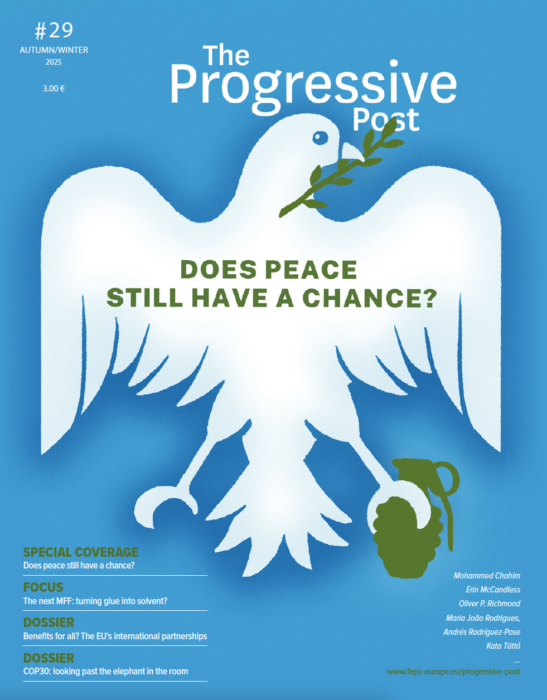
    Issue #29 Progressive Post

Issue #29

Does peace still have a chance?
Find all related publications
Publications
04/11/2026

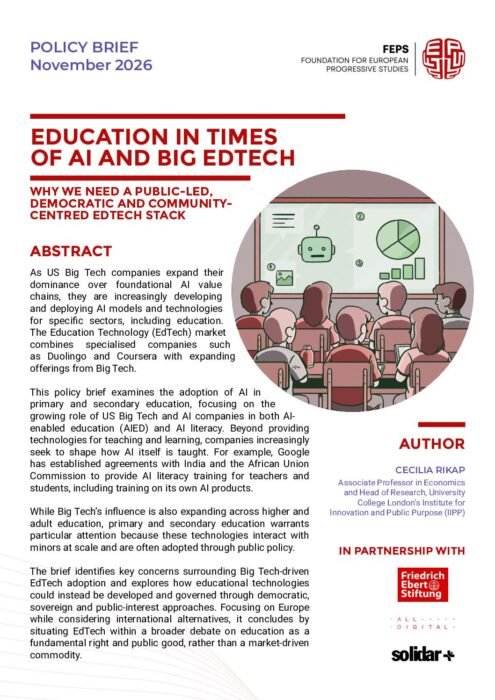
Education in times of AI and Big EdTech

Why we need a public-led, democratic and community-centred EdTech stack
04/11/2026

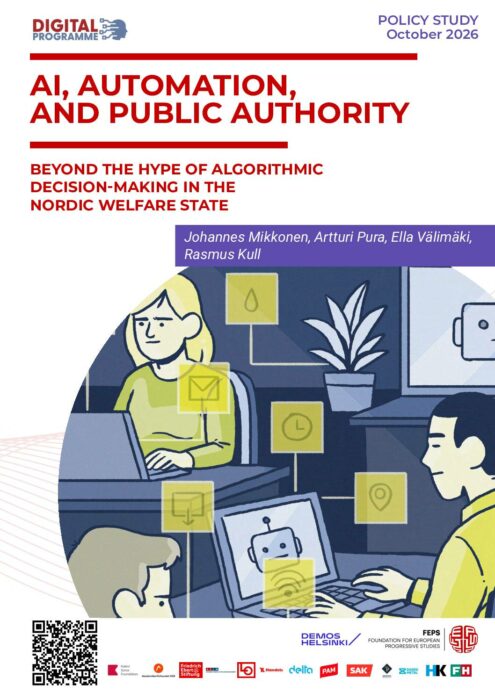
AI, automation, and public authority

Beyond the hype of algorithmic decision-making in the Nordic Welfare State
23/10/2026

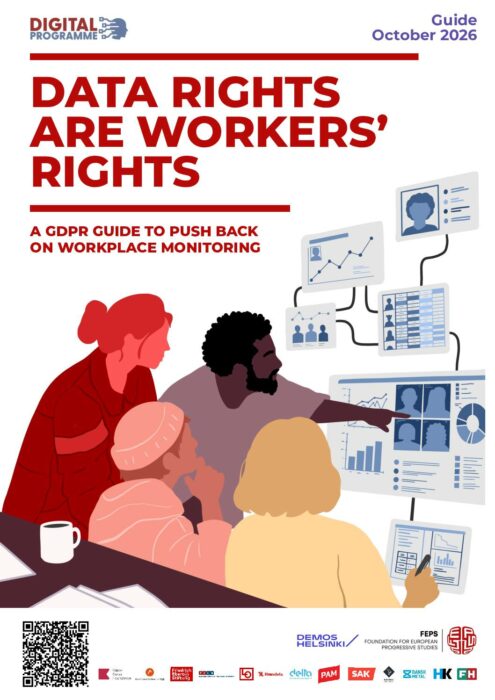
Data rights are workers’ rights

A GDPR guide to push back on workplace monitoring
23/10/2026

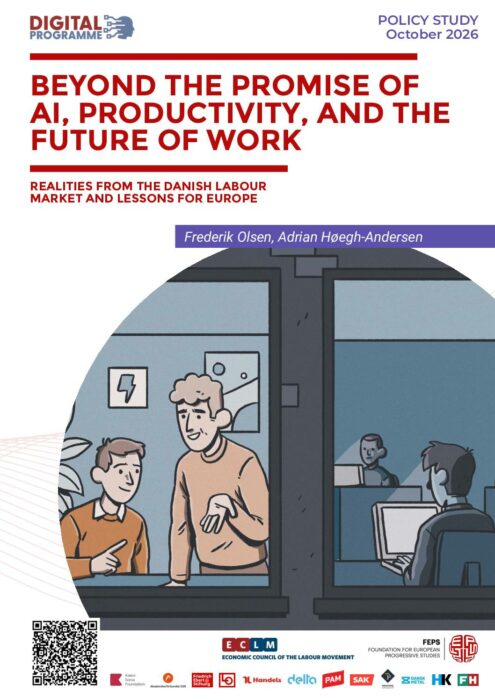
Beyond the promise of AI, productivity and the future of work

Realities from the Danish Labour Market and lessons for Europe
Find all related news
News
30/10/2026

FEPS Reacts: The new EU Framework for Climate Resilience

Necessary foundations but little action
23/10/2026

Notice of vacancy – Policy Analyst on Gender Equality

Apply before 23 November 2026
16/09/2026

FEPS Reacts: State of the European Union 2026

The 2026 State of the Union felt more like ‘von der Leyen I’ than ‘von […]
23/07/2026

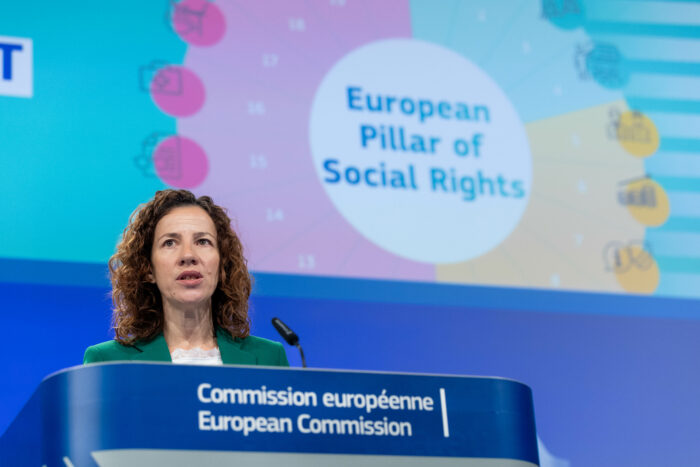
FEPS Reacts: European Commission communication on the Action Plan on the European Pillar of Social Rights

By Laszlo Andor, FEPS Secretary-General & François Balate, Policy Analyst on Social The communication on the […]
Find all related in the media
In the media

Frågan om jämställdhet splittrar unga svenskar

by dagens arena 29/10/2026
"The issue of gender equality divides young Swedes" - FEPS Policy Analyst on Democracy Matteo Dressler discusses the findings of the EqualiZe policy study in the Swedish context.

Brazil’s Lula survives Bolsonaro scare, safeguarding EU democratic ally on climate and trade

by EUobserver 26/10/2026
Read EUobserver's analysis of what comes next after Brazil's elections, which includes comments from Thainá Leite, Project Coordinator at FEPS

Франција е Франција – но Франција е и Европа

by Racin.mk 21/10/2026
“France is France – but France is also Europe.” In an opinion piece for Racin.mk, László Andor, Secretary General of FEPS, argues that France’s youth protests, set against a latent budget crisis and growing precarity (schools, housing), risk benefiting Marine Le Pen, and that France, despite bending the EU’s fiscal rules, has also propped up European growth.

La Regina, il problema dei divari territoriali è una questione europea

by Regione Basilicata 22/09/2026
“La Regina: territorial disparities are a European issue” News article published by ANSA (IT), featuring Raffaele La Regina, participant in the FEPS Young Academics Network, discussing territorial and social inequalities across Europe, the need to reconcile competitiveness and cohesion, and the role of European cohesion policy, industrial policy and investment in ensuring that no region is left behind.